News-Archive:
|
|---|

|
News-Archive:
|
|---|
|
|
After a rainy and very mild winter and a relatively wet spring, Common Swifts are the last migratory birds to be seen in the skies above our towns and villages since the beginning of May.
Sadly, once again, fewer swifts are flying in many regions of Germany than in previous years. A lack of rainfall in large parts of the African continent, ever-increasing encroachment in the African countryside, and continuing intensification of land use are also leading to an increasing shortage of insects. This situation is similar on the central bird migration route from North Africa via Sicily and Italy to Central Europe.
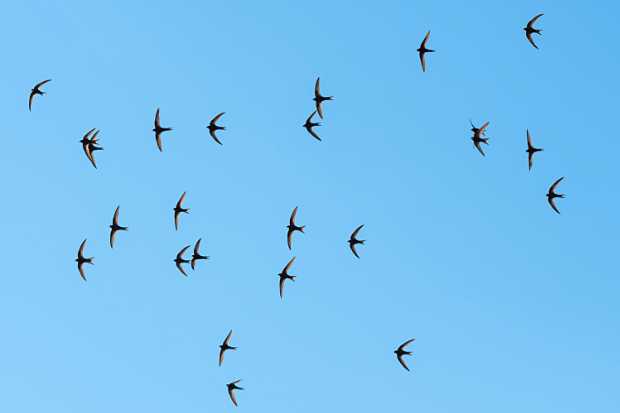
A flock of swifts in the sky © A. Raluca
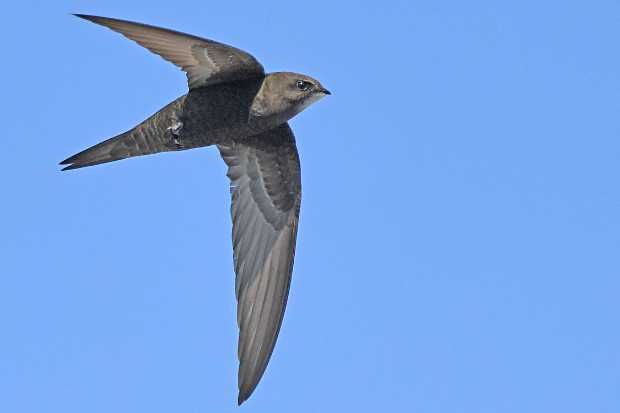
A Common Swift – perfectly designed for soaring through the sky © K. Roggel
There has been far too little rain in Sicily since May last year, and here, too, there was a lack of insects. Only the abundance of insects in and above our Pantani migratory bird sanctuary with the Pantano Cuba & Longarini lagoons, which still have water, provided tens of thousands of migratory birds with a richly stocked table this spring. From mid-March to mid-April, thousands of swifts and swallows spent their day hunting flying insects above the shore meadows and lagoons. Here, they replenished their vital energy reserves for the gruelling onward flight of more than 2,000 km to Central and Northern Europe.
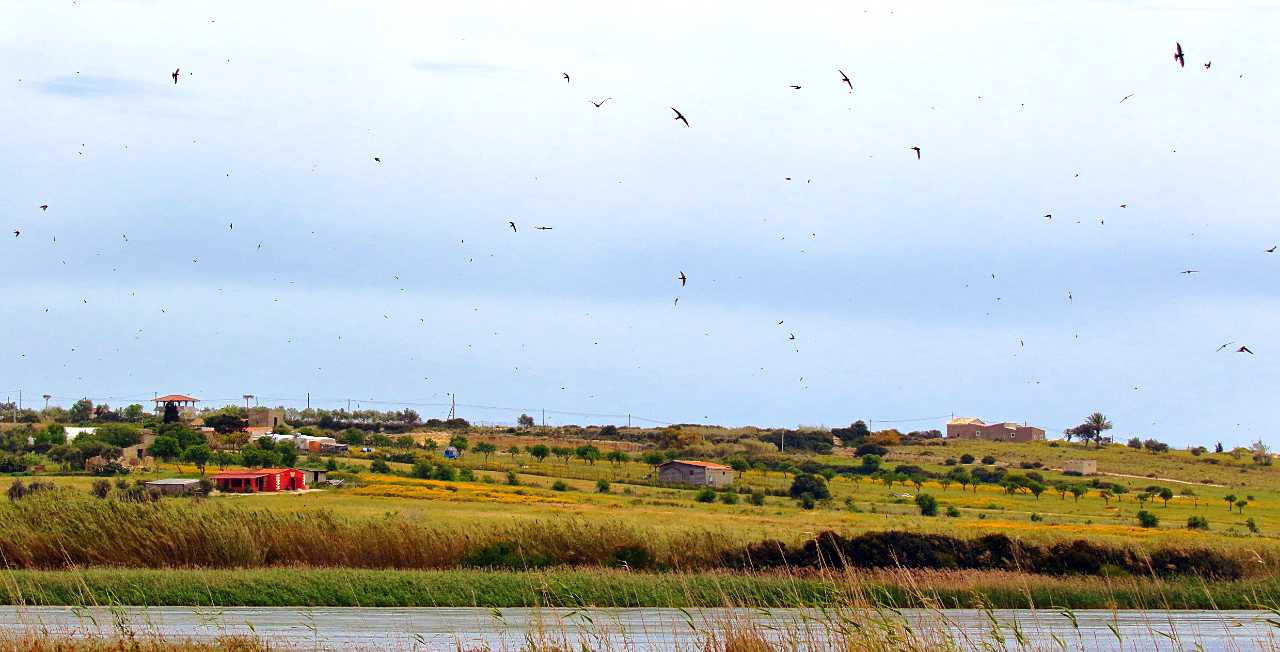
Common Swifts above the Pantano Cuba lagoon © SPA_IT_PG
But what awaits the healthy swifts that have returned to us here does not bode well: an acute shortage of flying insects and an increasing lack of suitable nesting and breeding sites on and in buildings. There are also the many dangers of accidents on reflective windows and the rapidly growing number of communication and other antennae. Added to this is death from excessive heat in often unsuitable substitute nesting cavities directly under hot roof tiles!
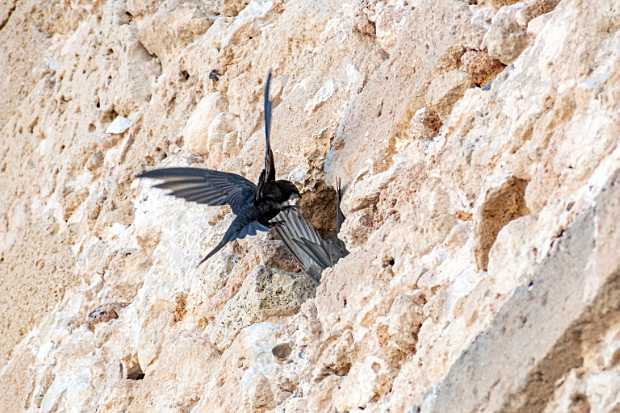
A pair of Common Swifts at their breeding cavity © A. Raluca
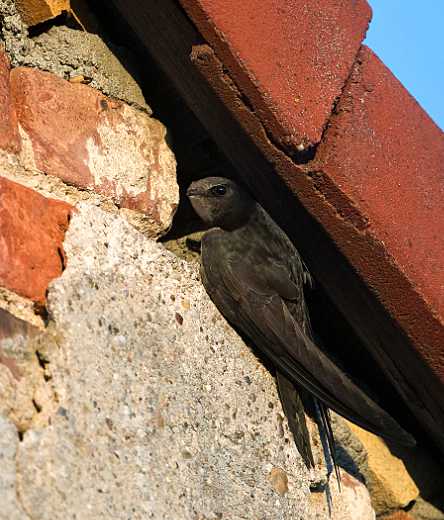
Common Swift on a wall crevice © Pröhl/fokus-natur
Our veterinary surgeon, Dr Christiane Haupt, and her small rescue team at the Swift Clinic in Frankfurt/Main care for injured or helpless adults and young Common Swifts. A great deal of specialist knowledge, commitment, and love of animals are the prerequisites for carrying out this unique rescue work for the protection and conservation of this long-distance migratory bird species in Europe, which specialises in constant flight. From nursing care to operations and the replacement of defective flight feathers, Christiane Haupt has mastered this challenging life task with undiminished dedication for 24 long years.

Common Swift fledgling with a bandaged wing © E. Brendel

Common Swift fledgling after a leg operation © E. Brendel
Here is a brief insight into the demanding day and night work of the clinic:
Swift Clinic Diary Notes 2023
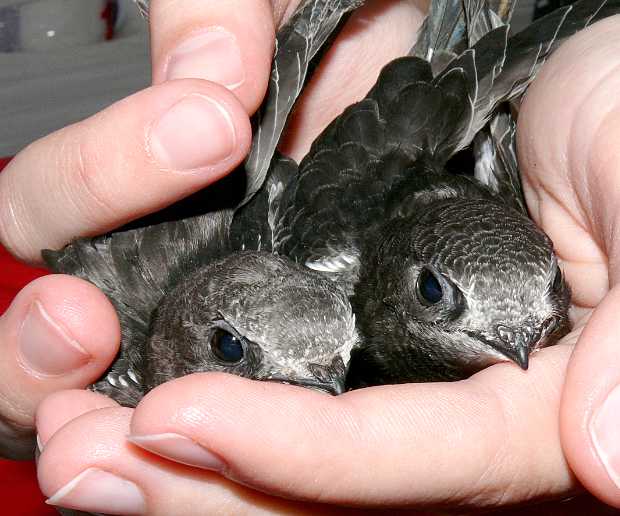

Well looked after Common Swifts © E. Brendel
To enable her to continue her unique swift rescue work at the Frankfurt Swift Clinic without any restrictions, Christiane Haupt needs the financial support of animal-loving donors and sponsors, especially in times of sharply rising energy prices, species-appropriate food, hygiene articles and veterinary products.
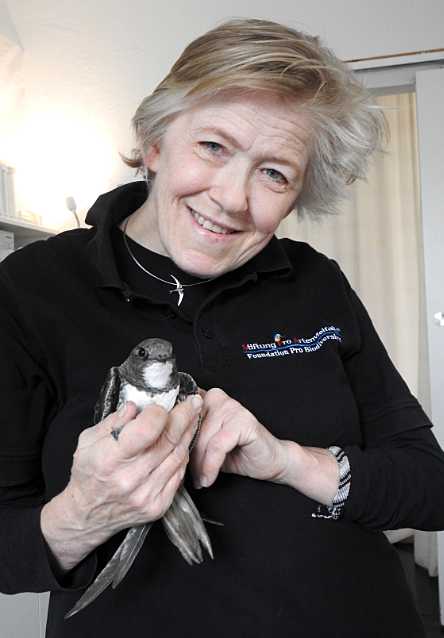
Christiane Haupt with an Alpine Swift nursed back to health © SPA
We need some 21,200 euros for this year's work at the Swift Clinic, with up to 800 patients expected again this year. Please help us to secure this amount promptly.
Only your donations of perhaps 20, 30, or even 50 euros will relieve Christiane Haupt of many of her worries. Only with your help can she order and pay for additional veterinary preparations and medical instruments, special swift food such as crickets and wax moth larvae, necessary hygiene products, and replacement heat lamps.
Please remember: Every Common and Alpine Swift cared for in the Swift Clinic and released back into the wild contributes to the conservation of this unique bird species.
Older projects of the month can be found in the archive
Copyright information for the image in the title bar:
"A Common Swift nursed back to health © E. Brendel"

Just 30 years ago, Great Egrets were an absolute rarity in Germany. Today, they are a familiar sight in many places. The story of Egret K195 is particularly remarkable: since 2018, it has been turning up time and again in our Frose nature reserve during the summer... more information

Following the successful spring bird conservation camps on Cyprus and the Greek island of Zakynthos, our local bird conservationists in Cyprus are once again standing up to the illegal operations of bird poachers and hunters. Yet again, we need your active support so that we can continue our campaign against the slaughter of migratory birds this autumn ... to the project
Postbank Hannover IBAN: DE47 2501 0030 0905 9063 07 BIC: PBNKDEFF
Stiftung Pro Artenvielfalt Meisenstraße 65 33607 Bielefeld Germany Tel. (0049) 0521 2997-883 / -884 / -889 Fax (0049) 0521 2997-885 Office Mo - Fr. 09.00 to 16.00
Foundation Management team@stiftung-pro-artenvielfalt.org Project Management projekte@stiftung-pro-artenvielfalt.org Donations, Donor Care service@stiftung-pro-artenvielfalt.org
 Donate now