News: Short & sweet |
|---|

|
News: Short & sweet |
|---|
|
|

A Great Egret with its prey in our Frose wetland © SPA
Great Egret K195: A faithful regular visitor to our wetland …
As recently as 30 years ago, Great Egrets were a true rarity in Germany. Today, these white herons can be seen in many places from spring to late autumn in the open agricultural countryside, hunting mice on grassland and arable land. Large flocks can gather at drained fishponds. Great Egrets are also regularly seen in our Frose wetland; at times, more than a hundred herons have been counted here.
A Great Egret with the ring code K195 has a particularly close association with our wetland. At the end of 2018, our site manager, Uwe, made several attempts to read this bird’s ring code. Finally, in mid-January 2019, he succeeded in reading the code.
The report to the ringing centre revealed an interesting piece of information: the Great Egret K195 had been ringed on 02.06.2018 as a nestling near Brest in Belarus, some 850 kilometres as the crow flies from Frose (Saxony-Anhalt).
Since then, K195 has returned regularly to Frose. After the breeding season, usually as early as the end of June, it reappears in our wetland and remains there well into winter. In January or February, it flies back to its breeding grounds in Eastern Europe. Year after year, Uwe has been able to identify the Great Egret again, most recently on 07.09.2026.
We do not yet know where K195’s breeding grounds are. This makes us even more hopeful that his identification number will one day be detected there too. This would allow us to trace his journey between its breeding and wintering grounds even more accurately.
Even now, however, K195 tells an extraordinary story: for eight years, this bird, which was ringed in Belarus, has returned time and again to the wetland managed by our Pro Biodiversity Foundation.
We owe our knowledge of this particular site fidelity to the bird’s individual ring markings, the vigilance of our site manager, and to our dedicated donors, who over many years have enabled us to purchase land that now covers 21 hectares.
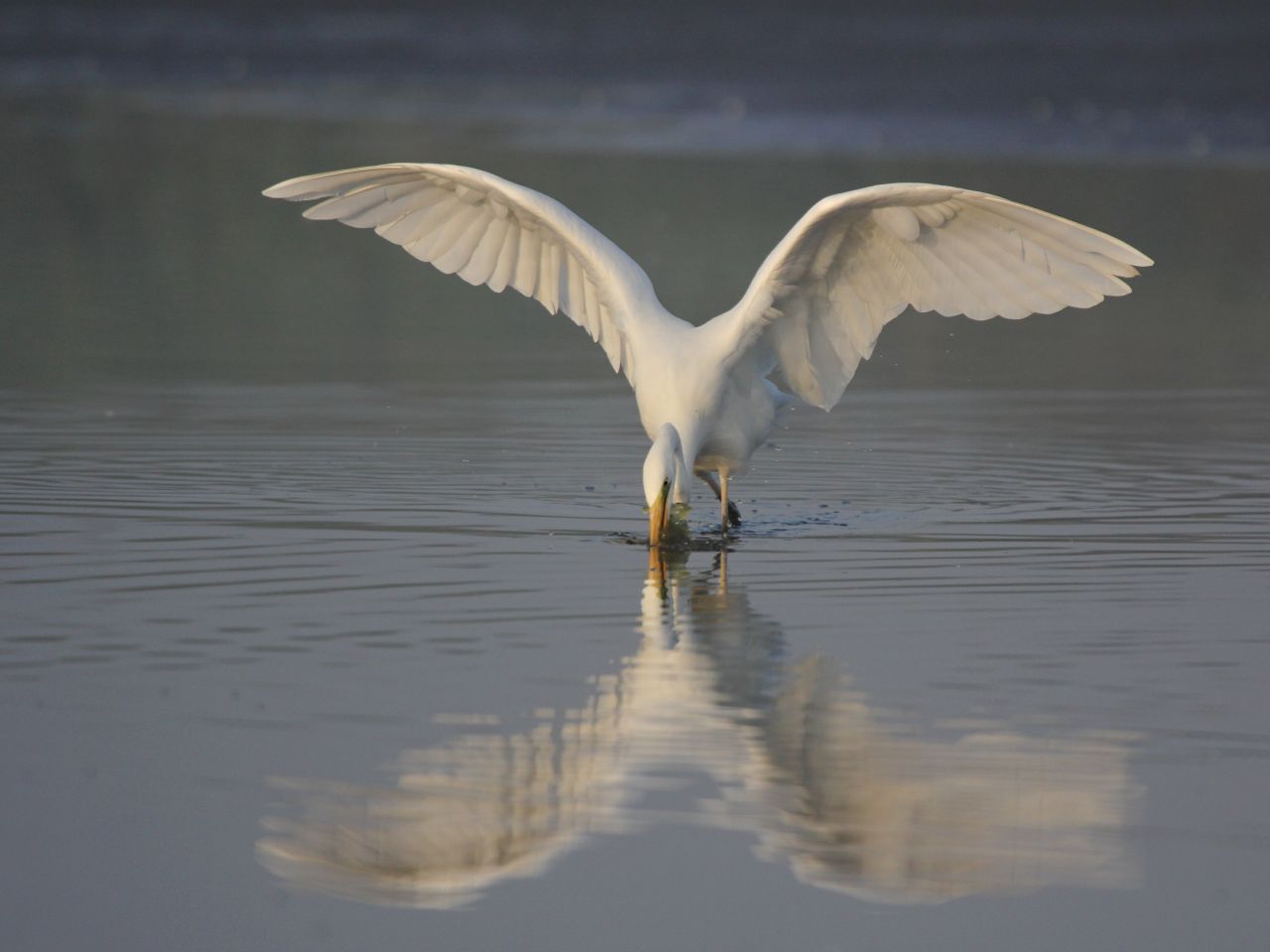
Wings casting shadows over the water: the fishing strategy of great white egrets as they forage in our Frose wetland. © SPA

Our Frose wetland provides a valuable source of food and a place of refuge for Great Egrets and many other species of heron and waterbirds © SPA

Scottish Highland cattle, together with Water Buffalo, are employed at Schimmel’s Ponds as part of the biotope conservation programme © SPA
Animals assisting with the management of the countryside: Scottish Highland cattle are moving into our ‘Schimmel’s Ponds’ project site …
Following several months of the cattle diligently grazing on the meadows of our project area in Hirschgrund near Oberlungwitz in Saxony – for the benefit of habitat and species conservation – one of the two herds of wild cattle has now moved on: Six Scottish Highland cattle and one German Shorthorn were transported by staff from the Grüne Aue Highland Cattle countryside conservation organisation some twelve kilometres to our second Saxon project area, ‘Schimmel's Ponds’ in Limbach-Oberfrohna.
Two Water Buffaloes and three goats have been working there continuously since spring as part of the landscape management programme. Now that the bird breeding season has ended and monitoring of songbirds in the area has been completed, grazing pressure on the vegetation around the ponds will increase. Without regular grazing or mowing, this ecologically valuable wetland, with its nine ponds, would quickly become overgrown and would no longer be suitable as a habitat for many wildlife species.
By early winter, our animal countryside conservationists will have grazed down the growth of reeds, cattails, willows and bramble bushes along the edges of the pond. Last year, we still did this work with machinery. This year, for the first time, the animal countryside conservationists will have the chance to show what they are capable of.
It remains to be seen whether their efforts to assist in countryside management will achieve the intended goal over the coming months. Where necessary, follow-up maintenance work is planned. Repair work on pond embankments and inlet channels is also scheduled for the winter months.
Through targeted grazing, we preserve and create open pond and embankment structures that are essential for biodiversity in and around the ‘Schimmel Ponds’.

Scottish Highland cattle keep the embankments and banks of the Schimmel's Ponds clear of vegetation and help to ensure that ecologically valuable habitat structures do not become overgrown © SPA
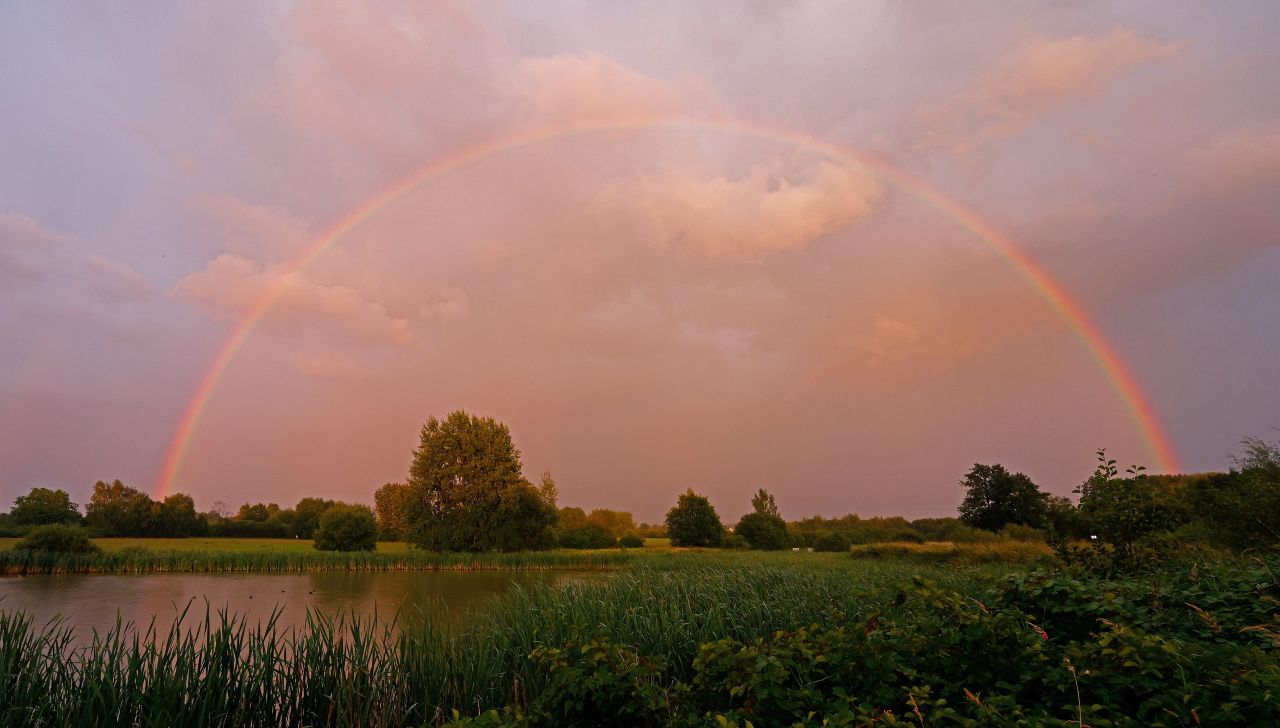
A rainbow spans the Schimmel's Ponds – an atmospheric view of our Saxon wetland and its diverse habitats © SPA
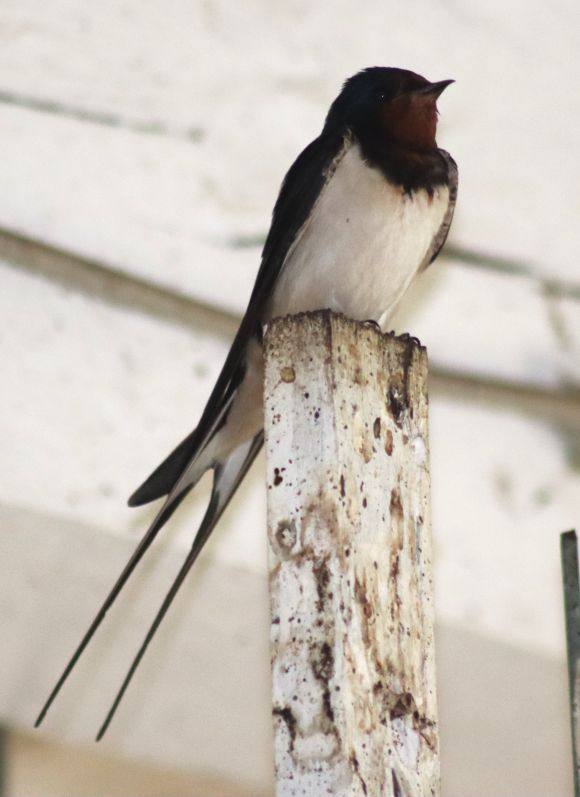
Every year, Barn Swallows use the interior of our swallow barn in Schmuggerow as a breeding site. © SPA
Conservation work under time pressure: Extensive building refurbishment works for up to 50 breeding pairs of Barn Swallows …
At our swallow barn in Ducherow (Schmuggerow district), we carried out extensive building improvements and habitat enhancement work ahead of this year’s return of the Barn Swallows in the spring. No fewer than 38 pairs of Barn Swallows used our historic building as a nesting and breeding site this year, and, by a conservative estimate, around 230 young swallows were born there this year.
The protection of the Barn Swallow and its nests, as enshrined in the Federal Nature Conservation Act (BNatSchG), is often quietly undermined in practice. By purchasing the swallow barn and a newly surveyed section of the surrounding land, our Foundation has now ensured that the protection enshrined in law is fully enforced in practice.
However, the BNatSchG and our property alone are not enough to fully protect this Barn Swallow breeding colony. Cats, martens and raccoons are magically drawn to the smell of the barn, the chirping of the swallows and the constant comings and goings of birds until late in the evening; all the parent swallows, their eggs and the fledglings that are not yet able to fly are too tempting a meal.
By refurbishing the stable gates, bricking up doors and window openings that were no longer needed, and restoring a door and a high window, we have significantly improved protection for the Barn Swallow colony. The same applies to an adjoining horse stable, which was most recently used exclusively as a workshop; we have made it accessible again to Barn Swallows seeking nesting sites, and two breeding pairs promptly took up residence.
By erecting a 1.60-metre-high fence around our newly created natural garden biotope, we have provided further comprehensive protection. The Barn Swallows are now already on their way to their winter quarters in the south, and we are planning further measures to optimise the interior of the barn buildings in October, as well as the planting of native trees and shrubs along the protective fence.
It has now grown quiet in and around the barn, and no sooner have they flown away than we look forward with great excitement and anticipation to the return of as many breeding pairs of Barn Swallows as possible to our ‘Swallow Barn’.
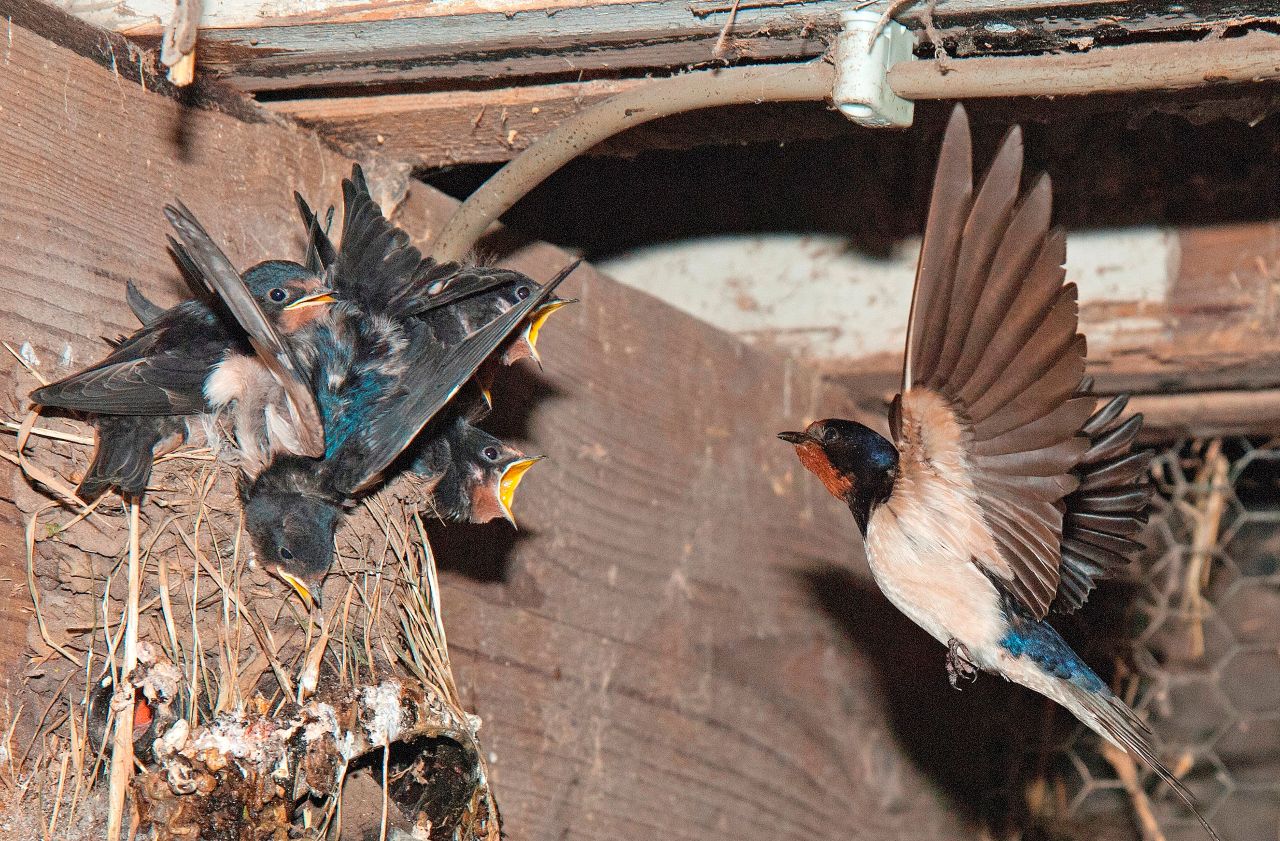
Young Barn Swallows wait hungrily for their next meal © vdBrink
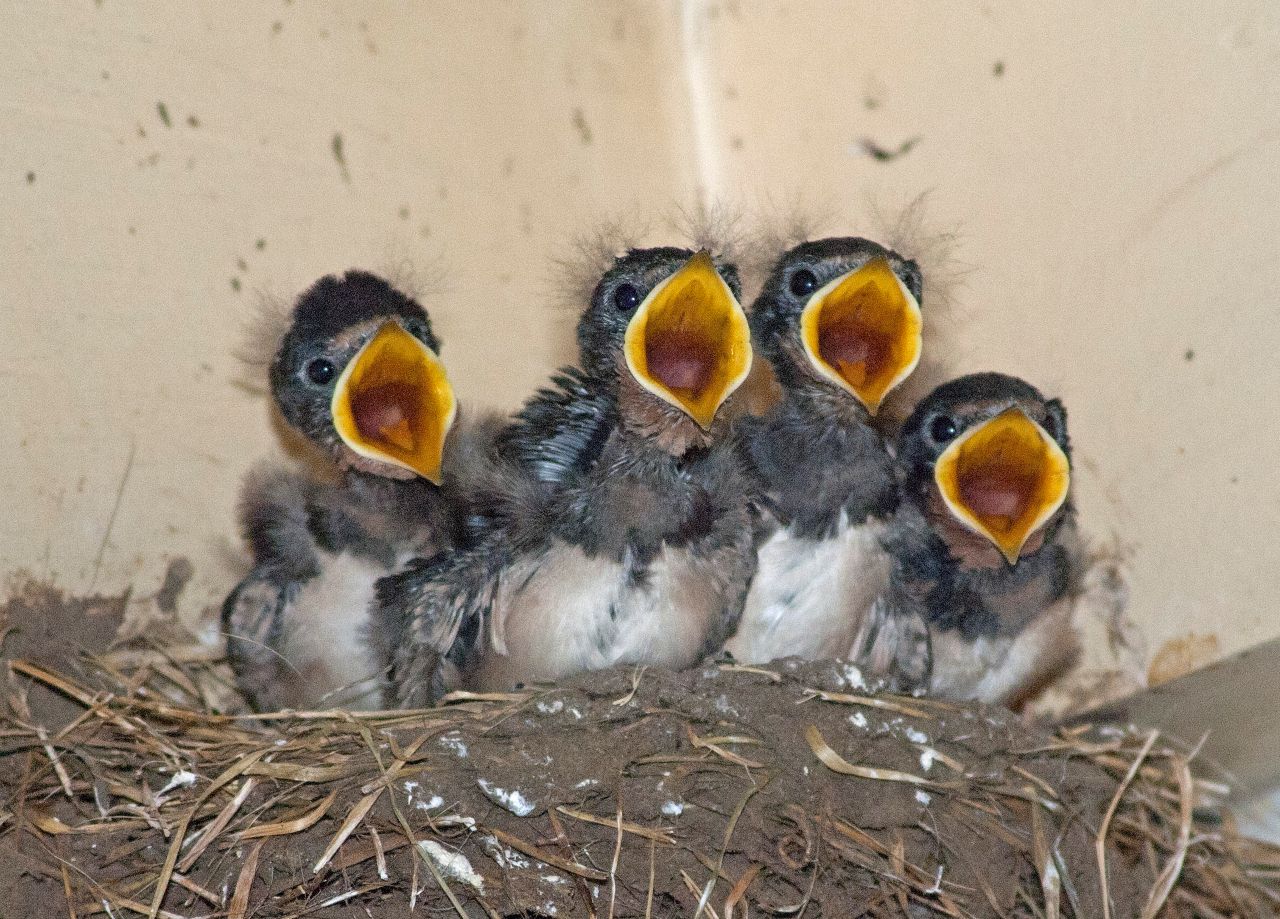
Four young Barn Swallows are well protected in our Schmuggerow swallow barn. © vdBrink
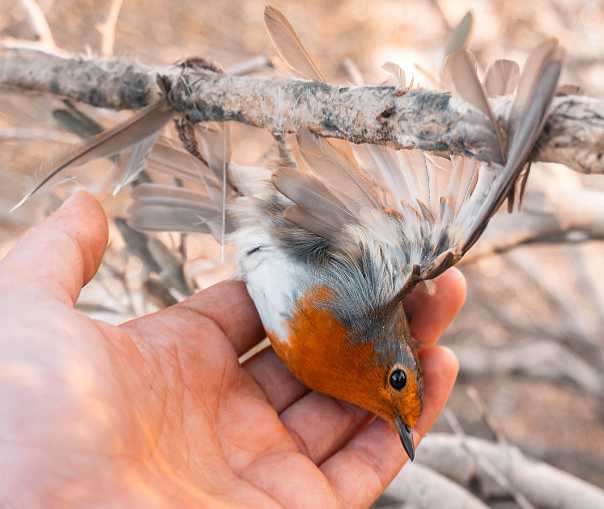
Following the successful spring bird conservation camps on Cyprus and the Greek island of Zakynthos, our local bird conservationists in Cyprus are once again standing up to the illegal operations of bird poachers and hunters. Yet again, we need your active support so that we can continue our campaign against the slaughter of migratory birds this autumn ... to the project
Postbank Hannover IBAN: DE47 2501 0030 0905 9063 07 BIC: PBNKDEFF
Stiftung Pro Artenvielfalt Meisenstraße 65 33607 Bielefeld Germany Tel. (0049) 0521 2997-883 / -884 / -889 Fax (0049) 0521 2997-885 Office Mo - Fr. 09.00 to 16.00
Foundation Management team@stiftung-pro-artenvielfalt.org Project Management projekte@stiftung-pro-artenvielfalt.org Donations, Donor Care service@stiftung-pro-artenvielfalt.org
 Donate now