News-Archive:
|
|---|

|
News-Archive:
|
|---|
|
|
Just a stone's throw away from the 10 hectares of Öse-Wiesenbachtal land we own, together with the neighbouring Immelsberg near Gehrden, lies the 3.2-hectare Klosterwiesen meadows. These were owned by the Benedictine monastery of Gehrden (1142-1810) until 1810 and were sold to local farmers after its dissolution.
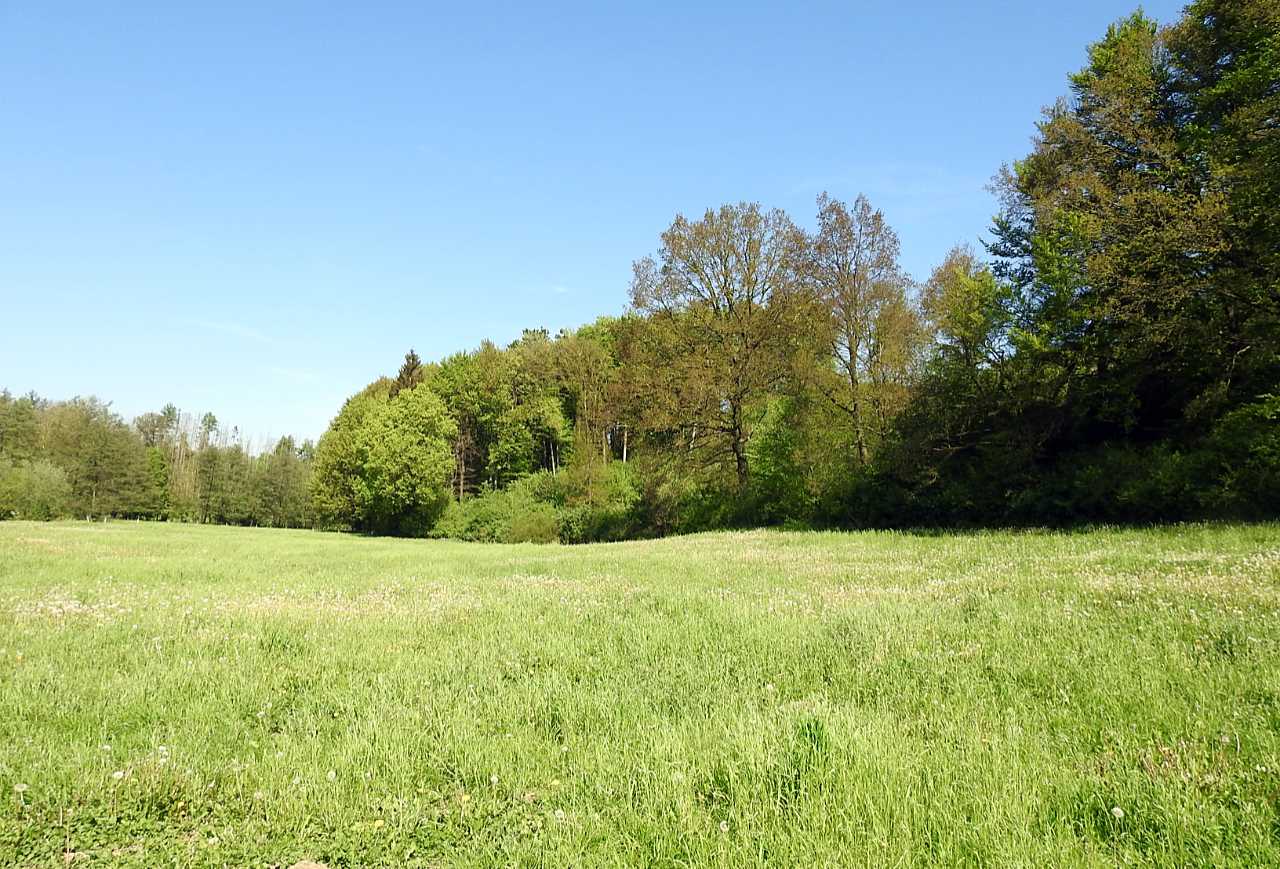
Spring-like Klosterwiesen near Gehrden © SPA
In recent years, the monastery meadows were regularly fertilised, the monotonous industrial grass sown there was cut up to three times a year, right up to the last visible spring source, and the young stream was straightened for intensive meadow management.
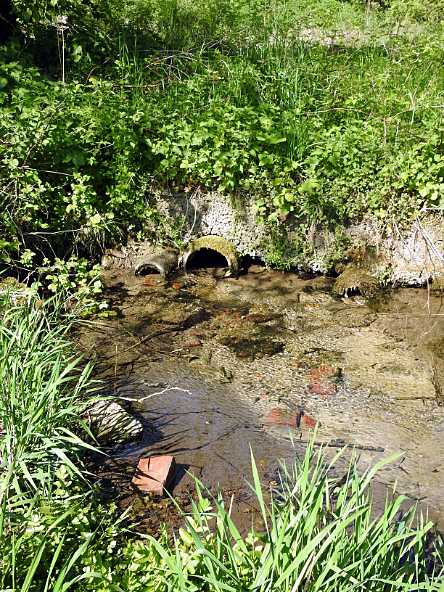
Destroyed spring source in the Klosterwiesen © SPA
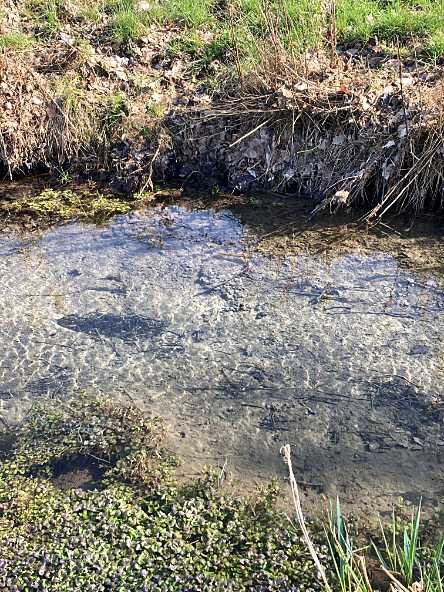
The stream bed can be seen through the crystal-clear spring water © SPA
The need to exploit the Klosterwiesen more economically led to the filling in and destruction of five of the six source areas years ago. The regular fertilisation of the meadows negatively affected the still-young stream. The consequences are excessive stream and bank vegetation growth and a lack of oxygen in the still-young stream in summer.
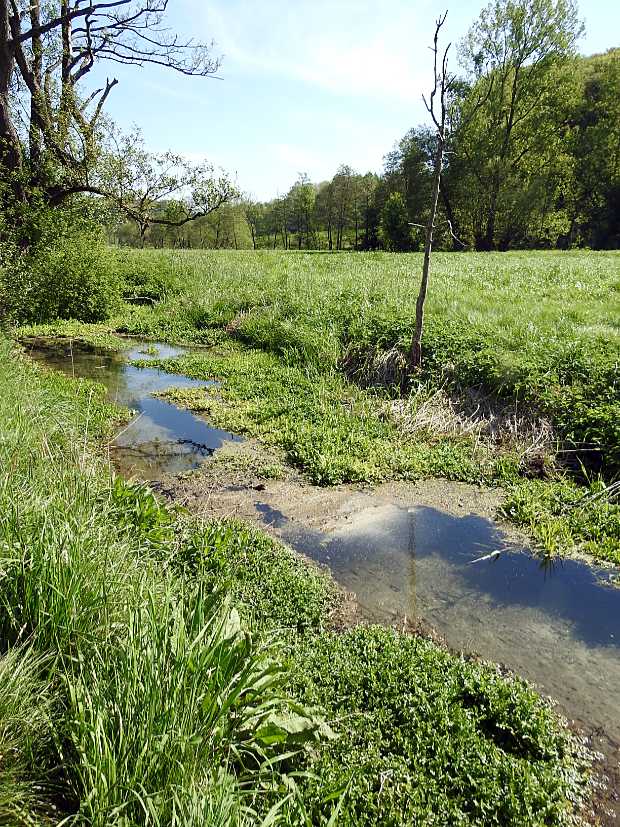
Spring stream polluted with nutrients © SPA
We are particularly fond of the last spring source that is still visible, as the landowner's grandfather told us years ago that there were five more sources before intensive grassland use!
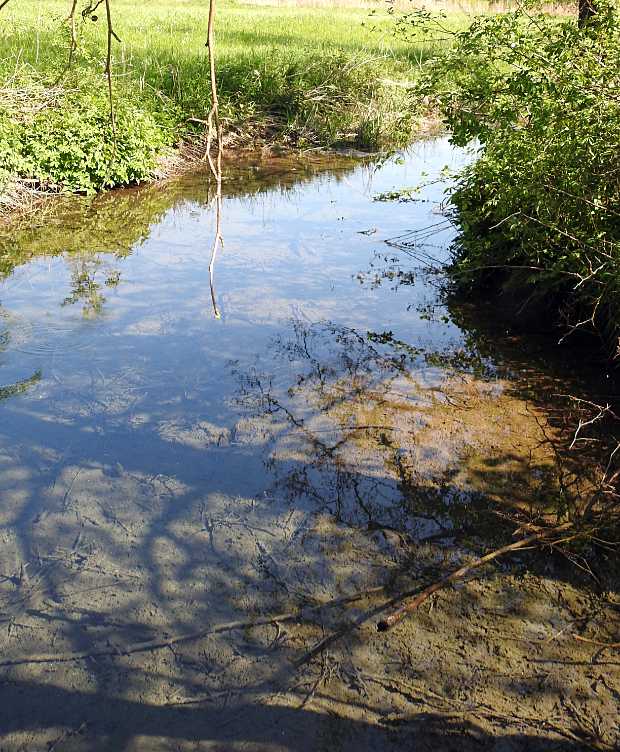
Spring 'pot' in the Klosterwiesen © SPA
Unfortunately, the protection of springs enshrined in German law is rarely observed in practice. Springs are, therefore, endangered not only in their existence but also in their function as a unique and valuable natural habitat.
The inevitable sad consequence in the Klosterwiesen was the disappearance of the biodiversity of small fish, dragonflies, amphibians, and bird species, such as the Common Kingfisher, Common Reed Warbler, and Common Nightingale, which were robbed of the dense riparian shrubbery along the stream. The European Tree Frog, which is highly endangered in Germany, has also long since lost its pond habitat there!
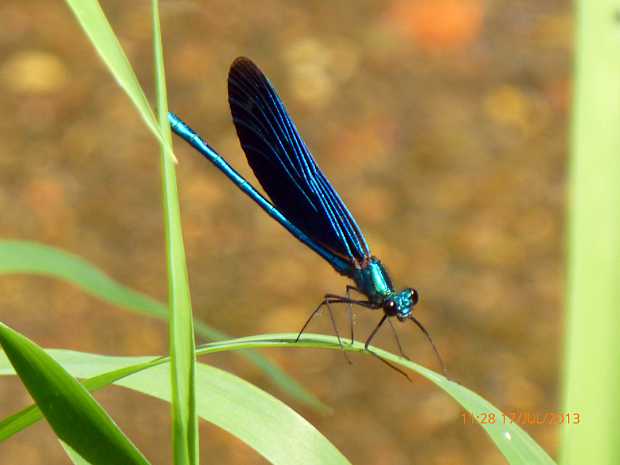
The Beautiful Demoiselle © SPA
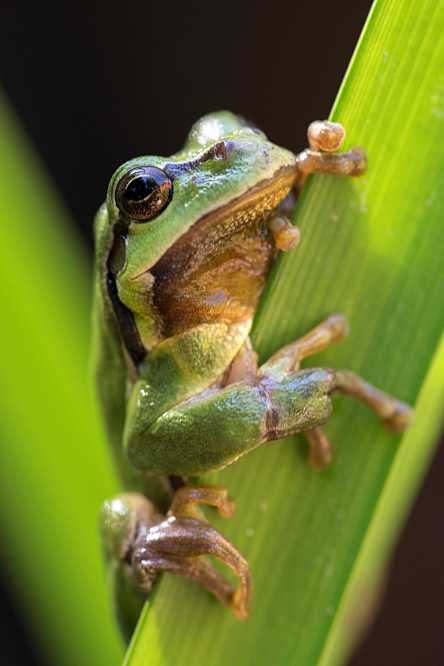
European Tree Frog observes its prey © Leo/fokus-natur
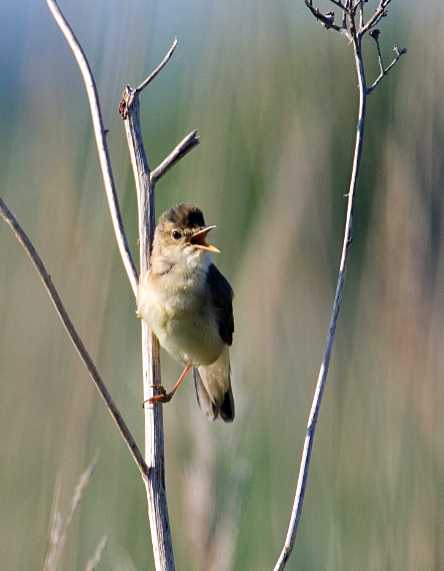
Common Reed Warbler © FotoNatur
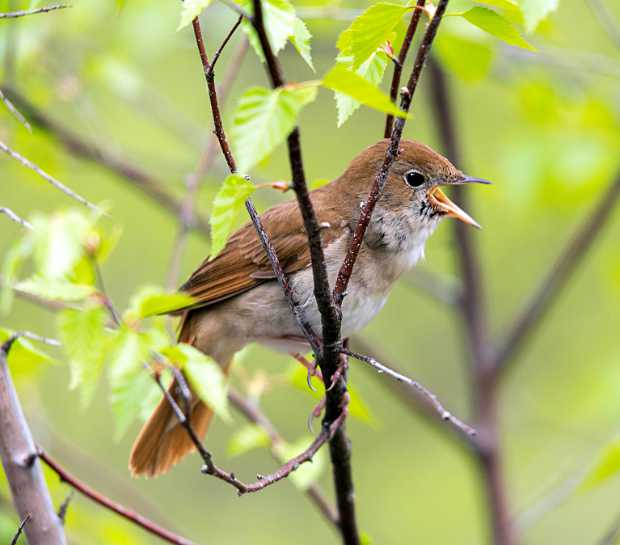
Singing Nightingale © Leo/fokus-natur
This autumn, we are planning to expose the five covered spring areas, relocate the straightened course of the stream in its former meandering streambed, create new sunlit pools and plant new native wild shrubs, alder and willow trees as well as renaturise the monostructured grassland back into a species-rich wet meadow. In this restructured biotope, native small fish, the Grey Heron, Little Egret, Common Nightingale, dragonflies, European Tree Frog, and even the Northern Lapwing (German Bird of the Year 2024) can once again find an intact and sustainably protected habitat.
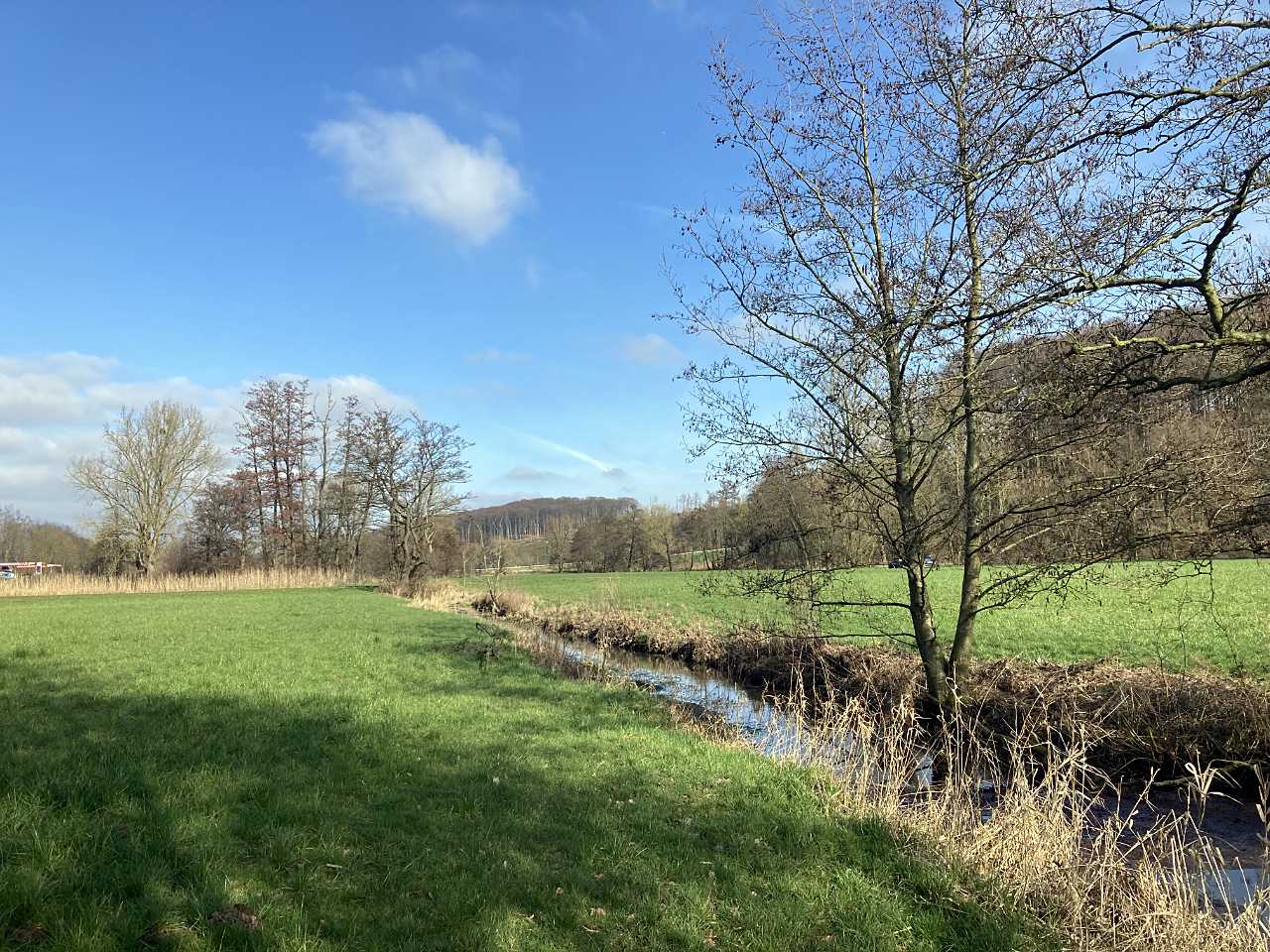
The Klosterwiesen near Gehrden, Höxter District © SPA
Your committed project donation will help us to pay the purchase price of the 3.2 hectares of the Klosterwiesen punctually and in accordance with the contract. The total of 79,600 euros includes ancillary purchase costs (notary fees, land transfer tax, and official permits.
Older projects of the month can be found in the archive
Copyright information for the image in the title bar:
"The Klosterwiesen with straightened stream course © SPA"

Just 30 years ago, Great Egrets were an absolute rarity in Germany. Today, they are a familiar sight in many places. The story of Egret K195 is particularly remarkable: since 2018, it has been turning up time and again in our Frose nature reserve during the summer... more information

Following the successful spring bird conservation camps on Cyprus and the Greek island of Zakynthos, our local bird conservationists in Cyprus are once again standing up to the illegal operations of bird poachers and hunters. Yet again, we need your active support so that we can continue our campaign against the slaughter of migratory birds this autumn ... to the project
Postbank Hannover IBAN: DE47 2501 0030 0905 9063 07 BIC: PBNKDEFF
Stiftung Pro Artenvielfalt Meisenstraße 65 33607 Bielefeld Germany Tel. (0049) 0521 2997-883 / -884 / -889 Fax (0049) 0521 2997-885 Office Mo - Fr. 09.00 to 16.00
Foundation Management team@stiftung-pro-artenvielfalt.org Project Management projekte@stiftung-pro-artenvielfalt.org Donations, Donor Care service@stiftung-pro-artenvielfalt.org
 Donate now