Land acquisition project: Drömling
|
|---|

|
Land acquisition project: Drömling
|
|---|
|
|
Extensive 340 km² fen basin on the state border of Saxony-Anhalt and Lower Saxony, which is crossed by the Mittelland Canal and drained by the Aller river to the west into the Weser and the Ohre river to the east into the Elbe.
The landscape existing today was created by extensive drainage and cultivation measures in the 18th century. It is characterized by extensive grassland areas, embedded forest islands and a close-meshed system of ditches, often overgrown with trees along their banks. The total of 1,725 km of watercourses has given the Drömling the nickname Land of a Thousand Ditches.
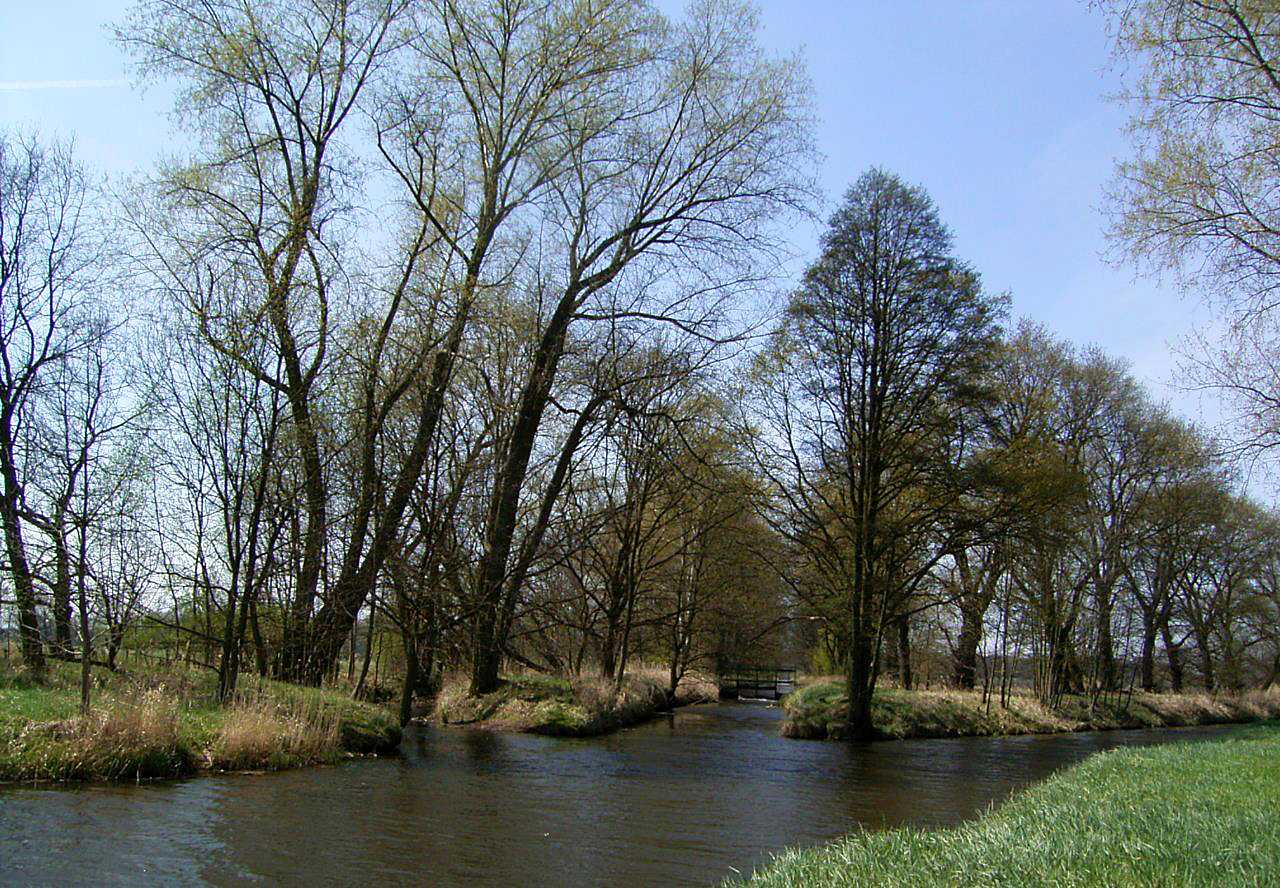
The Drömling – Land of a thousand ditches © SPA
The increasing dry seasons in winter and spring lower the groundwater level in the fen area and thus damage the wet fen meadows and the moor body. More and more peat ponds and small waterbodies dry up, which results in an increasing loss of habit and reproduction areas for amphibians and reptiles. This development reduces the food supply not only for storks and herons but also for meadow birds and birds of prey.
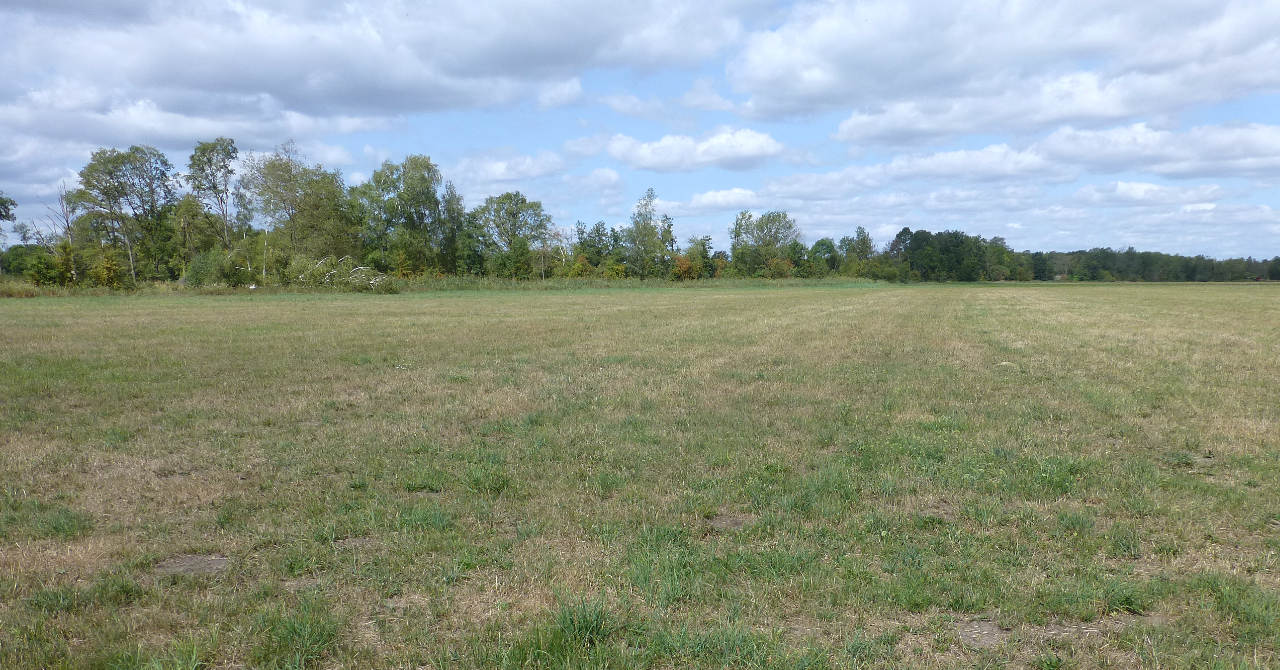
Lowland fen meadows endangered by periods of drought © SPA
The Ohre-Drömling Nature Reserve is the core of the larger protected area the Drömling. The protection is provided in particular for the preservation, restoration and development of the functionality of the natural balance in the entire Drömling. The aim of this protection is to achieve water levels in the core and wet zones of the Drömling leading to the preservation of the fen body. The existing open meadow and pasture habitats are to be preserved and developed through site-adapted farming management.
Some 450 species of ferns and flowering plants are found today in the Drömling Biosphere Reserve, of which 74 species are on the German Red List. The fauna of the Drömling is species-rich, with more than 40 species of mammals. 21 species are on the Red List, including the Eurasian Otter and the European Beaver.
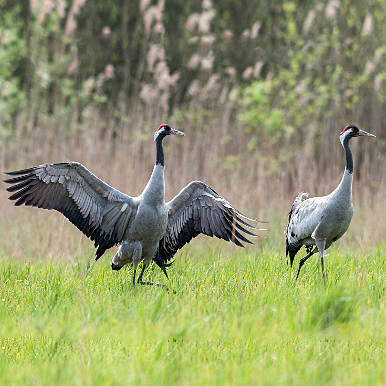
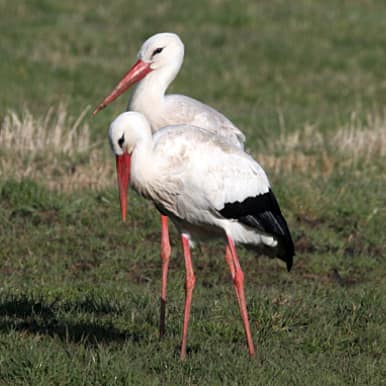
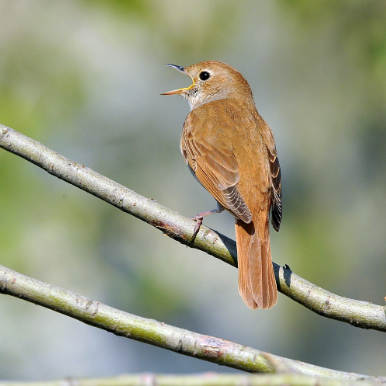
Bird life is particularly rich in species and individuals. The Common Crane stops over in the Drömling during migration and has made its home here with the first breeding pairs. The White Stork also breeds in the Drömling with some 50 breeding pairs. This is the largest population west of the Elbe in the new German federal states. The Black Stork, and two large Grey Heron colonies also find suitable habitats here. The Red Kite, Northern Lapwing, Golden Oriole, and the Common Nightingale are other bird species found here. The latter meets its eastern counterpart, the Thrush Nightingale, which has its western distribution limit in the Drömling.
In recent years, our Foundation has made a local contribution to the preservation of the diverse biotope structures with four exemplary projects in the Drömling.
1. Revitalised branch of the River Ohre - habitat for the Eurasian Otter
Near Calvörde, Saxony-Anhalt, we revitalised an old silted-up arm of the river by excavating 700 m³ of soil and reconnecting it to the River Ohre, thus creating valuable new habitat for the Eurasian Otter and many other wildlife species such as mussels, fish, dragonflies and the Common Kingfisher.
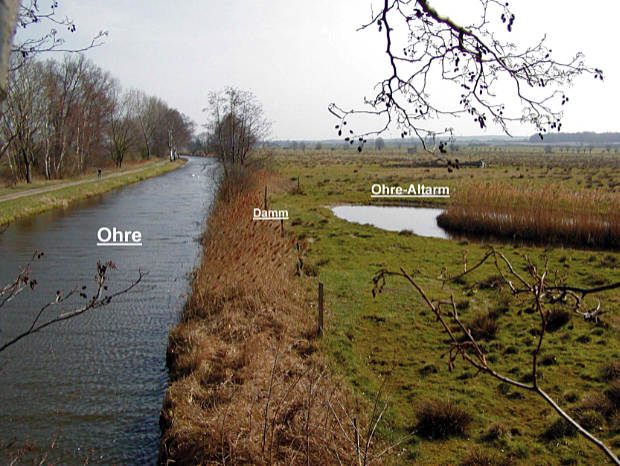
Silted-up Ohre oxbow lake (r.) © SPA
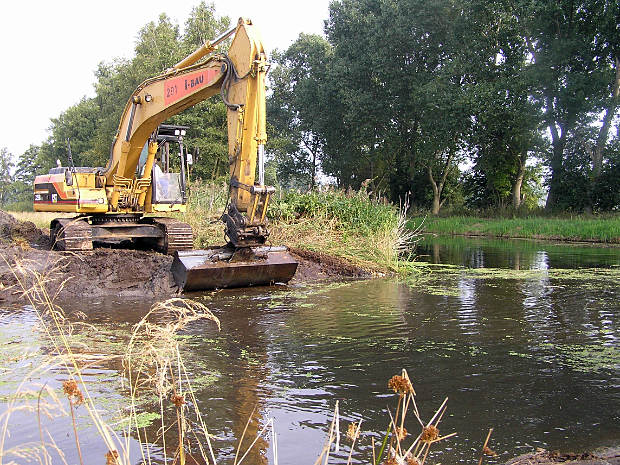
Reconnection of the oxbow to the Ohre © SPA
No less than ten different authorities had to approve this construction measure, which improves the landscape and the water and thus enhances the biotope!
Eurasian Otter, White Stork
2. Shallow water biotope - habitat for the Common Crane
Thanks to the years of consistent implementation of a comprehensive nature conservation concept by the local nature park administration in cooperation with local farmers, the number of breeding White Stork pairs and other meadow birds (e.g. Eurasian Curlew) has gradually increased.
To create an additional water-washed nesting site with safe breeding islands for the first pairs of breeding cranes, in coordination with the then nature park administration we created a Common Crane breeding biotope with two shallow water lakes, involving the excavation of 4,800 m³ of peat soil and sand. Since the 2008 breeding season, a pair of cranes successfully raised 1-2 young in the perfectly ingrown and secure breeding site every year up to 2017.
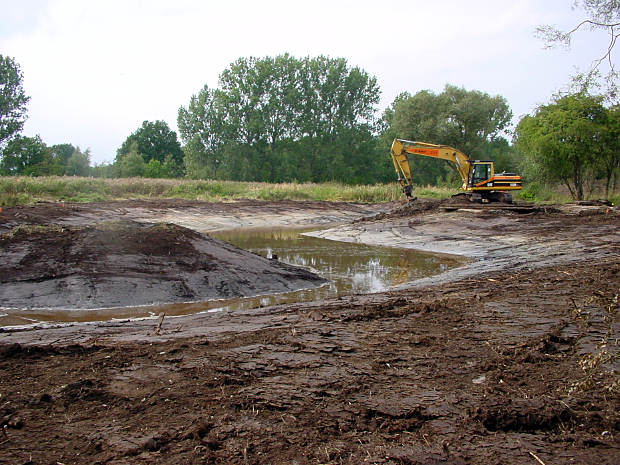
Reconstruction of the Common Crane biotope © SPA
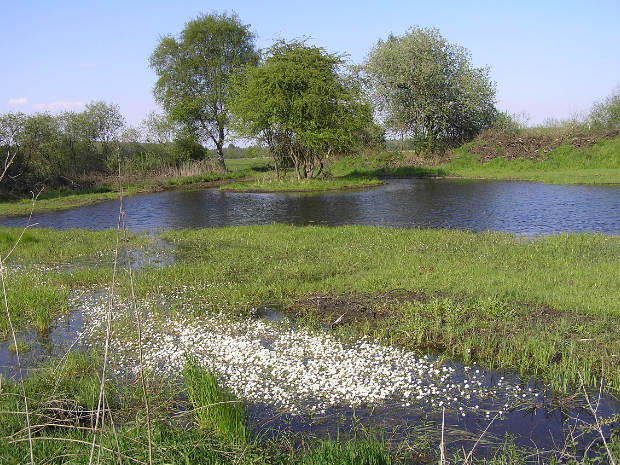
The new Common Crane biotope 9 months later © SPA
Since 2018 and currently, the Common Crane biotope has dried up due to decreasing rainfall and the sinking groundwater level, and renaturation currently seems to be unpromising.
Common Crane, European Tree Frog
3. Wet meadows - feeding grounds for the White Stork
Despite diverse protection efforts and state-specific bans on ploughing up grassland it continues to disappear, and suitable White Stork habitat is becoming scarcer. The springs, which are gradually drying up, make it more difficult for the White Storks to successfully raise their young since the young birds can only swallow earthworms in the first 10 days of life.
The battle for every square metre of wet grassland, flood plain, hay meadow and hay pasture is well worth fighting. Our small contribution to the large wet meadow protection goal in the Drömling is the purchase of 1.4 ha of wet grassland for extensive use as a hay meadow by a local farm and the protection of ditches, which are the habitat of the European Tree Frog.
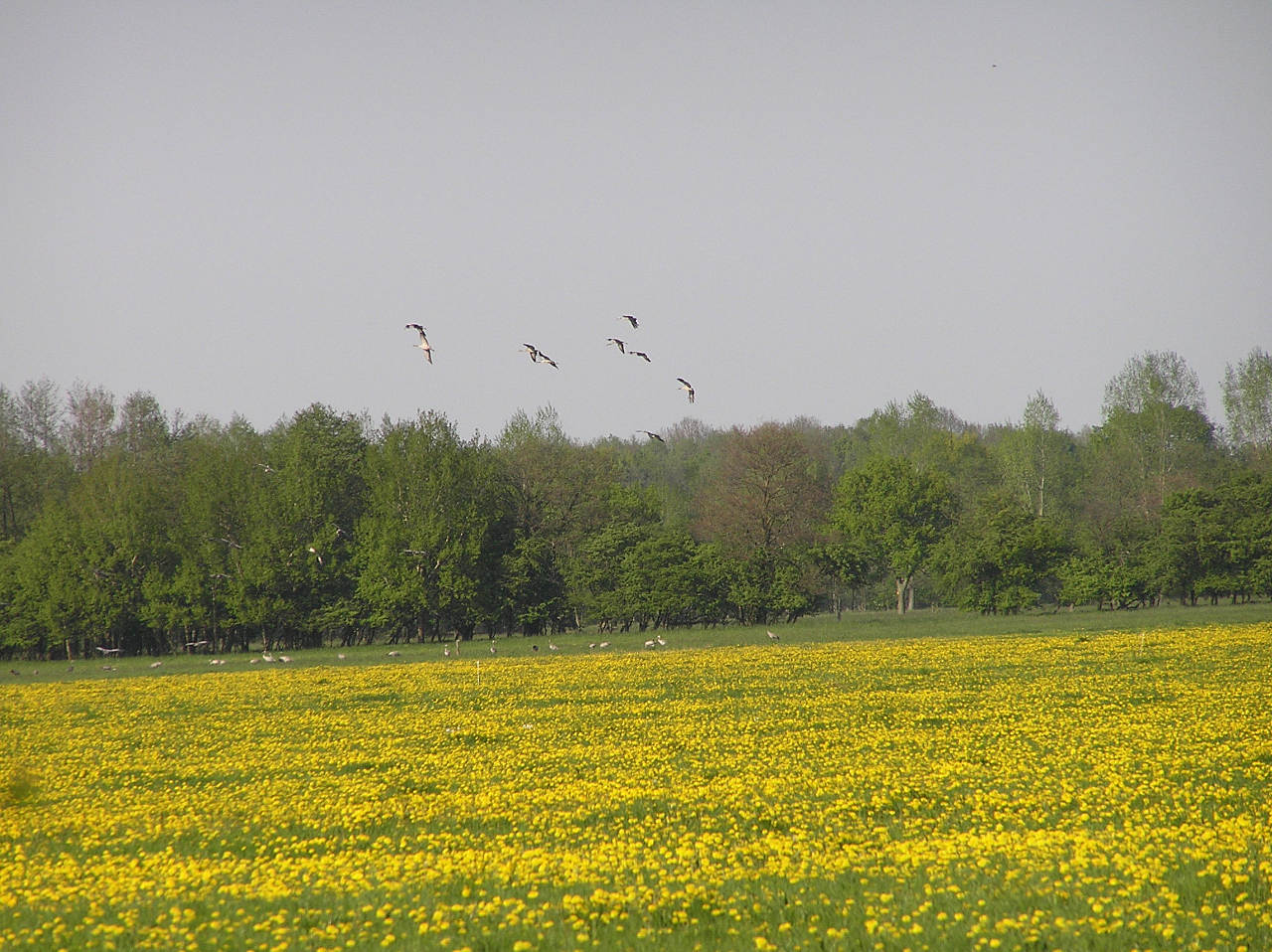
Wet meadows in Drömling – Habitat for variety of wildlife and plant species © SPA
White Stork, European Tree Frog
4. Farm Garden biotope - habitat for the Common Nightingale
With the purchase of a former 0.3 ha farm garden with 2 bog ponds, we have successfully implemented our fourth biotope protection project in Buchhorst, in the central part of the Drömling. The former garden biotope, which is now permanently protected, with solitary trees, wild hedges, two moor ponds and tall herb meadows, secures a valuable habitat for typical bird species of the structurally rich garden biotopes such as the Nightingales, Yellowhammer, Tree Sparrow and Eurasian Blackcap. The two warm, shallow- water moor ponds - surrounded by willow bushes - have become a rare habitat for the European Tree Frog and also serve as feeding grounds for the White Stork pair that breeds in the immediate vicinity!
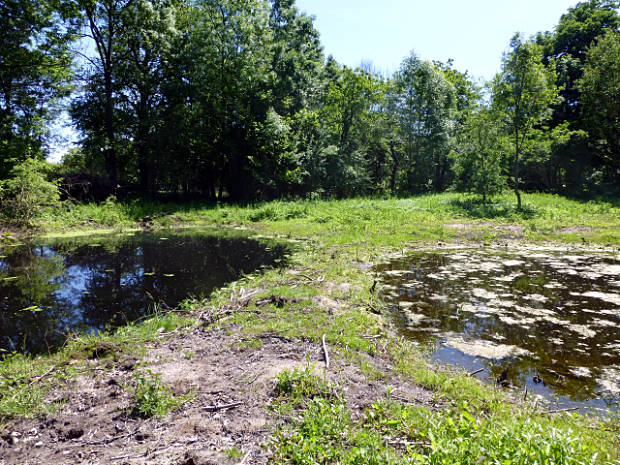
Our farm garden with wet biotope © SPA
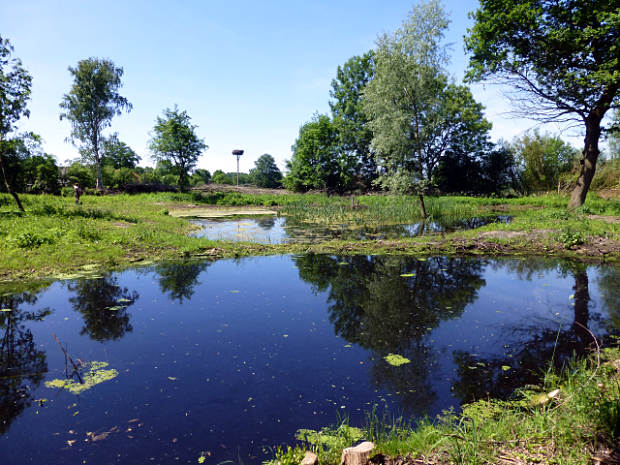
Feeding grounds for the neighbouring White Stork pair © SPA
White Stork, European Tree Frog, Common Nightingale
Common Crane
© Leo/fokus-natur
White Stork
© FotoNatur
Common Nightingale
© L. Hlasek
Eurasian Otter
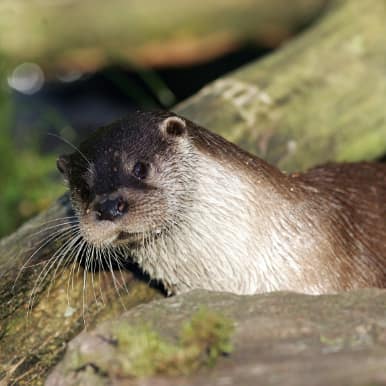
© FotoNatur
European Tree Frog
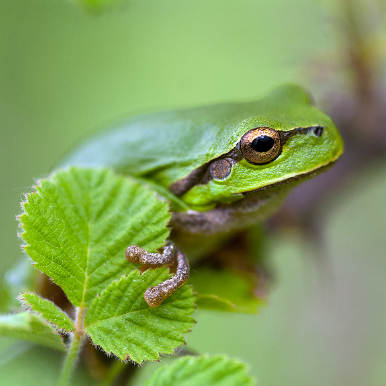
© Leo/fokus-natur
Your donation helps us to purchase further ecologically-valuable plots of land.
The information on the copyrights of the images used on this site can be found at Copyrights, unless these are already indicated in or below the image.

Just 30 years ago, Great Egrets were an absolute rarity in Germany. Today, they are a familiar sight in many places. The story of Egret K195 is particularly remarkable: since 2018, it has been turning up time and again in our Frose nature reserve during the summer... more information

Following the successful spring bird conservation camps on Cyprus and the Greek island of Zakynthos, our local bird conservationists in Cyprus are once again standing up to the illegal operations of bird poachers and hunters. Yet again, we need your active support so that we can continue our campaign against the slaughter of migratory birds this autumn ... to the project
Postbank Hannover IBAN: DE47 2501 0030 0905 9063 07 BIC: PBNKDEFF
Stiftung Pro Artenvielfalt Meisenstraße 65 33607 Bielefeld Germany Tel. (0049) 0521 2997-883 / -884 / -889 Fax (0049) 0521 2997-885 Office Mo - Fr. 09.00 to 16.00
Foundation Management team@stiftung-pro-artenvielfalt.org Project Management projekte@stiftung-pro-artenvielfalt.org Donations, Donor Care service@stiftung-pro-artenvielfalt.org
 Donate now