Land acquisition project: Island of Hiddensee
|
|---|

|
Land acquisition project: Island of Hiddensee
|
|---|
|
|
The Baltic Sea Island of Hiddensee, with its almost 17 km long sandy beaches, its sand dunes partly covered with pine trees, the rare dune heath and the constantly changing coastline, is definitely one of the most valuable and beautiful natural landscapes in Germany. Parts of the Baltic Sea Island belong to the Vorpommersche Boddenlandschaft National Park, which is supplemented by the approx. 75.0 ha Dünenheide Hiddensee (dune heath) Nature Reserve near the village of Vitte. The dune heath is the result of centuries of overuse of the poor, sandy soil by sheep grazing and the use of raw humus from the heath as stable bedding.
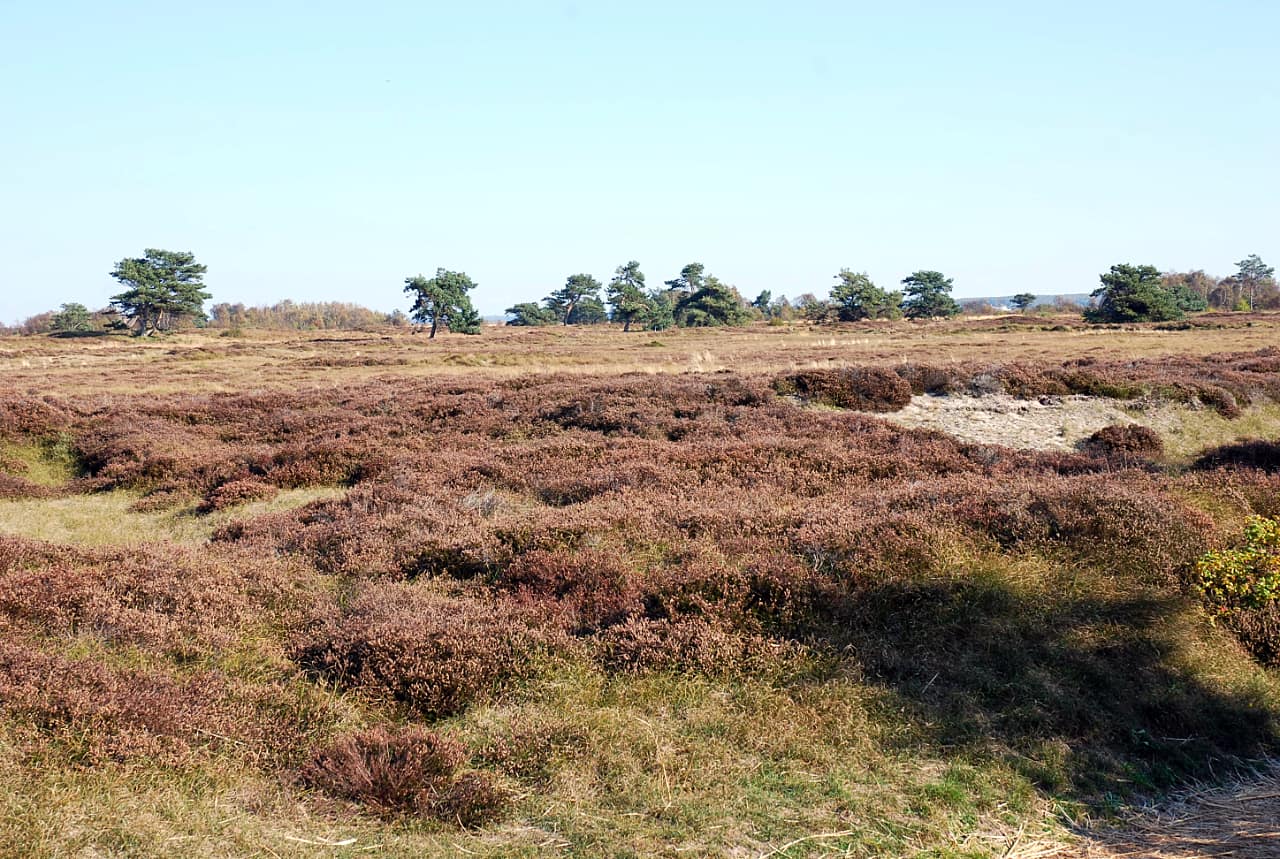
Dune heath on Hiddensee © SPA
Unfortunately, this strictly protected natural idyll is still abused by disruptive leisure activities such as cycling, hiking and photography by those who have little time for nature and its wonderful wildlife, despite the nature reserve regulations in force!
The invasion by woody plants such as Birch, late-flowering Bird Cherry and Blackberry into the open heath areas leads to shading of the herbaceous layer and increased humus formation. This restricts the development of open heathland.
In late autumn 2010, after lengthy negotiations, we succeeded in signing a purchase contract for more than 13,300 m² (1.3 ha) of valuable property in the centre of the Dünenheide Hiddensee (dune heath).

Foundation plots in the Dünenheide Hiddensee © SPA
Our ecologically valuable plots of land in the central area of the dune heath include coastline areas, parts of the dune wall and dune heath areas. The latter offer important stop-over and feeding areas, especially for the Eurasian Whimbrel, resident in northern Europe, on its up to 15,000 km long migration, to the coasts of South East Asia and West Africa beginning in July. Here the Whimbrel finds the Crowberry, a dwarf shrub of the dune heath, the berries of which provide vital energy reserves for its long migration journey.


Crowberries – A dwarf shrub on the dune heath critical for the survival of the Eurasian Whimbrel © SPA
In order to safeguard these unique dune heath biotope areas, we finance biotope-adapted landscape conservation measures such as removal of the late-flowering Bird Cherry and the rejuvenation of the partially over-aged heathland by backbreaking hand-weeding, to tear out the old heather bushes, so that open areas for resettlement and rejuvenation of the heath are created.
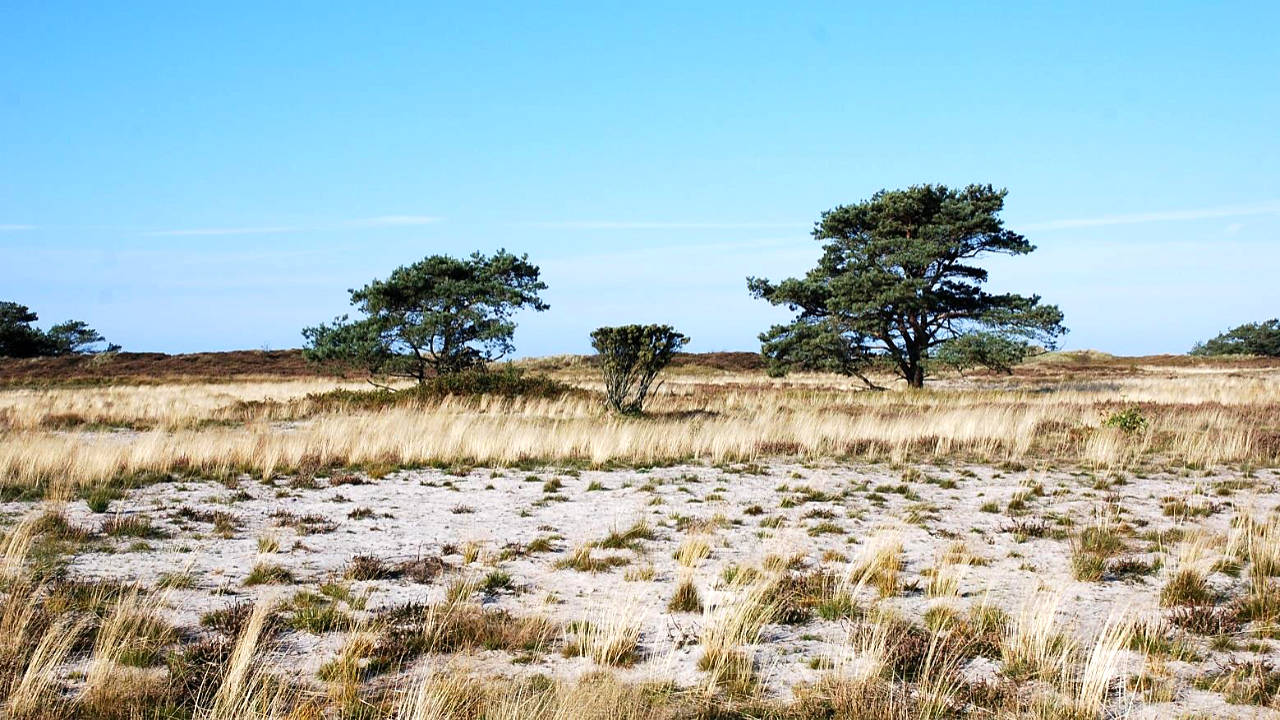
The Dünenheide Hiddensee: new settlement after hand weeding. © SPA
We are very interested in the purchase of further property plots in the Dünenheide Hiddensee (dune heath) nature reserve.
Eurasian Whimbrel, Red-backed Shrike, Crested Lark, Silver-studded Blue, Common European Viper
Eurasian Whimbrel
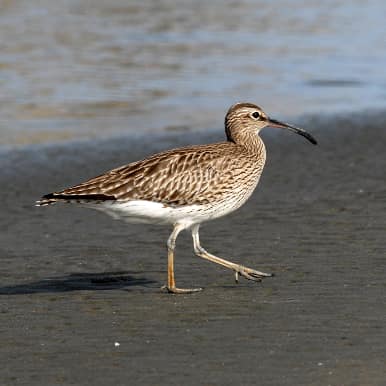
© FotoNatur
Red-backed Shrike
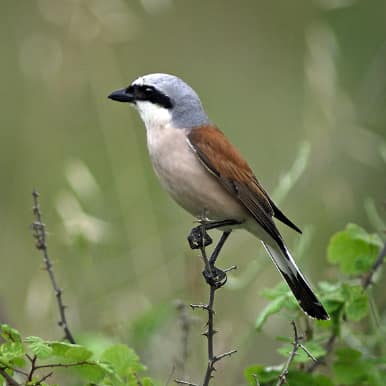
© Leo/fokus-natur
Crested Lark
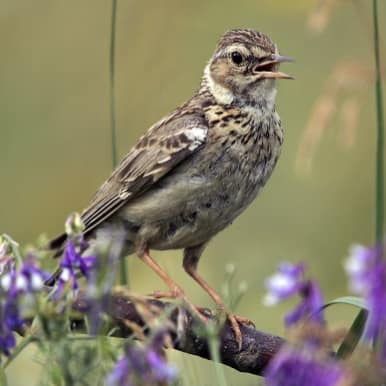
© Pröhl/fokus-natur
Silver-studded Blue
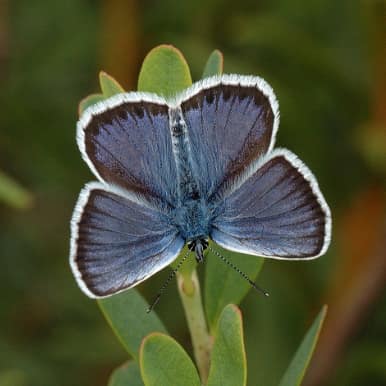
© L. Hlasek
Common European Viper

© Leo/fokus-natur
Your donation helps us to purchase further ecologically-valuable plots of land.
The information on the copyrights of the images used on this site can be found at Copyrights, unless these are already indicated in or below the image.

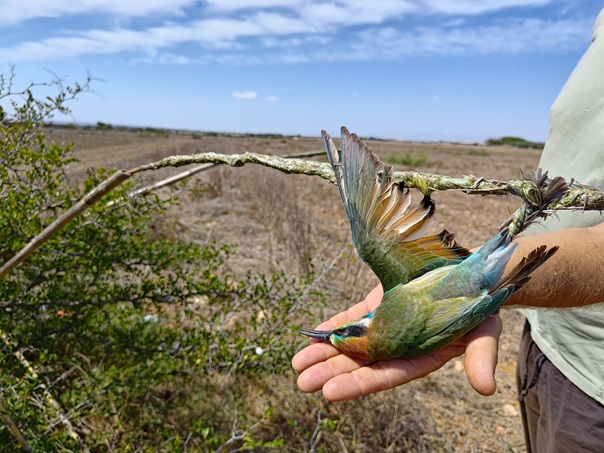
The relative lull on the spring bird-killing front in Cyprus didn't last into the autumn migration season: There is widespread trapping and killing, involving hundreds of illegal limesticks and mist nets. Cypriot bird poachers and hunters operating illegally are (unfortunately) living up to our worst expectations during this year’s autumnal bird migration.... more information
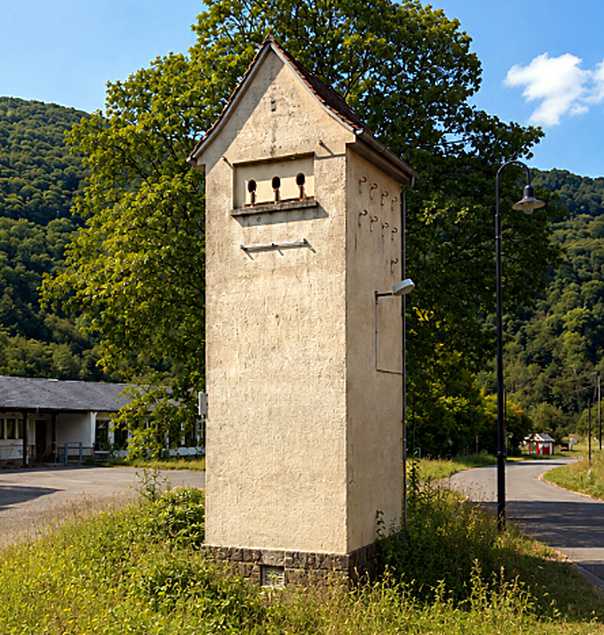
Five years after taking over a disused transformer tower in the Ahr Valley, work is now beginning on converting it into a species conservation tower. Situated right next to a nursery school, it will provide a new refuge for Common Kestrels, Barn Owls, House Martins, Sparrows, Common Swifts, bats and many other building-dwelling species – as well as a nature discovery area for children. Please help us to make this very special species conservation project in Hönningen a reality ... to the project
Postbank Hannover IBAN: DE47 2501 0030 0905 9063 07 BIC: PBNKDEFF
Stiftung Pro Artenvielfalt Meisenstraße 65 33607 Bielefeld Germany Tel. (0049) 0521 2997-883 / -884 / -889 Fax (0049) 0521 2997-885 Office Mo - Fr. 09.00 to 16.00
Foundation Management team@stiftung-pro-artenvielfalt.org Project Management projekte@stiftung-pro-artenvielfalt.org Donations, Donor Care service@stiftung-pro-artenvielfalt.org
 Donate now