Land acquisition project: Nordhausen
|
|---|

|
Land acquisition project: Nordhausen
|
|---|
|
|
The Rüdigsdorfer Schweiz is a hill country landscape with elevations up to 350 m AMSL near Rüdigsdorf in the district of Nordhausen in Thuringia (Germany).
This landscape is the last intact gypsum karst area in Thuringia and was designated as nature reserve in 1957, covering some 3 km². Subsequently, the EU declared the gypsum karst area, with numerous sinkholes, a protected natural heritage site.
Sinkholes are sometimes rugged depressions on the earth's surface caused by the collapse of non-water-soluble top layers over a natural cavity in the subsoil. The cause of the cavity formation is the dissolving effect of the water on easily soluble rocks such as rock salt, gypsum and limestone in the subsoil. Sinkholes are karst phenomena typical of and relatively common in the gypsum karst region of the southern Harz. There are an estimated 8,000 such sinkholes in Thuringia.
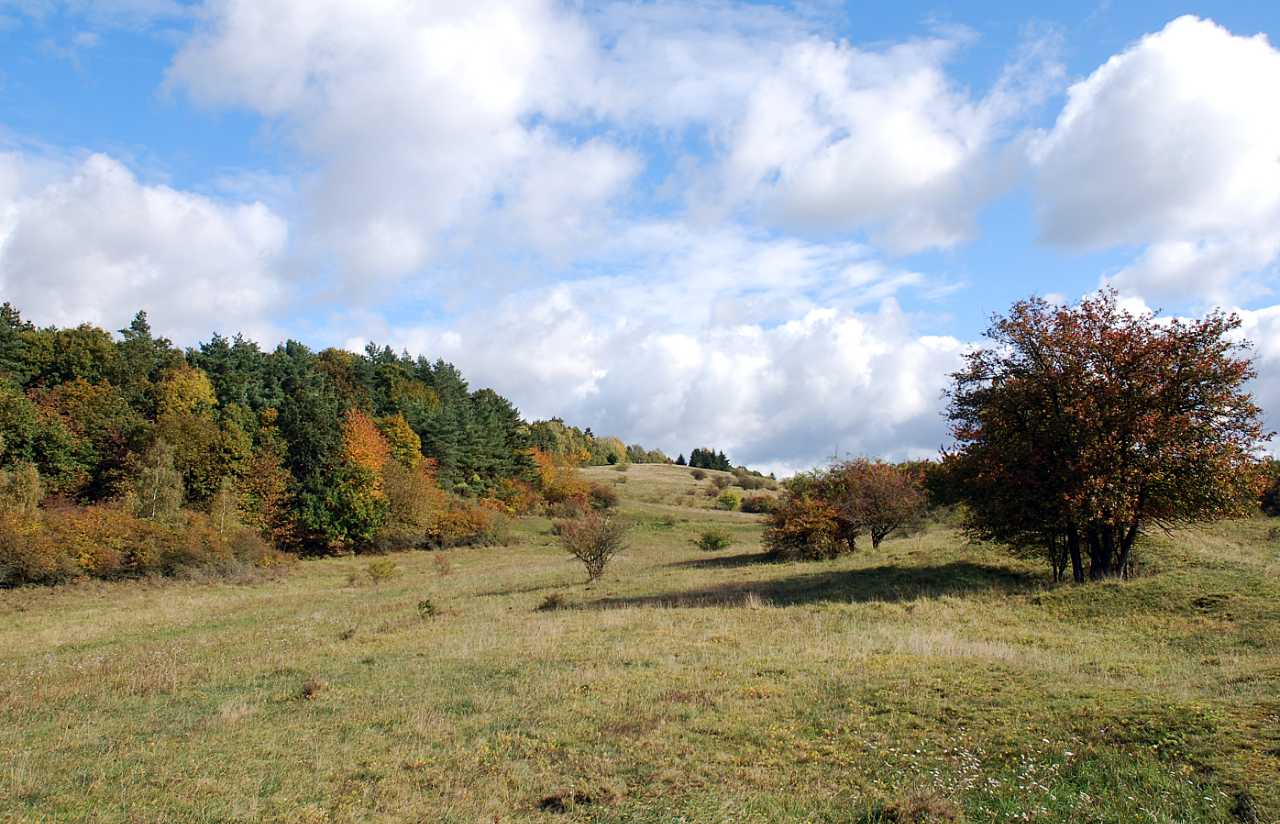
Our autumnal Foundation plots in the Rüdigsdorfer Schweiz © SPA
In the 20th century, around a third of the natural gypsum karst landscape in the Rüdigsdorfer Schweiz was destroyed by gypsum mining.
On 9 March 2004, the Prime Minister of Thuringia announced the end of the planned gypsum open-cast mines in the Rüdigsdorfer Schweiz. On 27 April 2004, the Thuringian cabinet approved the inclusion of the planned quarrying areas on Winkelberg and in Harzfelder Holz in the Günzdorf area in the FFH late registrations. Both sites will now be included in the Rüdigsdorfer Schweiz Nature Reserve.
The gypsum industry has not yet withdrawn its Rüdigsdorf Winkelberg (Südharzer Gipswerk) and Neustadt/Günzdorf (BPB Formula) mining applications and is working on new plans for partially underground gypsum extraction in order to retain a foothold in Rüdigsdorfer Schweiz.
Gypsum quarrying was planned to resume in early 2005 but was prevented by protests from residents. The continued interest of the gypsum industry is based on existing mining rights.
The southern exposed forest and hedge fringes, and the hill country meadow areas on the Winkelberg, often offer snow-free areas even in winter - and thus an ideal, mouse-rich hunting ground for the shy European Wildcats that still live there.
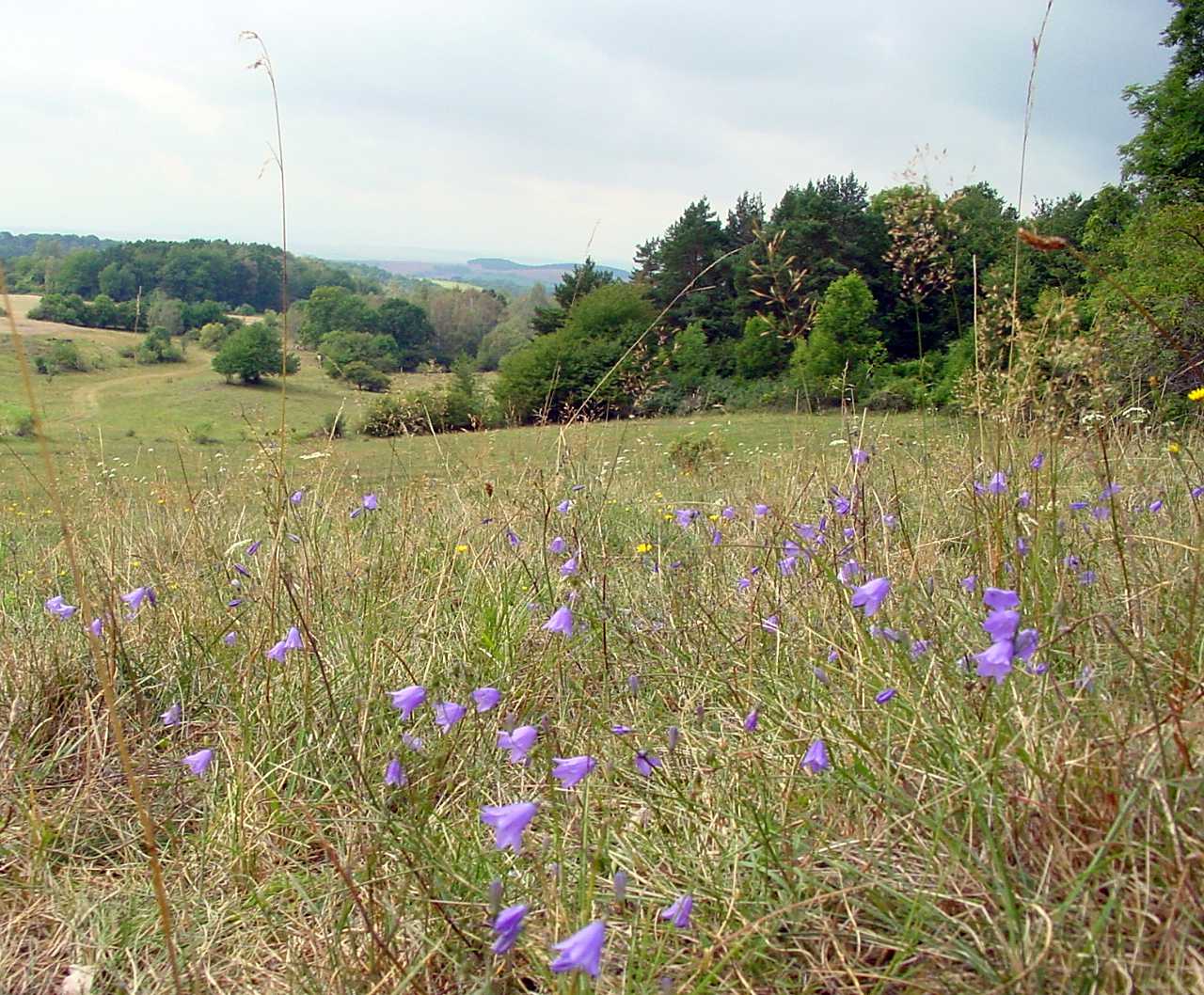
Our hill country meadow plots - habitat for the European Wildcat © SPA
A research project by the Technical University Dresden established that the European Wildcat population in the Harz Mountains function as a source population for surrounding former wildcat habitats. The European Wildcat is now being resettled from this source population.
Thanks to the thin layer of humus and dry subsoil, the hill country meadows, extraordinarily rich in flowers, provide a home for more than 300 butterfly and wild bee species, many of them on the German and Thuringia Red Lists. This represents an irreplaceable and rare habitat that has already disappeared in many places.
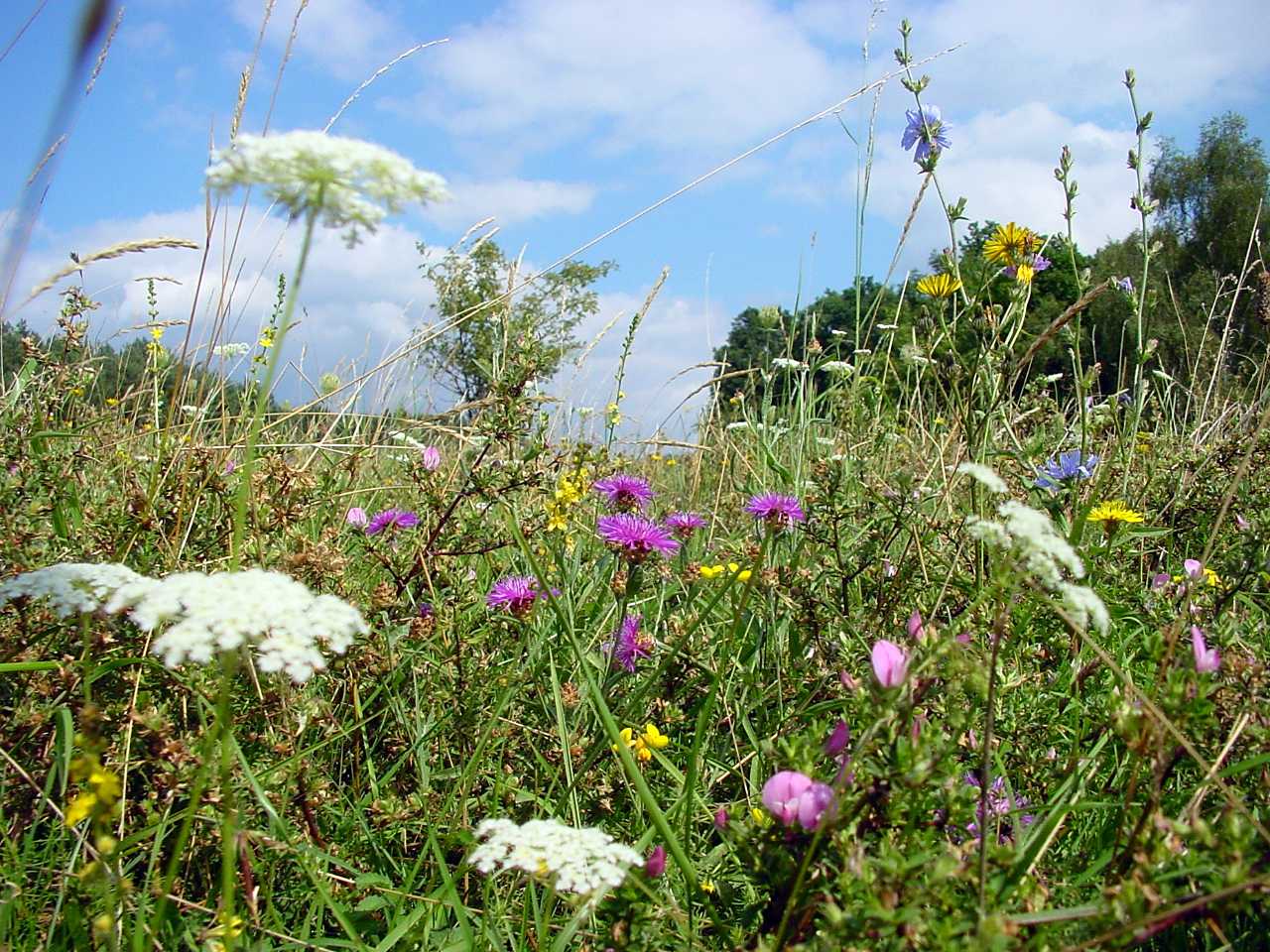
Our blossoming hill country meadows - habitat for numerous butterfly and wild bee species © SPA
For more than four years, we struggled to buy 12.8 ha of hill country meadows and dry gypsum karst grassland in the Rüdigsdorfer Schweiz in the southern Harz mountains near Nordhausen. Species-rich gypsum karst rough pasture, with an incredible variety of flowering plants, grow on the areas used as a police training ground in GDR times because they were temporarily unused for farming. These provide a valuable, irreplaceable habitat for more than 300 butterfly and moth species, many of them on the German and Thuringian Red Lists. The moths are, in their turn, an ideal food source for several bat species, which are found here in large numbers.
To protect and preserve the hill country rough meadows with their variety of flowering plants, we offered a shepherd roaming herd grazing rights for some 300 sheep and several goats. These rights may be exercised once a year in the period following plant flowering and seeding. The sheep spend the night in a mobile pen. The migratory flock grazing prevents the nutrient-poor grassland from becoming overgrown, reduces the biomass on the meadows and prevents the concentrated fertilisation of the meadows with sheep manure.
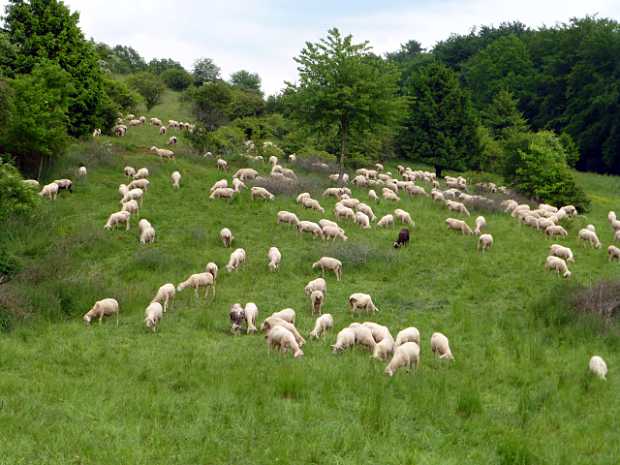
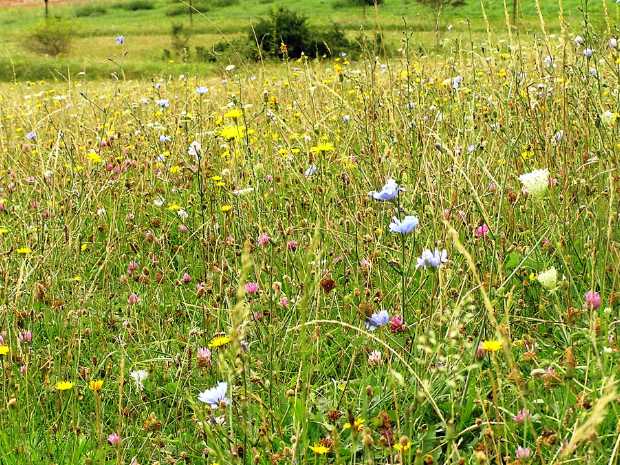
Animal landscapers help to preserve species-rich mountain flower meadows © SPA
Should the gypsum mining permits on the Winkelberg in the Rüdigsdorfer Schweiz Nature Reserve be renewed on appeal, we will react accordingly to effectively legally represent our species-protecting property interests in this nationwide endangered special biotope type with its diversity of Red List insect species.
European Wildcat, Greater Mouse-eared Bat, Green Woodpecker, Red-backed Shrike, Swallowtail and 300 other butterfly species
European Wildcat
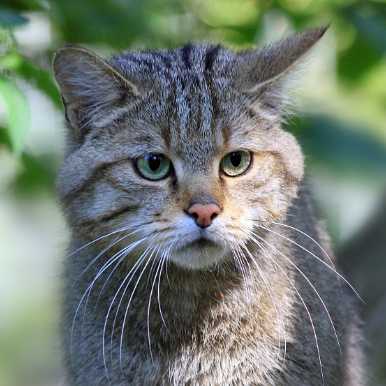
© H. Grabe
Green Woodpecker
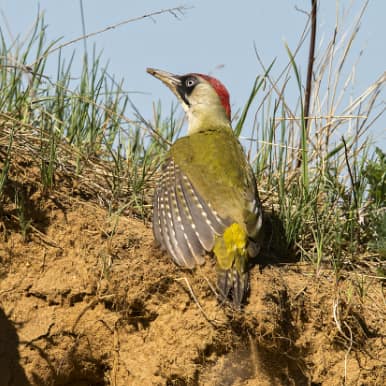
© Leo/fokus-natur
Red-backed Shrike
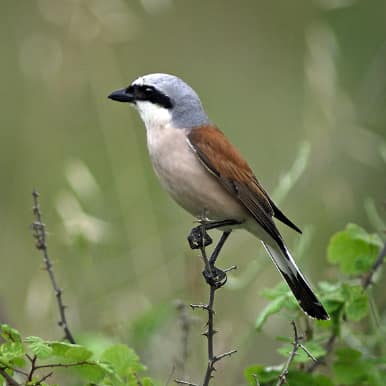
© Leo/fokus-natur
Greater Mouse-eared Bat
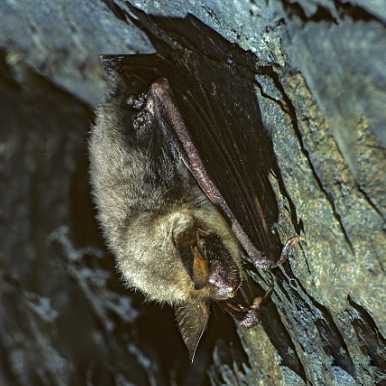
© Leo/fokus-natur
Swallowtail
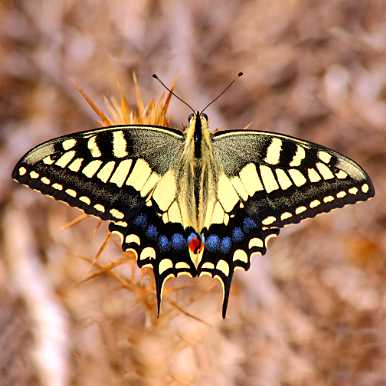
© SPA
Marbled White
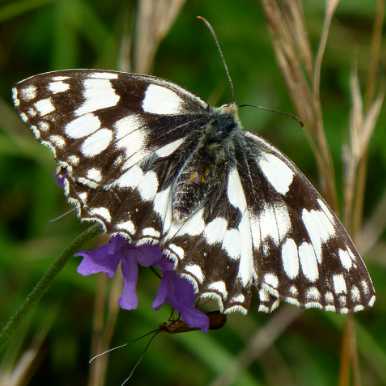
© SPA
Your donation helps us to purchase further ecologically-valuable plots of land.
The information on the copyrights of the images used on this site can be found at Copyrights, unless these are already indicated in or below the image.

Just 30 years ago, Great Egrets were an absolute rarity in Germany. Today, they are a familiar sight in many places. The story of Egret K195 is particularly remarkable: since 2018, it has been turning up time and again in our Frose nature reserve during the summer... more information

Following the successful spring bird conservation camps on Cyprus and the Greek island of Zakynthos, our local bird conservationists in Cyprus are once again standing up to the illegal operations of bird poachers and hunters. Yet again, we need your active support so that we can continue our campaign against the slaughter of migratory birds this autumn ... to the project
Postbank Hannover IBAN: DE47 2501 0030 0905 9063 07 BIC: PBNKDEFF
Stiftung Pro Artenvielfalt Meisenstraße 65 33607 Bielefeld Germany Tel. (0049) 0521 2997-883 / -884 / -889 Fax (0049) 0521 2997-885 Office Mo - Fr. 09.00 to 16.00
Foundation Management team@stiftung-pro-artenvielfalt.org Project Management projekte@stiftung-pro-artenvielfalt.org Donations, Donor Care service@stiftung-pro-artenvielfalt.org
 Donate now