Land acquisition project: Obersdorfer Vorder- & Hintersee
|
|---|

|
Land acquisition project: Obersdorfer Vorder- & Hintersee
|
|---|
|
|
The Obersdorfer Vordersee, and the Obersdorfer Hintersee, with an area of some 64 ha and 13 ha, respectively, are clear water lakes with depths of 6 m to 40 m in the Märkisch-Oderland District.
There are three circular islands in the Obersdorfer Vordersee with mixed deciduous woodland, still largely natural and undisturbed. The lakeshore is lined with sections of a reed belt from 1.0 to 3.0 m in width.
Reed beds, alder marsh woodland, adjacent wet meadows and cultivated grassland surround the Obersdorfer Hintersee.
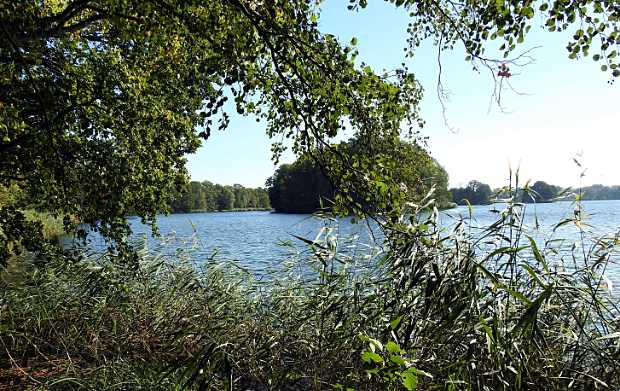
View to the east across the northerly part of the Obersdorfer Vordersee © SPA
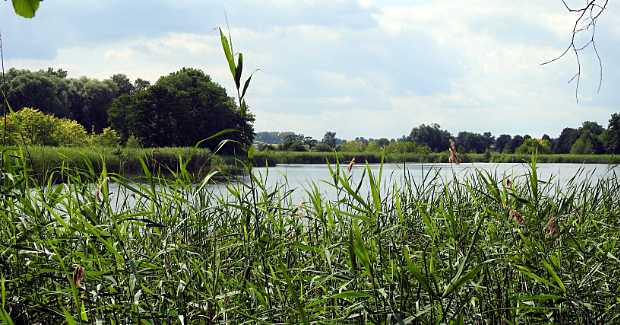
View to the south across the Obersdorfer Hintersee © SPA
Except for short stretches of open shore, the Vordersee is framed by a narrow belt of mixed deciduous woodland consisting of ash, linden, elm, and oak trees. Protected only by an up to 20 m wide fringe of trees and shrubs, the northern side of the Hintersee borders on mono-structured, intensively used farmland.
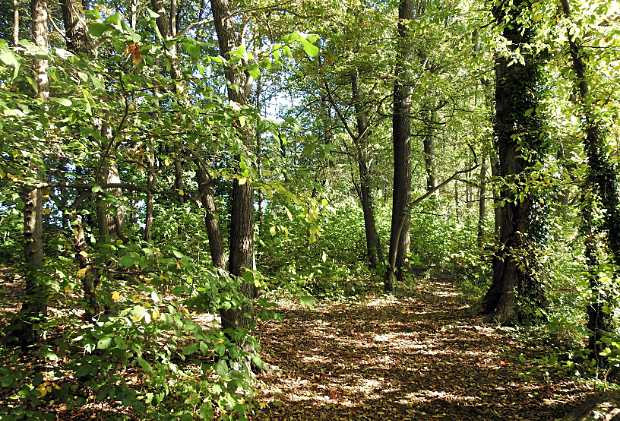
Mixed woodland fringes the northern part of the Vordersee © SPA

Wet meadow countryside around the Obersdorfer Hintersee © SPA

Mono-structured farmland north of the Obersdorfer Hintersee © SPA
In GDR times, with its nutrient-polluted streams and drainage systems and high nitrogen loads (slurry), the mono-structured farmland suffocated the Vordersee for many years. It was marked out and designated a slurry high-load area by the district authorities in 1964. A period of four to five long years was needed for the recuperation of the Vordersee from this man-made poisoning and for it to gradually become a natural, intact water habitat again.
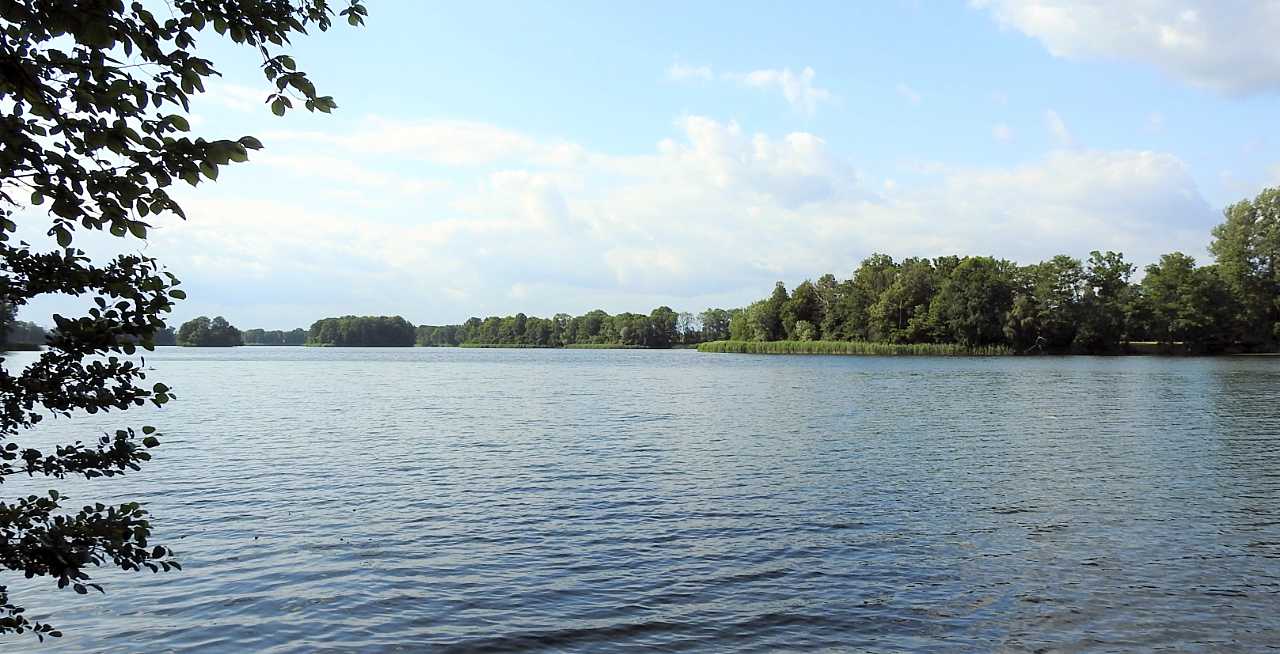
View to the west across the Obersdorfer Vordersee © SPA
Both lakes are part of an extensive nature reserve, which regrettably does not exclude their use for swimming, fishing and boating! The intensity of use is always the most critical and all-important question for the well-being of nature and biodiversity. Freshwater lakes are highly sensitive habitats that react very quickly to human disturbance. This leads to unrest on the lake with disruption of waterfowl, use of the reed and shore areas with abandonment and loss of nesting, breeding and hiding places for many wild animal species, and deteriorating water quality with a decline in amphibian, reptile and fish life.
If the use of the small bathing beach on the only publicly accessible shore area of the Obersdorfer Vordersee is restricted to the local and/or regional population, the Vordersee, with its diversity of birds, fish, amphibians and reptiles, can cope with the reduced disruption and stress.
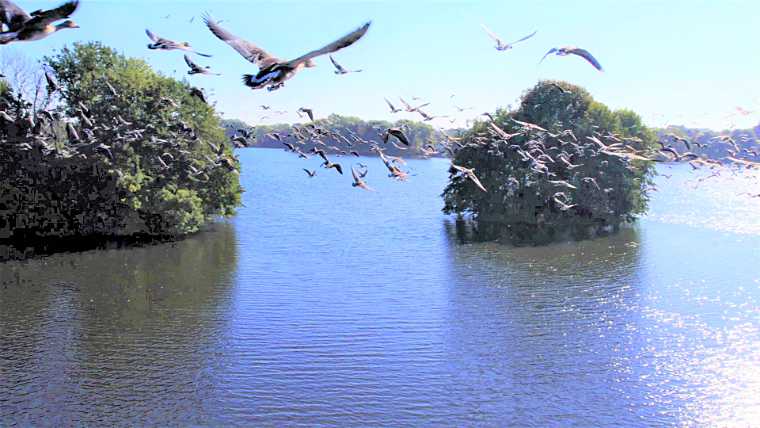
Greylag Geese on migration fly in to rest in the Obersdorfer Vordersee © SPA
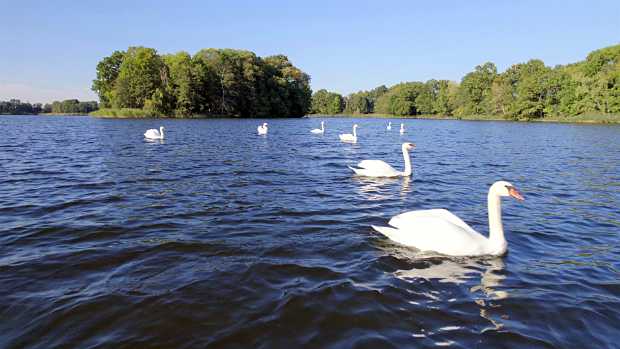
Mute Swans on the Obersdorfer Vordersee © SPA
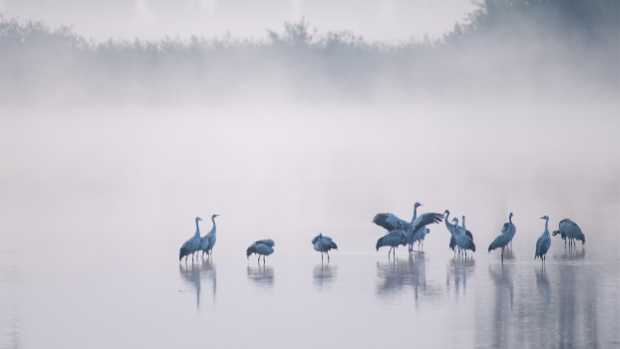
Common Cranes at their night roost © A. Kneifel
There is an urgent need to clarify the legal basis under water legislation by which farms that border on the Vordersee and Hintersee, and private garden owners abutting the Vordersee, regularly draw water, either officially or unofficially.
As long as the lake leaseholder and master fisherman Artur R. and his son actively engage in officially approved and sustainably practised fishing on the Vordersee, and continue to restrict the issuing of fishing licences, we are not concerned about the balance of the fish population. With the support of fish experts, we will initiate in future a gradual restructuring of the species structure of the fish fauna, especially in the Vordersee.

Roland Tischbier (r.) meets fisheries supervisor Artur R. (l.) at the Obersdorfer Vordersee © SPA
The increasing lack of precipitation in recent years has also led to a drop in water levels in the freshwater lakes in the north-eastern part of Brandenburg. It is not uncommon for water levels to have dropped by up to 0.5 m. Happily, this is far from the case with the Vordersee and Hintersee. Nonetheless, a drop in the water level of 'only' some 0.3 m means 231,000 m³ less water in the two lakes!
Our aims are the preservation and future safeguarding of the relative calm and undisturbed nature of this lake complex, including the reed beds along the banks and the tree-lined banks; termination of unauthorized water outtake from the Vordersee; restriction of bathing and swimming to the eastern parts of the lake; biotope improvement of at least one island in the lake by the construction of an osprey nesting platform.
Our lake tenant, the master fisherman Artur R. and his son, who have known the two lakes for decades, are responsible for ensuring this by keeping a watchful eye on the nature reserve regulations in force and monitoring our project goals.
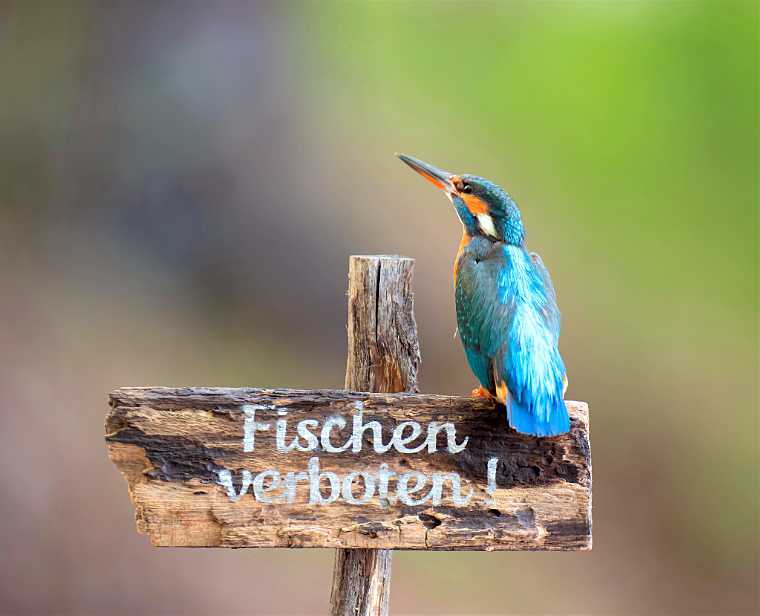
Common Kingfisher on sign © A. Kneifel
After short but intensive property negotiations, the exchange of species information and an extensive on-site visit to the Obersdorfer Seen, we arrived at a positive assessment of the ecological value of this property. We thus took a timely decision to purchase this lake complex with its total area of some 79 hectares and transfer the property to our Foundation.
With our planned purchase of further wet meadows and grassland areas between Vordersee and Hintersee and the adjacent alder marsh woodland, we aim to reduce land use adjacent to the lake. In this way, we will provide a habitat for more bird species that reside and breed in reedbeds, such as the Savi's Warbler, Sedge Warbler, Eurasian Reed Warbler, Marsh Warbler, Great Reed Warbler, Reed Bunting and Western Marsh Harrier. Such a habitat for breeding and rearing of young by these species has become rare elsewhere.
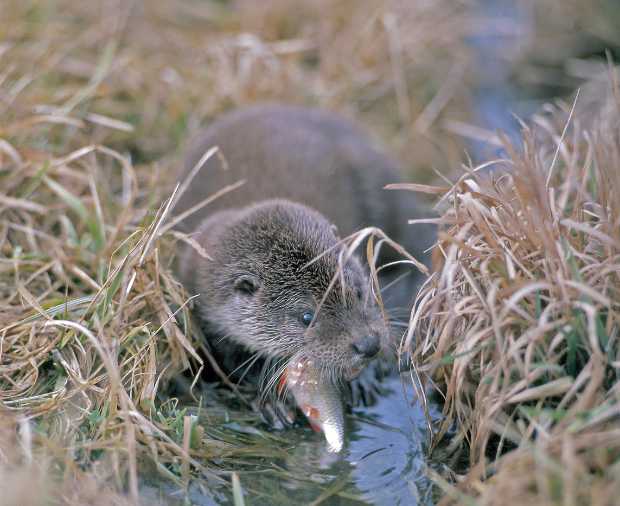
Eurasian Otter with prey © L. Hlasek
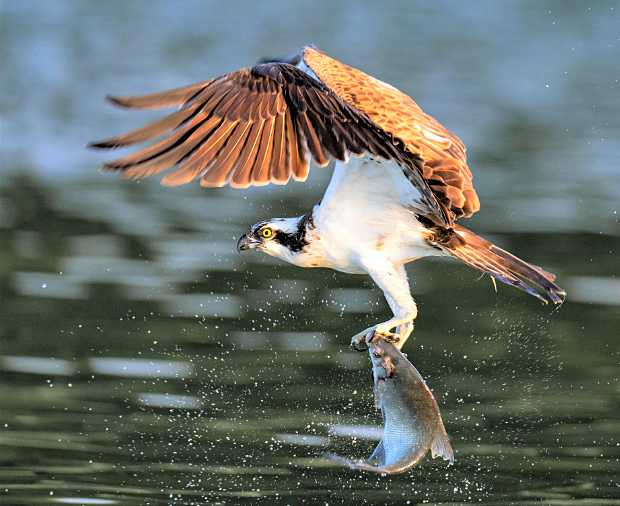
Osprey (feeding guest) hunting successfully © A. Kneifel
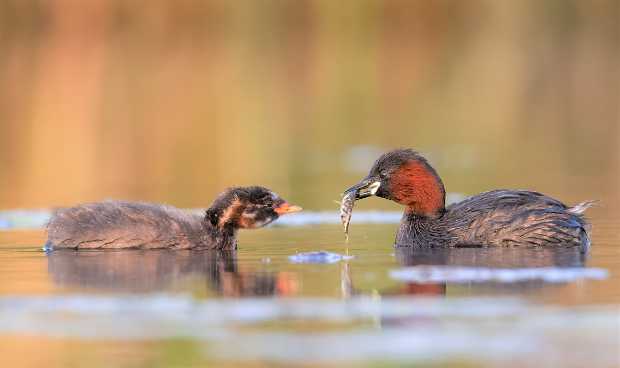
Little Grebe feeds its young © A. Kneifel
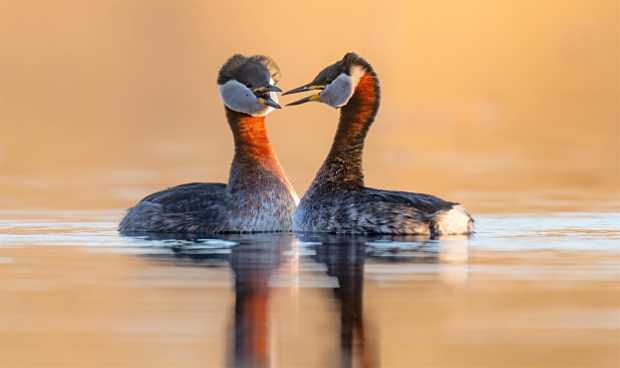
Red-necked Grebe pair courting © A. Kneifel
This would also benefit the Common Cuckoo, which is increasingly losing out in the face of climate change because its host birds return earlier and earlier from their winter quarters.

'Host' bird Eurasian Reed Warbler
© L. Hlasek

Young Common Cuckoo in Reed Warbler's nest
© L. Hlasek
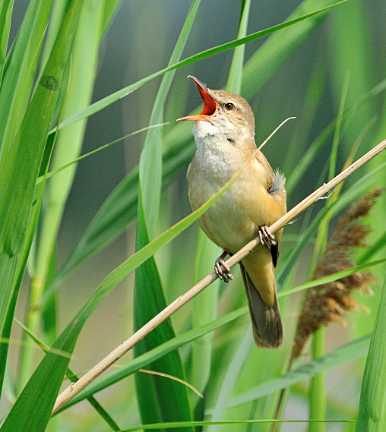
'Host' bird Eurasian Reed Warbler
© L. Hlasek
By the time the Cuckoo arrives in early to mid-May, their incubation by their host birds is so far advanced that chicks are already present in the nest, and the cuckoo egg laid in the foreign nest is no longer hatched.
Eurasian Otter, Common Crane, Common Snipe, Common Tern, Common Kingfisher, four Reed Warbler species, Gadwall, Eurasian Teal, Tufted Duck, Goldeneye, Osprey (feeding guest), White-tailed Eagle (feeding guest).
Common Snipe
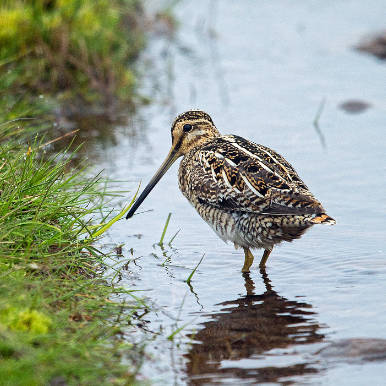
© Pröhl/fokus-natur
Common Tern
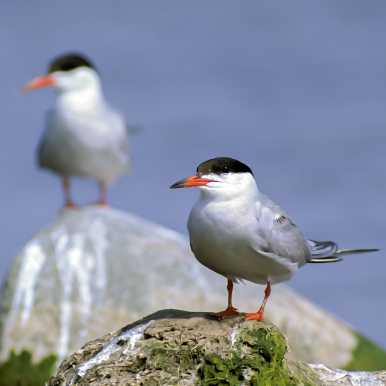
© Leo/fokus-natur
Common Kingfisher
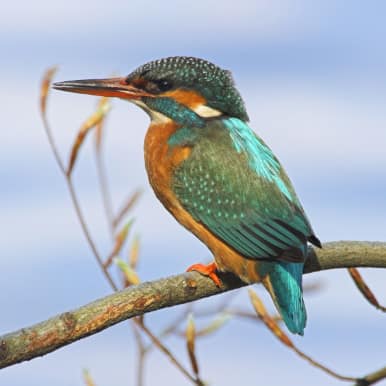
© Dr. P. Wernicke
Goldeneye
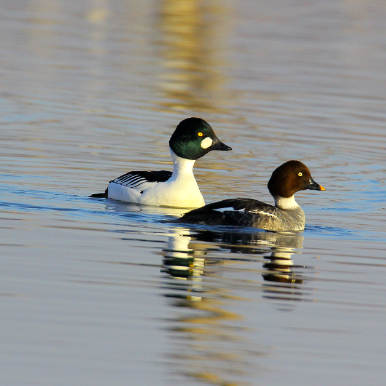
© U. Nielitz
Eurasian Teal
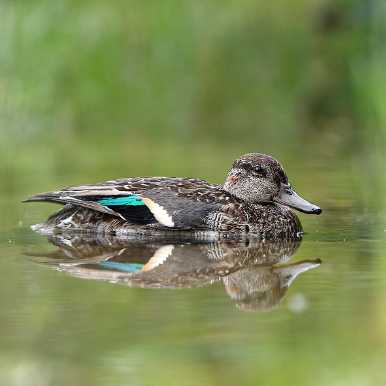
© Pröhl/fokus-natur
Gadwall
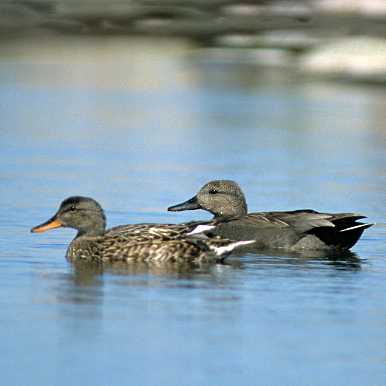
© Leo/fokus-natur
Your donation helps us to purchase further ecologically-valuable plots of land.
The information on the copyrights of the images used on this site can be found at Copyrights, unless these are already indicated in or below the image.

Just 30 years ago, Great Egrets were an absolute rarity in Germany. Today, they are a familiar sight in many places. The story of Egret K195 is particularly remarkable: since 2018, it has been turning up time and again in our Frose nature reserve during the summer... more information

Following the successful spring bird conservation camps on Cyprus and the Greek island of Zakynthos, our local bird conservationists in Cyprus are once again standing up to the illegal operations of bird poachers and hunters. Yet again, we need your active support so that we can continue our campaign against the slaughter of migratory birds this autumn ... to the project
Postbank Hannover IBAN: DE47 2501 0030 0905 9063 07 BIC: PBNKDEFF
Stiftung Pro Artenvielfalt Meisenstraße 65 33607 Bielefeld Germany Tel. (0049) 0521 2997-883 / -884 / -889 Fax (0049) 0521 2997-885 Office Mo - Fr. 09.00 to 16.00
Foundation Management team@stiftung-pro-artenvielfalt.org Project Management projekte@stiftung-pro-artenvielfalt.org Donations, Donor Care service@stiftung-pro-artenvielfalt.org
 Donate now