Project: Wiesmahd near Bad Kohlgrub
|
|---|

|
Project: Wiesmahd near Bad Kohlgrub
|
|---|
|
|
The Ammertal Alps and the upper Ammertal are known for their divine Wiesmahd landscapes, consisting of mountain meadows and semi-natural grassland. Very occasionally, such small-scale Wiesmahd areas are found in the fringe areas of the Murnauer Moos. These blooming uncultivated meadows are true treasure troves of nature, with a variety of flora and fauna that has long since disappeared almost everywhere else in the intensively cultivated pre-Alpine cultural landscape.
Arnica, orchids, gentian, devil's claw, carnation, mountain clover, cinquefoil - many flowering plants that still grow on the Wiesmahd areas in the Alpine foothills are among the endangered "Red List" species. At the same time, these flowering meadows are home to hundreds of insects such as wild bees, grasshoppers, beetles, spiders and ants in the optimal habitat of a carpet of grasses and herbs.
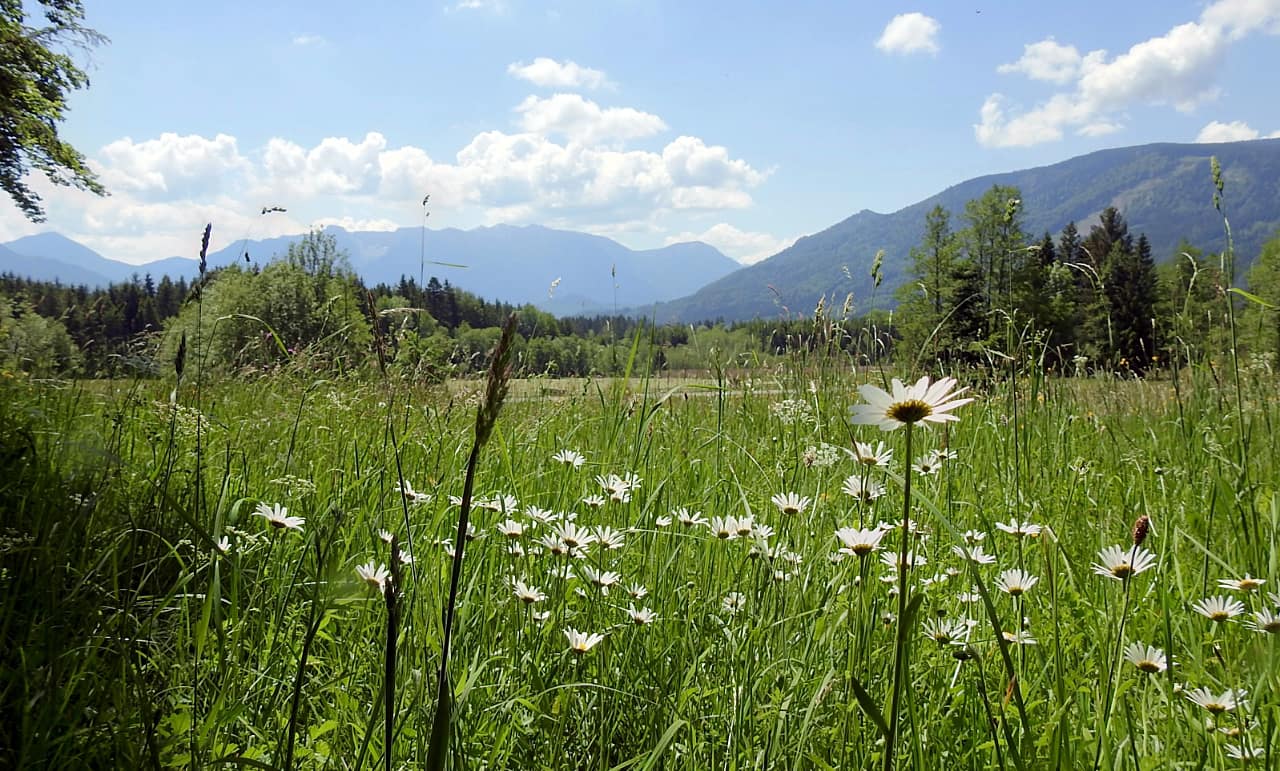
Summerlike Wiesmahd © SPA
Today's intensified farming forms of land use, also in the foothills of the Alps, can no longer do without fertiliser to increase the biomass and without repeated mowing for haymaking.
Where livestock farming is practised, there are too many animals (large livestock units) on the land, compacting the soil and suppressing the biodiversity of grasses and flowering plants with their feeding behaviour. As a result, the natural diversity of insects and small creatures is waning.
These threats denote the irretrievable destruction and thus the end of the semi-natural meadows.
What makes the semi-natural Wiesmahd areas so ecologically unique is the centuries-long renunciation of fertilisation because of the small area involved and their remote location: Additionally, the Wiesmahd areas are mown only once a year because of meagre growth and the cuttings harvested as hay. Traditionally, mowing takes place from mid-July at the earliest. The late pruning allows the flowering plants and grasses to shed their seeds before pruning and before the hay is brought in.
Today's rapid species loss means that preserving such unique species paradises is worth almost any price, if necessary, rescuing them by land purchase.
Based on a species inventory report by the Garmisch-Partenkirchen regional nature conservation agency, we successfully conducted a financial Wiesmahd rescue operation in spring 2020 to prevent a planned land-use conversion. Under extreme time pressure, the process was carried out and required timely and swift decision-making. We learned that the conservation of a unique species paradise has its price.
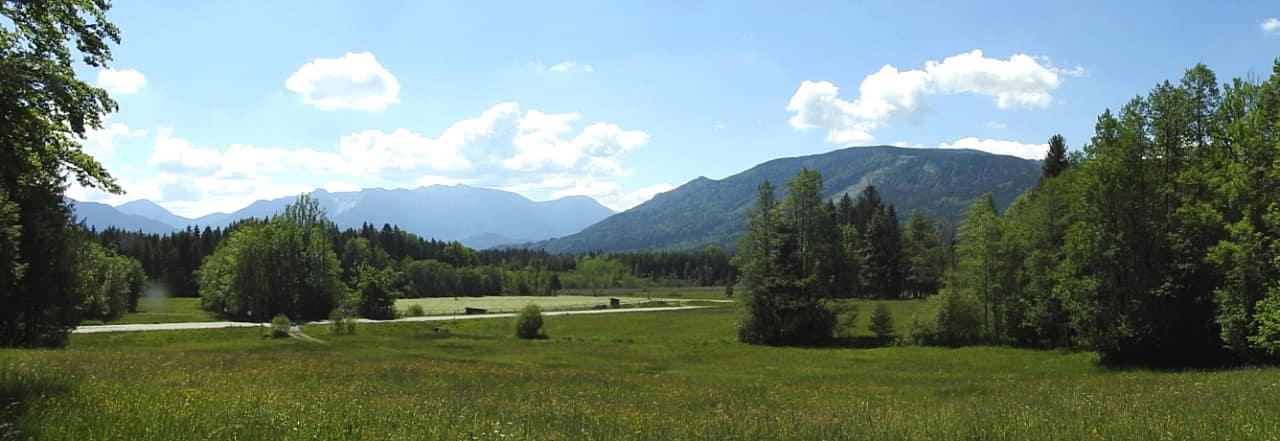
Our Foundation's Wiesmahd plots at the foot of the Hörnle Mountains © SPA
But that is put into perspective on our 1.3 ha (13,000 m2) Wiesmahd area with 0.3 ha of adjoining mixed forest and stream. We can proudly and happily state that there are more than 15 species of butterflies, many of them on the "Red List Bavaria", the "Red List Germany", and the FFH appendix list of endangered insect species.
For the future biotope-adapted maintenance of the Wiesmahd, we have concluded an appropriately designed lease agreement with a regional organic farmer who uses an insect-friendly mowing machine.
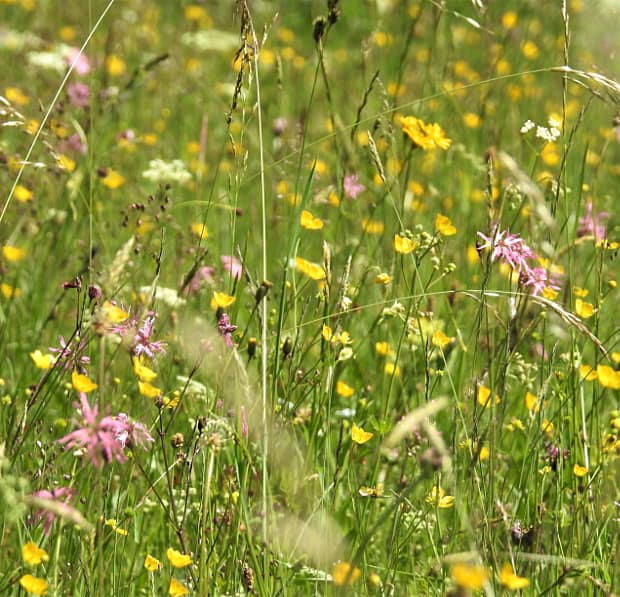
Wiesmahd. A paradise for wildflowers and butterflies © SPA
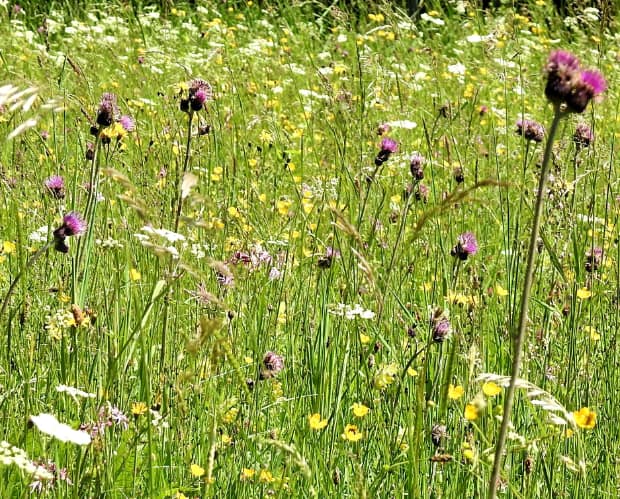
The richness of blossom on pre-alpine Wiesmahd © SPA
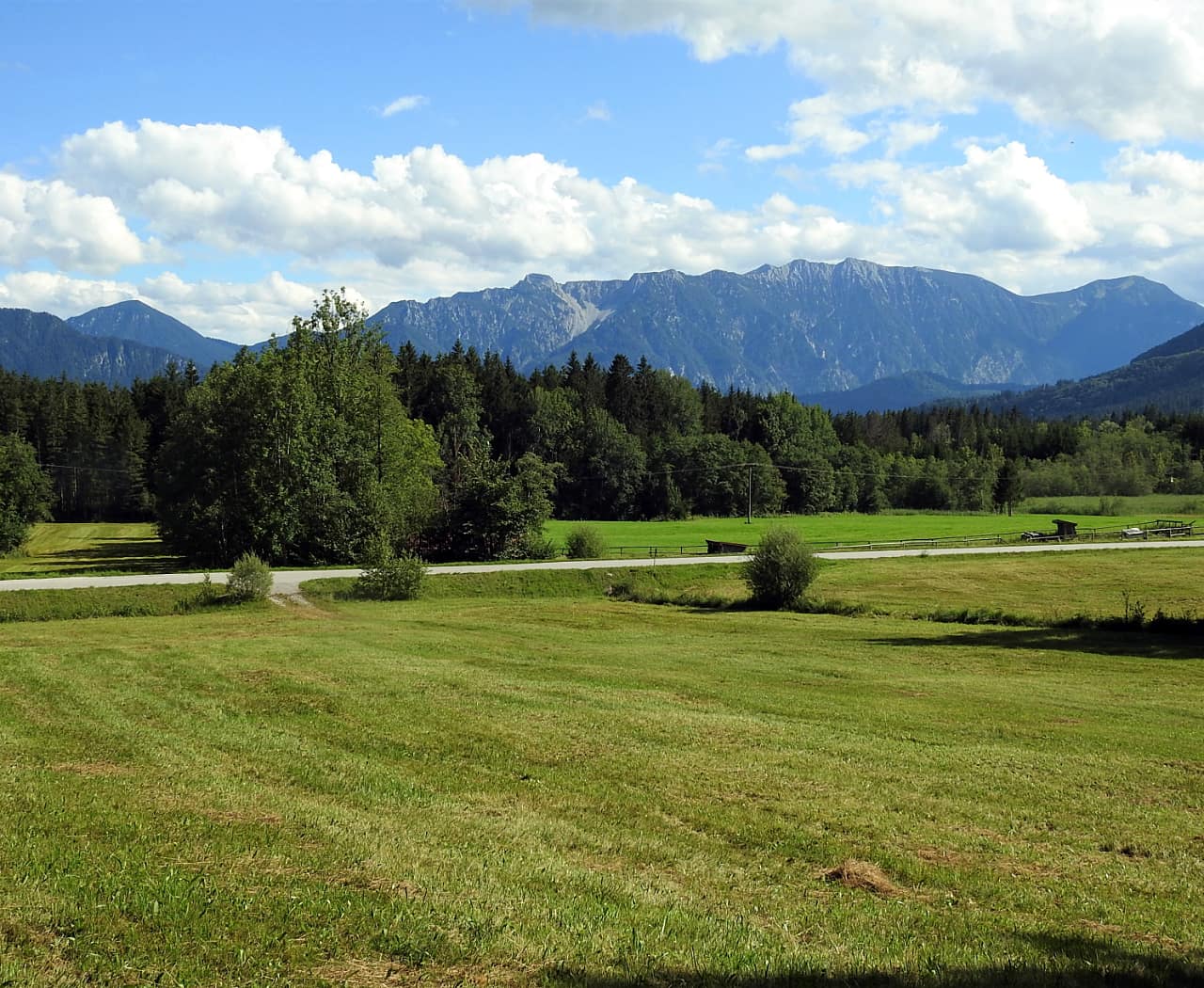
The Wiesmahd mid-August after mowing and haymaking © SPA
Birds: Tree Pipit, Whinchat, Red-backed Shrike, Meadow Pipit
Meadow Pipit
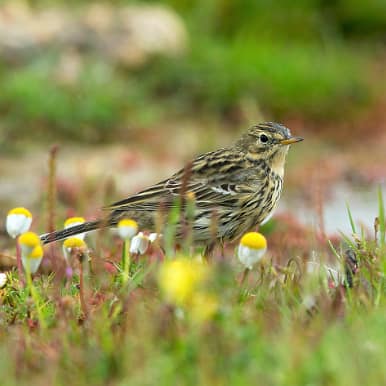
© Leo/fokus-natur
Whinchat
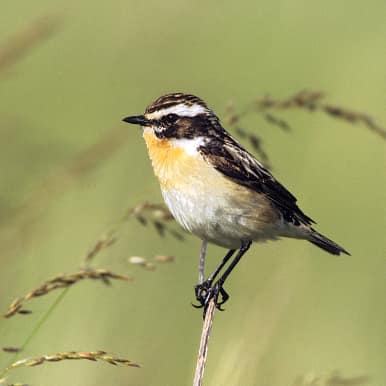
© Dr. P. Wernicke
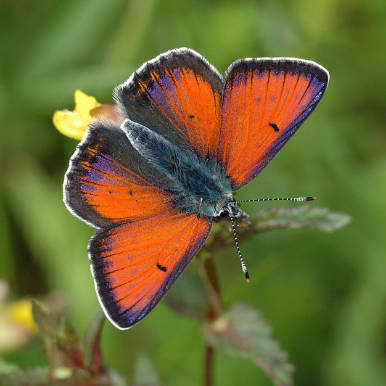
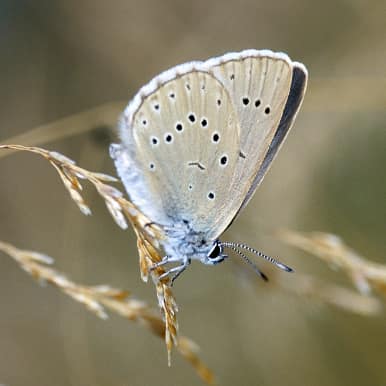
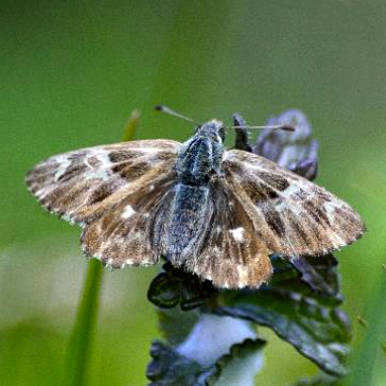
Butterflies: Marsh Fritillary, the Dryad, Tufted Skipper, Lesser Marbled Fritillary, Clossiana Titania's Fritillary, Small Pearl-bordered Fritillary, Heath Fritillary, False Heath Fritillary, Duke of Burgundy, Mazarine Blue, Geranium Argus, Silver-studded Blue, Alcon Blue, Scarce Large Blue, Dusky Large Blue, Purple-edged Copper
Small Pearl-bordered Fritillary
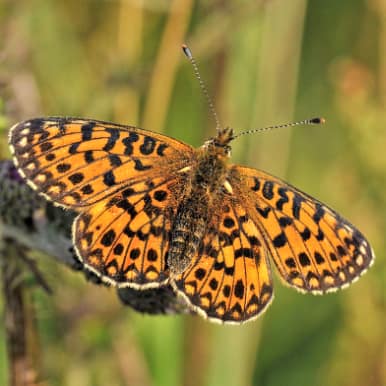
© L. Hlasek
Mazarine Blue
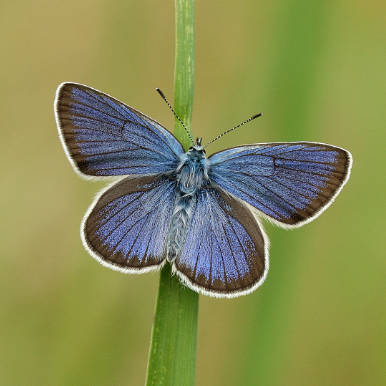
© L. Hlasek
Heath Fritillary
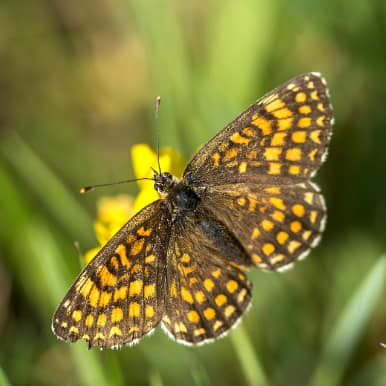
© Leo/fokus-natur
Marsh Fritillary
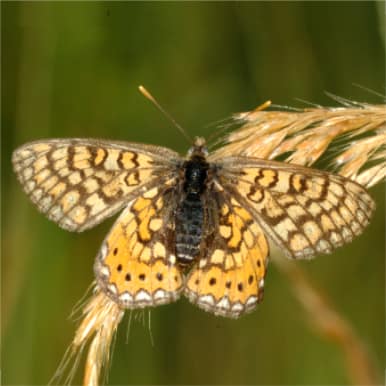
© L. Hlasek
False Heath Fritillary
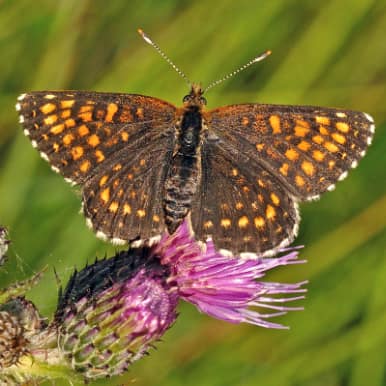
© L. Hlasek
Purple-edged Copper Blue
© L. Hlasek
Scarce Large Blue
© Leo/fokus-natur
Tufted Skipper
© L. Hlasek
Orthoptera: Wart-biter
Reptiles: Common European Viper, Grass snake
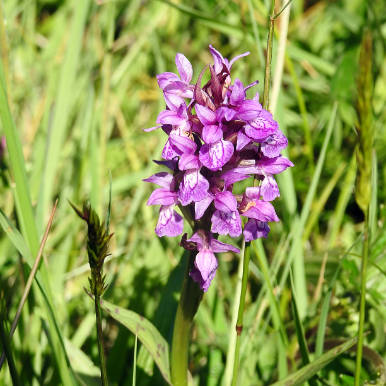
Highlighted plant species: Cirsium tuberosum, Broad-leaved Marsh Orchid, Matgrass, Red-rattle, Bird's- eye Primrose
Broad-leaved Marsh Orchid
© SPA
Fragrant Orchid
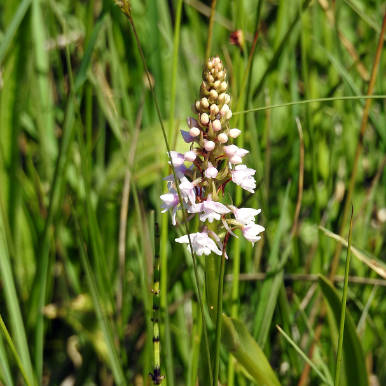
© SPA
Grapple plant
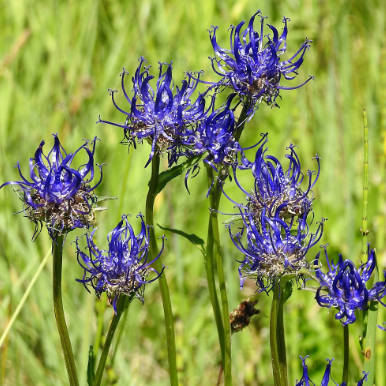
© SPA
Globeflower
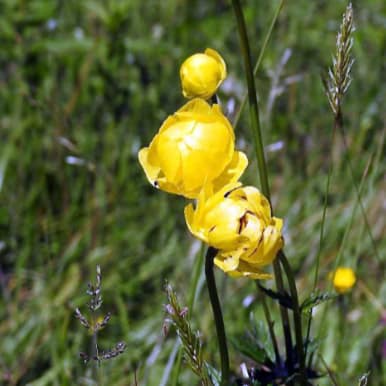
© SPA
Your donation enables the purchase of further ecologically-valuable plots of land.
The information on the copyrights of the images used on this site can be found at Copyrights, unless these are already indicated in or below the image.

Just 30 years ago, Great Egrets were an absolute rarity in Germany. Today, they are a familiar sight in many places. The story of Egret K195 is particularly remarkable: since 2018, it has been turning up time and again in our Frose nature reserve during the summer... more information

Following the successful spring bird conservation camps on Cyprus and the Greek island of Zakynthos, our local bird conservationists in Cyprus are once again standing up to the illegal operations of bird poachers and hunters. Yet again, we need your active support so that we can continue our campaign against the slaughter of migratory birds this autumn ... to the project
Postbank Hannover IBAN: DE47 2501 0030 0905 9063 07 BIC: PBNKDEFF
Stiftung Pro Artenvielfalt Meisenstraße 65 33607 Bielefeld Germany Tel. (0049) 0521 2997-883 / -884 / -889 Fax (0049) 0521 2997-885 Office Mo - Fr. 09.00 to 16.00
Foundation Management team@stiftung-pro-artenvielfalt.org Project Management projekte@stiftung-pro-artenvielfalt.org Donations, Donor Care service@stiftung-pro-artenvielfalt.org
 Donate now