Land acquisition project: Wilder Berg bei Seelow
|
|---|

|
Land acquisition project: Wilder Berg bei Seelow
|
|---|
|
|
The FFH area Wilder Berg bei Seelow is located south-east of the town of Seelow on the slope of the East Brandenburg Plate, which runs down to the Oder Valley and covers an area of 81.0 ha.
In the centrepoint of the steppe grasslands on the River Oder slopes between Seelow and Frankfurt (Oder), continental steppe grasslands occur predominantly alternating with mixed forests rich in deciduous trees and extensively used grassland. These steppe grasslands have a particularly remarkable flora and rich fauna.

Lime-turf plots on the Wilder Berg bei Seelow © SPA
The Brandenburg State Office for the Environment, Health and Consumer Protection has classified the 10.7 ha of meadows on the Wilder Berg bei Seelow, which have been owned by the foundation since 2012, as steppe and dry limestone grassland of Germany-wide significance.
All dry meagre biotopes suffer from the continuing high concentration of nitrogen, which to a great extent is extracted from the atmosphere in our industrial society. This means constant fertilisation of the originally nutrient-poor soil. As a result, the biomass of the plant world, which originally specialised in poor soils, increases and leads to a disadvantageous change up to and including the impoverishment of the formerly flower-rich vegetation.
Aerial fertilisation is attended by shrub encroachment on the open, nutrient-poor grassland habitats, which initiates a cycle of even more biomass on the formerly poor soils and increasing shading from trees and shrubs.
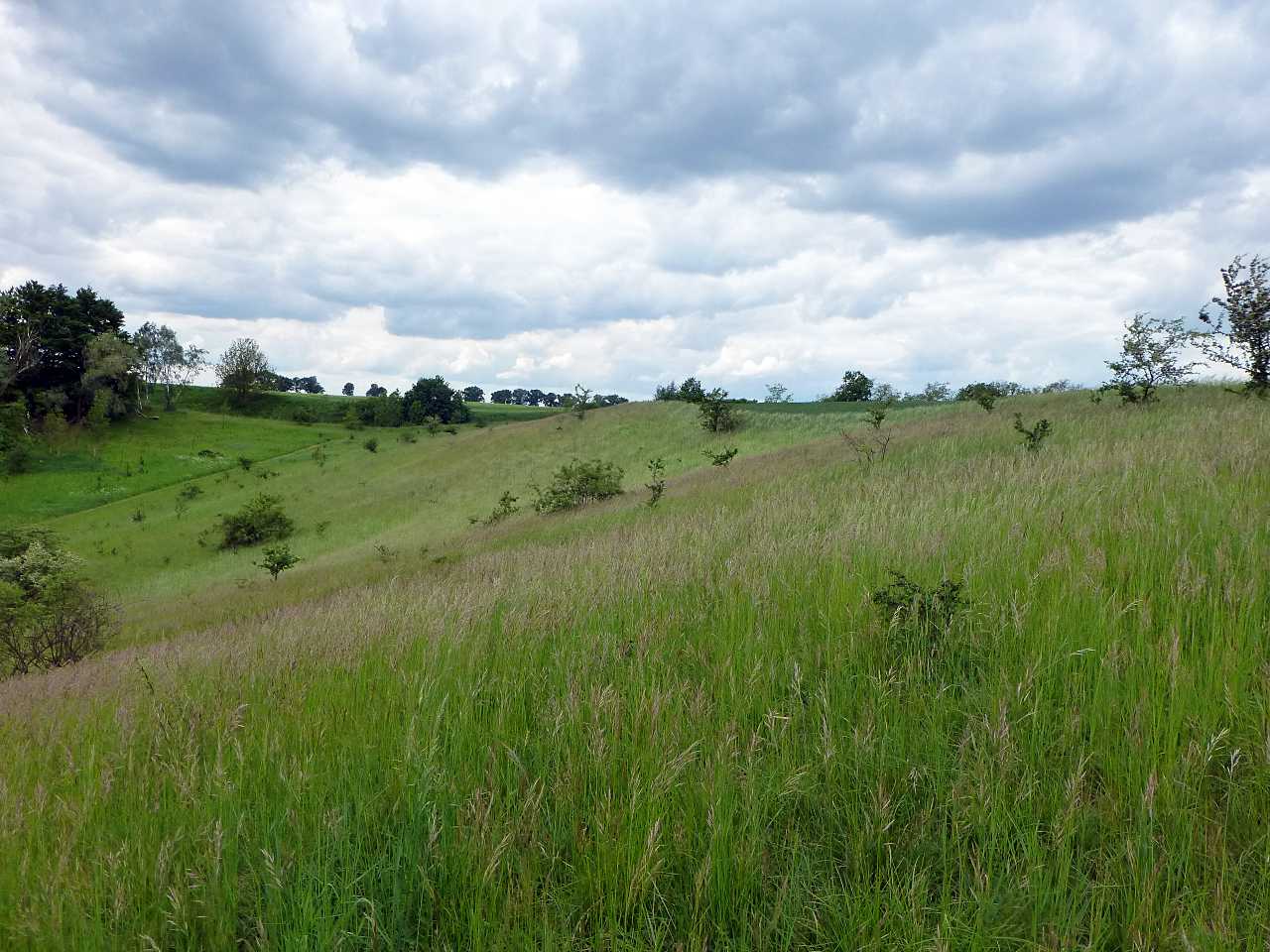
The meagre grassland habitats are threatened by uncontrolled vegetation growth © SPA
The conservation purpose of the nature reserve, which encompasses a structurally rich slope section of the transition area between the Lebuser Platte and the Oderbruch, includes:
Source: Ordinance (excerpts) on the Wilder Berg bei Seelow nature reserve of 1 November 2005
The meagre lowland hay meadows and the dry steppe grassland are strictly protected areas in terms of Section 7 of the Federal Nature Conservation Act. We ensure their protection by eliminating the risk factors of aerial fertilisation and shrub encroachment through extensive land use by goat and sheep grazing or by neutralisation through regular biotope care such as mowing and shrub clearance.

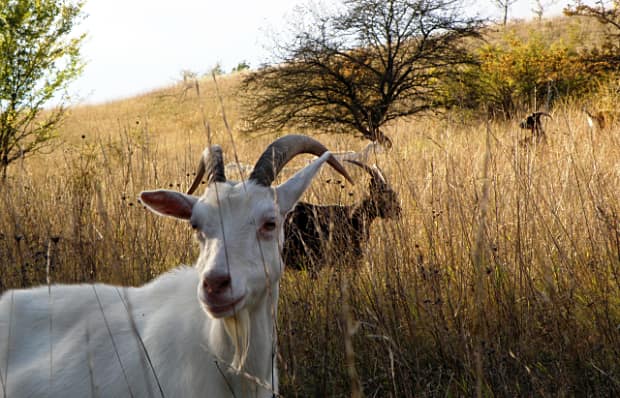
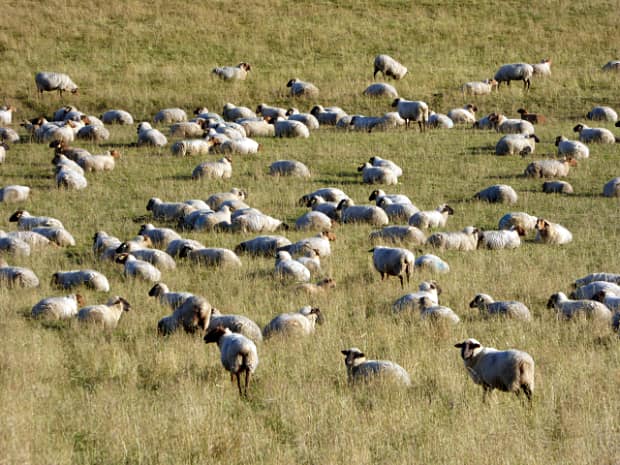
Extensive grazing of the dry steppe grassland by goats and sheep © V. Keuchel
We have implemented both medium- and long-term measures to preserve our dry grassland biotope areas through appropriately designed usage contracts.
We continue to be interested in the purchase of mixed forest and nutrient-poor areas along the slopes of the River Oder.
Red-backed Shrike, Corn Bunting, Eurasian Skylark, Sand Lizard, Tiger Beetle, Pheasant's Eye, Field Larkspur, German Gentian
Red-backed Shrike
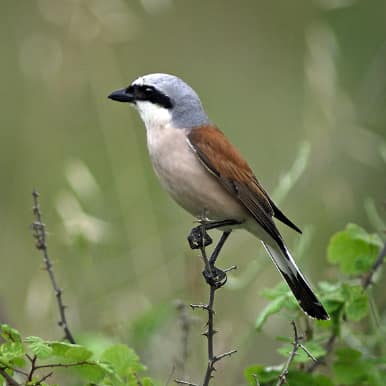
© Leo/fokus-natur
Eurasian Skylark
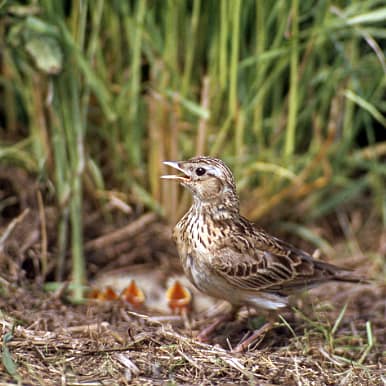
© L. Hlasek
Sand Lizard
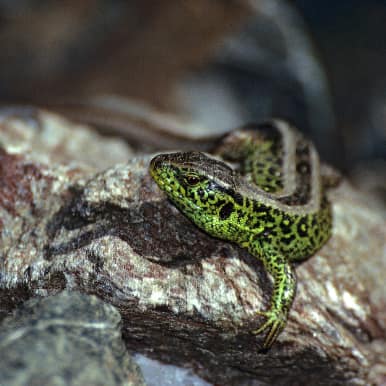
© Leo/fokus-natur
Field Larkspur
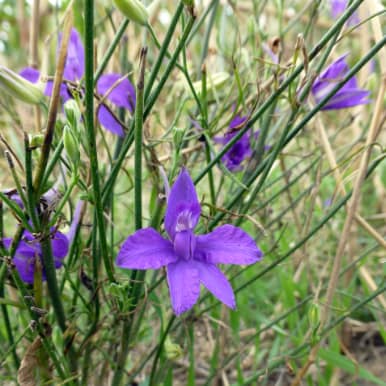
© SPA
Pheasant's Eye
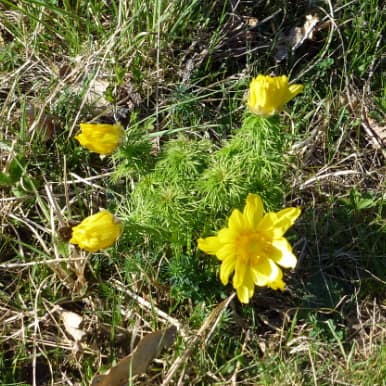
© SPA
Meadow Sage
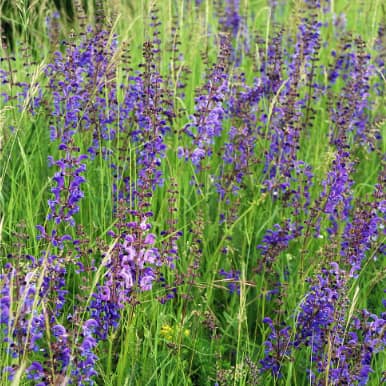
© SPA
Please help us to preserve meagre grassland and flowering meadows in Germany. Every donation counts.
The information on the copyrights of the images used on this site can be found at Copyrights, unless these are already indicated in or below the image.

Just 30 years ago, Great Egrets were an absolute rarity in Germany. Today, they are a familiar sight in many places. The story of Egret K195 is particularly remarkable: since 2018, it has been turning up time and again in our Frose nature reserve during the summer... more information

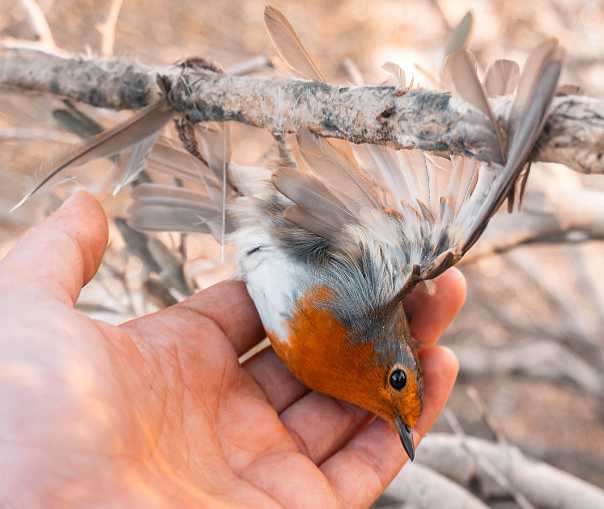
Following the successful spring bird conservation camps on Cyprus and the Greek island of Zakynthos, our local bird conservationists in Cyprus are once again standing up to the illegal operations of bird poachers and hunters. Yet again, we need your active support so that we can continue our campaign against the slaughter of migratory birds this autumn ... to the project
Postbank Hannover IBAN: DE47 2501 0030 0905 9063 07 BIC: PBNKDEFF
Stiftung Pro Artenvielfalt Meisenstraße 65 33607 Bielefeld Germany Tel. (0049) 0521 2997-883 / -884 / -889 Fax (0049) 0521 2997-885 Office Mo - Fr. 09.00 to 16.00
Foundation Management team@stiftung-pro-artenvielfalt.org Project Management projekte@stiftung-pro-artenvielfalt.org Donations, Donor Care service@stiftung-pro-artenvielfalt.org
 Donate now