Land acquisition project: Pantani Cuba & Longarini
|
|---|

|
Land acquisition project: Pantani Cuba & Longarini
|
|---|
|
|

View across the Pantano Longarini lagoon in our nature reserve for migratory birds on the south-east coast of Sicily © SPA
The region of the now lagoon wetlands Pantano Cuba and Pantano Longarini on the south-east coast of Sicily is part of a broad subsidence plain, some of which was formerly below sea level. This created a deep bay, an important trading port since ancient times. At the end of the 18th Century, slow ground uplift and eustatic sea-level fluctuations created a long line of dunes that separated the inner part of this bay from the open sea. As a result of this change, the former basin was flooded and formed the wetlands (Pantani) we know today.
The three Pantani: Cuba, Longarini and Bruno, stretch along the coast of south-eastern Sicily from Pachino to Pozzallo. This coastal area was an important port for ships coming to Sicily from Greece, Africa, and the Orient via the Mediterranean Sea in ancient times. The first Greek settlements in this area date back to the 8th century BC.
Near the mouth of Pantano Longarini, the rocky ridge Punta Castellazzo stretches about 250 m towards the sea. This headland is the boundary of a bay known as Porto Ulisse. In Roman and Byzantine times, Porto Ulisse was an important port of call for ships from Greece and Egypt carrying grain and wine to Rome and the shipment of products from inland Sicily to Rome and the Orient.
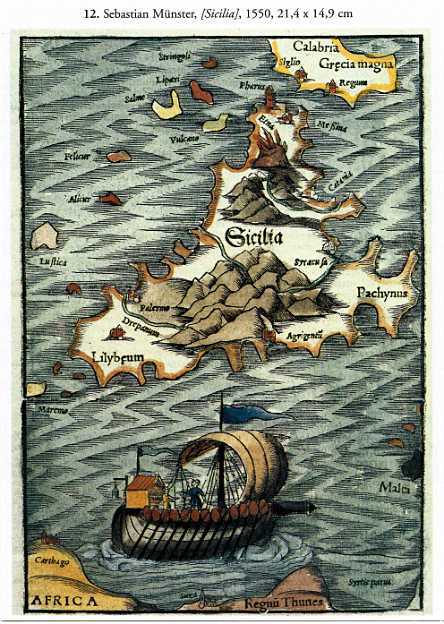
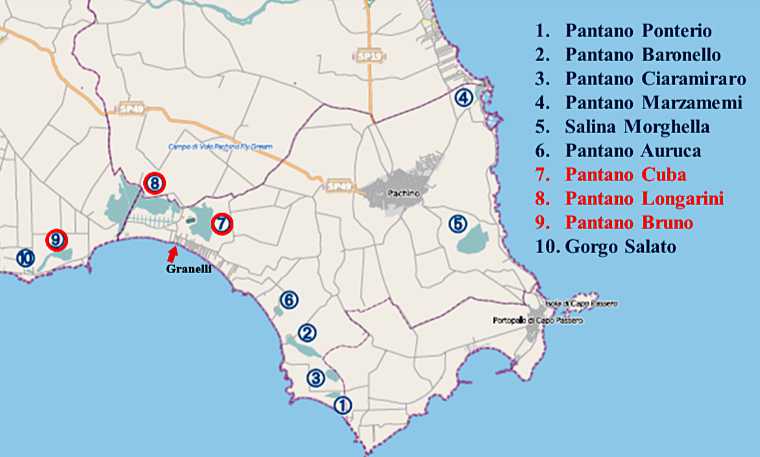
The Pantani Region in south-east Sicily © SPA.IT
(map modified from Guglielmo et al., 2013)
Evidence of these trading relationships was found in 1963 when a cargo ship believed to be Byzantine from the 6th Century AD was found near Pantano Longarini. This ship, made of cypress, oak and pistachio wood, was about 40 m long (Throckmorton & Kapitan, 1968).
More interesting and worthwhile information can be found here...
In the timeframe 1910-1942, most of the wetlands in Sicily were drained to create and redistribute new arable land. Before the wetlands and their lagoons were drained, there were 16 of them in the Ispica Plain, with a total area of more than 4 km². After the draining in the years 1950-1960, only the three Pantani (wetlands) Cuba, Longarini and Bruno remained, solely because of cost.
At the time, these extensive landscape modifications in Sicily were considered a victory of civilisation over nature; in reality, they destroyed an important and unique ecosystem, massively altering the local microclimate and causing severe environmental damage. They are comparable to the countless illegal constructions erected at random (without development plans/building permits) on the coast in the 1970s and 1980s.
The owner of the Pantano Longarini lagoon intervened massively in the lagoon and wetland structure around 1970 to set up a mullet breeding facility. A canal system in a herringbone pattern was constructed in the southern part of the wetland. These channels total some 1 km in length, up to 12 m wide and are connected to the sea by a 200 m long, 1.5 m deep and 4 m wide canal. Sea fish and crabs were supposed to reach the ditch system through this estuary channel and thus create the business basis for fish farming.
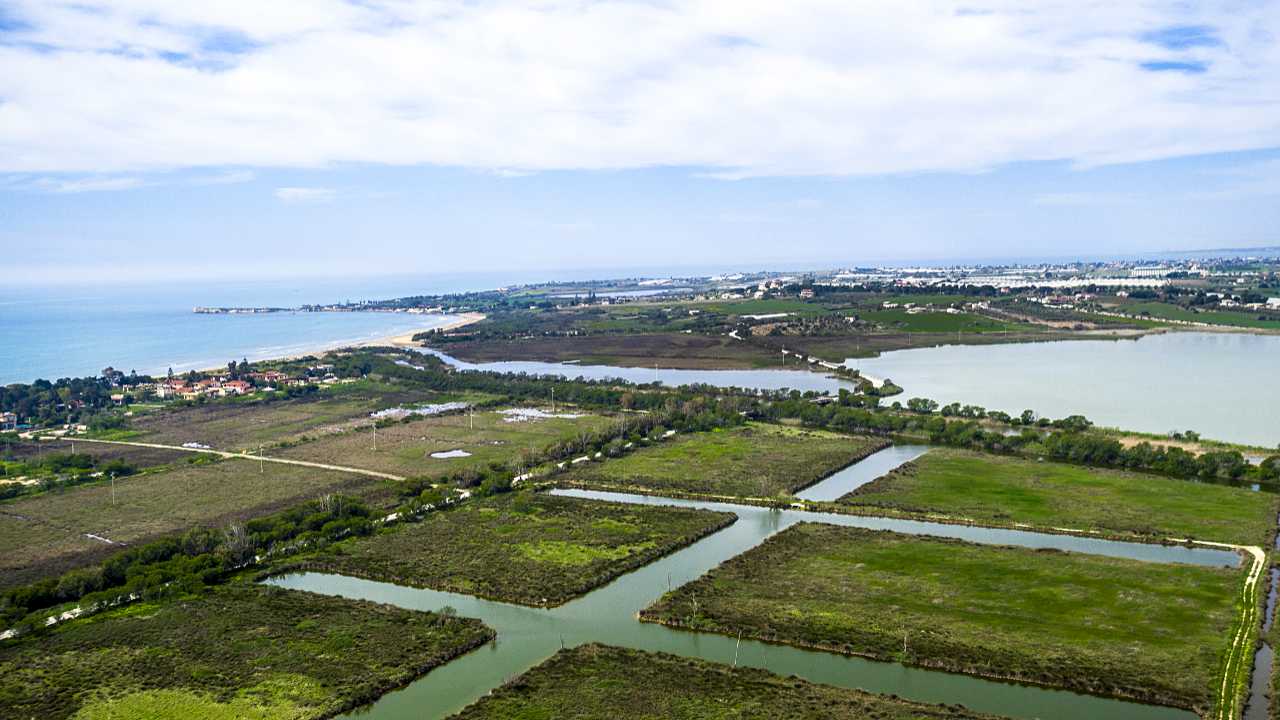
Pantano Longarini: A channel system constructed for fish farming © SPA
This biotope-destroying and costly landscape intervention and the constant silting up of the canal mouth, which today only connects to the Mediterranean Sea in rainy winters and when the water level is high, very quickly led to incalculable costs, inefficiency and the end of fish farming.

After the winter rain. The connection between the Pantano Longarini lagoon channel and the Mediterranean © SPA.IT
Nevertheless, sea fish, crayfish and crabs can sporadically swim into the lagoon channel system and, together with millions of mussels in the Pantano Longarini and Pantano Cuba lagoons, provide a rich food base for Mediterranean bird species such as Greater Flamingo, Night Heron, Cattle Egret, Yellow-Legged Gull and for more than 60 North and Central European migratory bird species of humid wetland habitats such as Osprey, Northern Marsh Harrier, White Stork, Black Stork, Little Egret, Eurasian Curlew, Snipe, Ruff, Northern Lapwing, Little Stint and Greenshank.
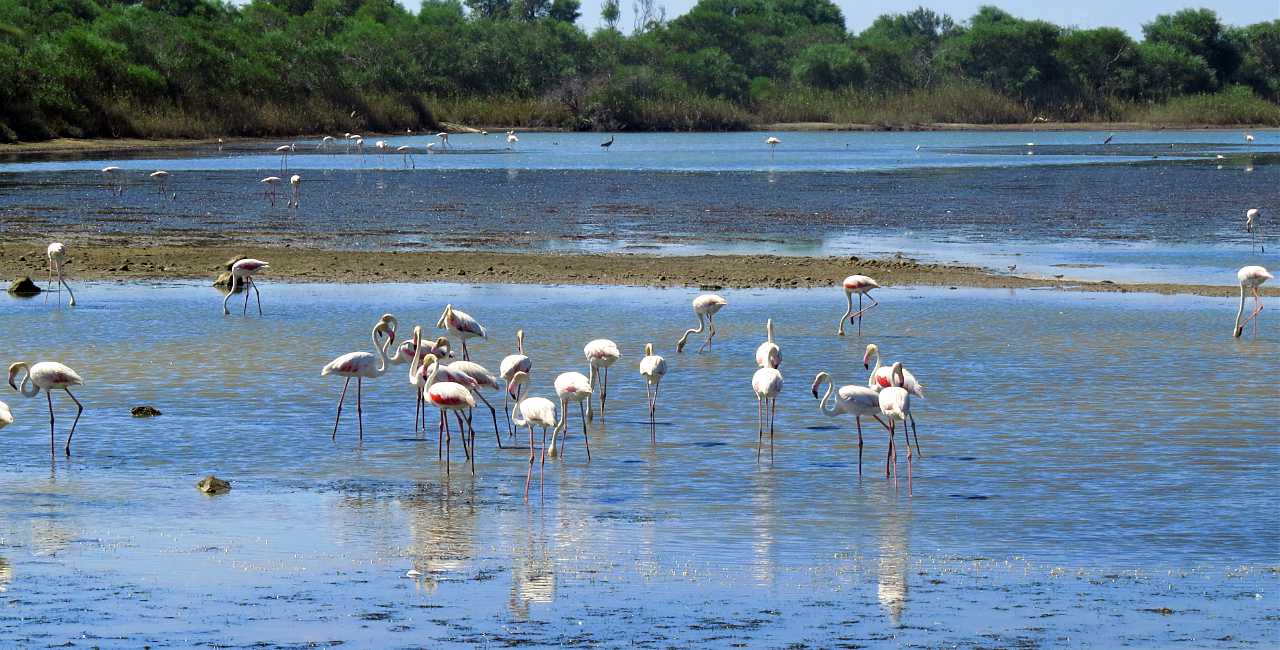
Greater Flamingos in the Pantano Longarini lagoon estuary on the Mediterranean © SPA.IT
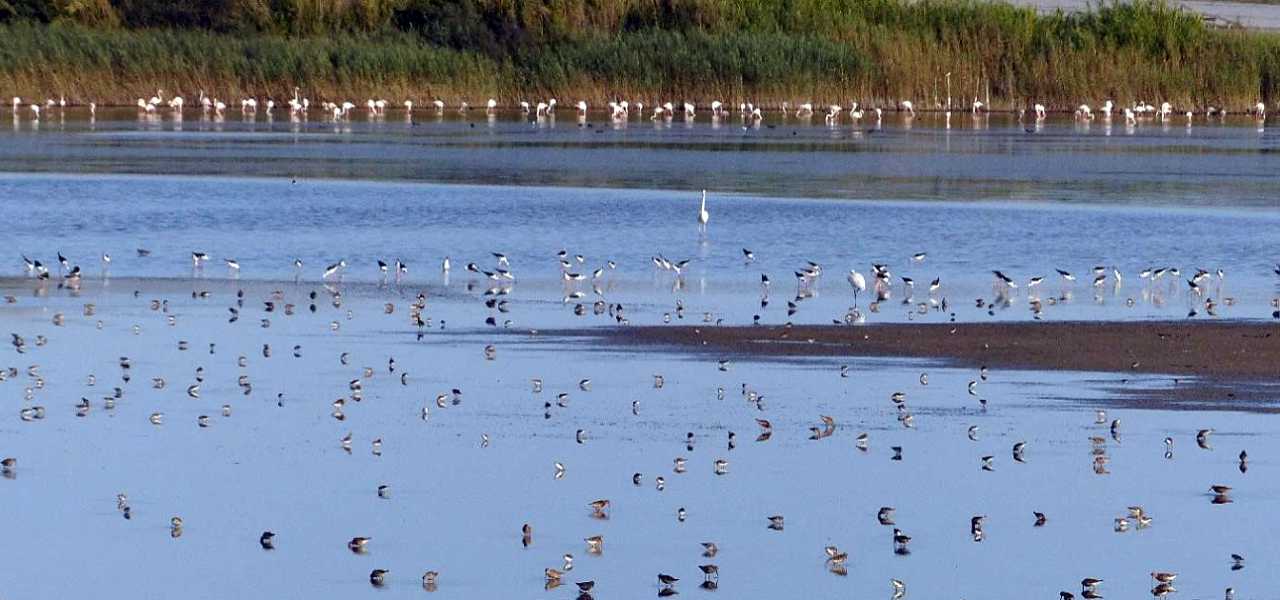
Waders, waterfowl and Flamingos in the shallow water of Pantano Longarini lagoon © SPA.IT
The concentration of migratory bird species and tens of thousands of individual birds on the lagoons and adjacent wetlands during the autumn and spring migratory and wintering seasons has made this economically disused and, therefore, uncontrolled wetland complex a well-known and prolific area for bird hunting and poaching. Even outside the Italian hunting season, all forms of feathered life were shot at.
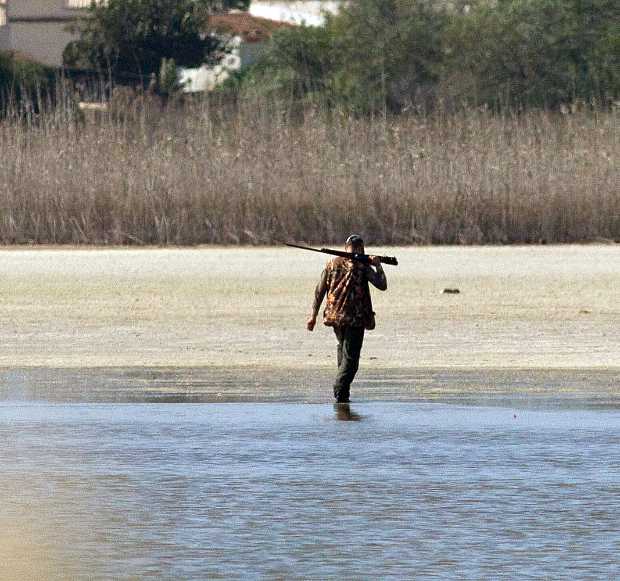
Illegal bird hunter in our Pantano Cuba wetland © SPA.IT
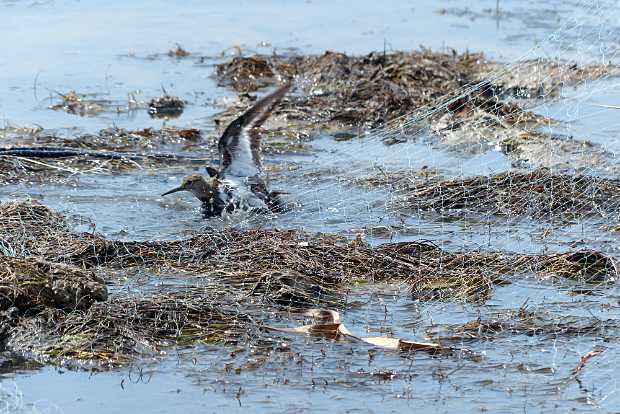
Dunlin in an illegal trap net on the edge of the lagoon © SPA.IT
The complexity and extensive dimensions of the wetland structures had, and in part still have permitted the lagoons and their shore areas to degenerate into illegal garbage dumps - also for toxic garbage.
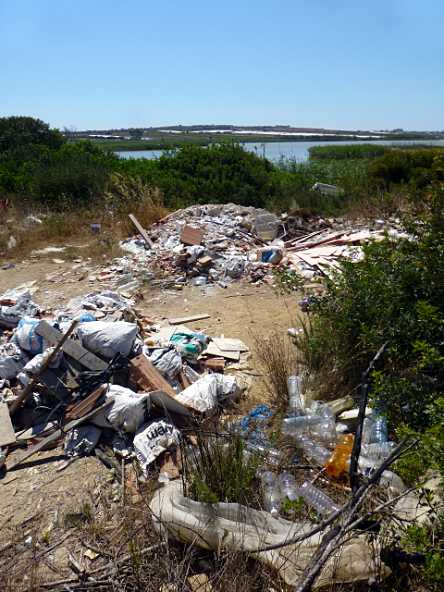
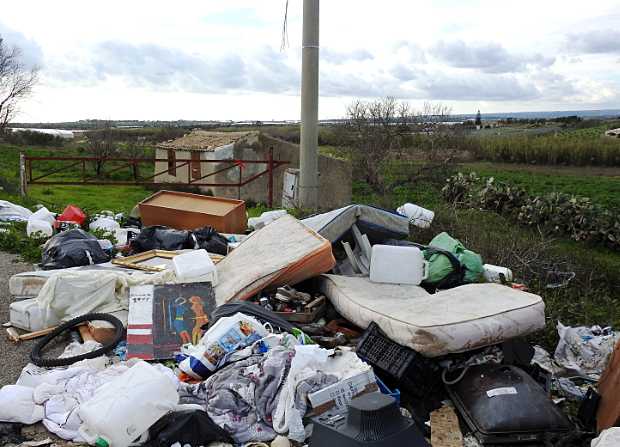
Illegal rubbish dumping on and adjacent to our property on the lagoon shoreline © SPA
Thanks to the fertile soil around and on the shoreline of the lagoons, farming activity in the form of vegetable growing, grain crops and viniculture have increasingly intensified in recent decades. This has fatal consequences for the unique biodiversity, water quality and the shoreline vegetation. In places, the greenhouses and polytunnels, which are used intensively for up to 3 harvests a year, are immediately adjacent to the lagoon. As a result, heavy rain in the winter months flushes vast quantities of toxic agricultural chemicals and artificial fertilisers into the reed beds in lagoon shore areas and, where these have been degraded, directly into the lagoons.
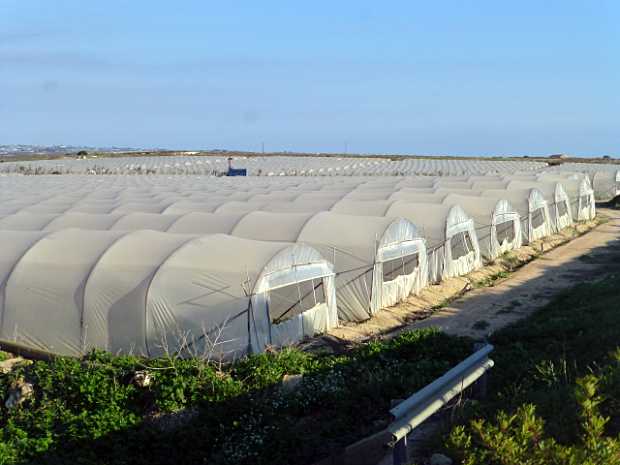
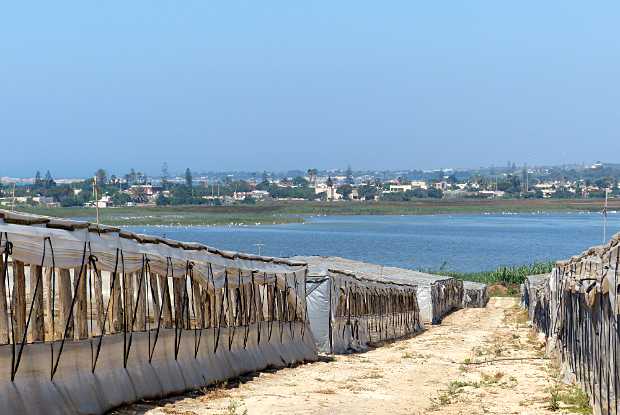
Intensive farming with polytunnel greenhouses that extend down the shore slopes to the Pantano Cuba lagoon © SPA
On the farmed areas around the wetlands, unused biomass, as well as waste and rubbish, are burnt continuously, especially in early spring and autumn, and wanton fires (arson) destroy reed beds and macchia areas along the lagoon shoreline. As a result, soot and pollutants contaminate the wider environment, including the water surfaces of the lagoons.
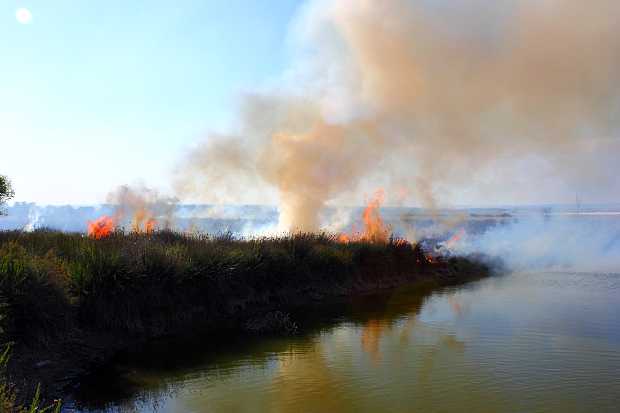
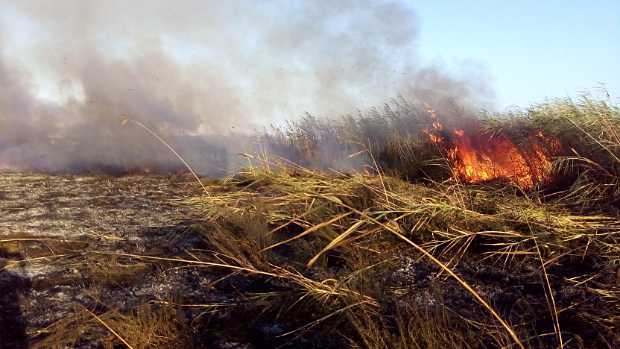
Arson attacks in Pantano Longarini (l.) und Pantano Cuba (r.) ) © SPA.IT
In May 2013, the board of the Foundation resolved to effectively and directly tackle the bird hunting and poaching problem by initiating and consistently expanding a large-scale and long-term nature and species protection project. The project aimed to restore the ecological integrity and survival function of this strategically highly significant and crucial migratory bird stopover and feeding hotspot for hundreds of thousands of Northern and Central European migratory birds.
In the medium and long term, the restored Pantani property, with a total area of up to 480.0 ha (4,800,000 m²), guarantees the sustainable success of this strategic foundation investment in biodiversity for the benefit of the migratory bird world.
In November 2013, the Foundation laid the cornerstone for the planned large-scale migratory bird protection project in a property bidding process before the court in Siracusa (Sicily) with the successful bid acceptance for the approximately 82 ha (820.000 m²) Pantano Cuba lagoon on the south-east coast of Sicily. The area includes reedbeds and shoreline property plots.
This was the first successful purchase of land by the Foundation outside Germany. To date, with the purchase of the two freshwater lagoons, Pantano Cuba and Pantano Longarini, and adjacent land on the shore, we own almost 392.0 ha (3,920,000 m²) - equivalent to the area of approx. 780 football fields - of this critical and valuable migratory bird resting and feeding place (hotspot) secured permanently as a foundation-owned migratory bird sanctuary.
You can find an overview of our Foundation property here.
The path to what we have achieved to date was, and is, still rocky. The vast majority of people in Sicily and Italy still have little understanding of the conservation of the natural foundations of life, nature and its unique biodiversity, apart from its use for leisure and profit.
Thanks to the ongoing large and generous donations from our donors, sponsors and friends and with the gruelling commitment of our Sicilian bird guards and many committed volunteer bird guards from the Pantani region of Sicily, the rest of Sicily, Italy and Germany, we were able, bit by bit, to secure this migratory bird hotspot directly on the Mediterranean coast by
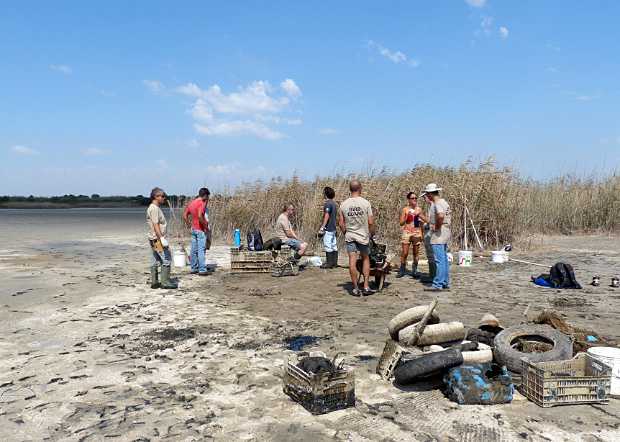
Rubbish collection in the dried-up Pantano Cuba lagoon © SPA
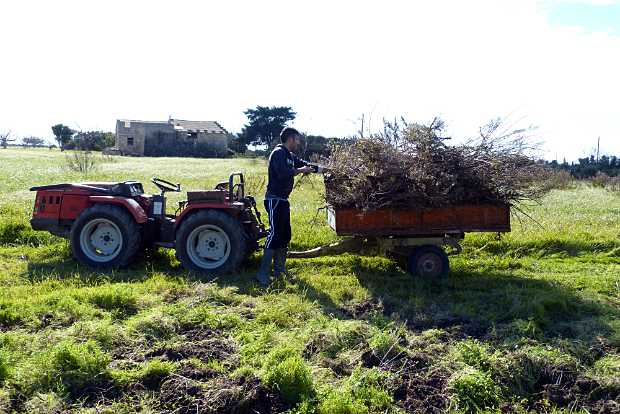
Removal of invasive shrubs © SPA
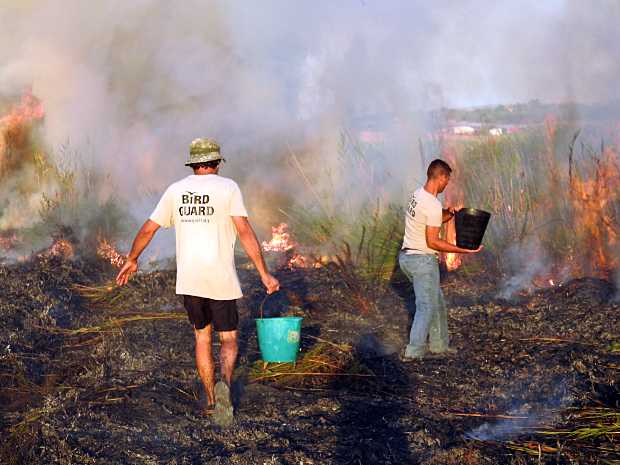
Firefighting after arson in Pantano Cuba © SPA

Removal of illegal fishnets from the Pantano Longarini channel system © SPA.IT
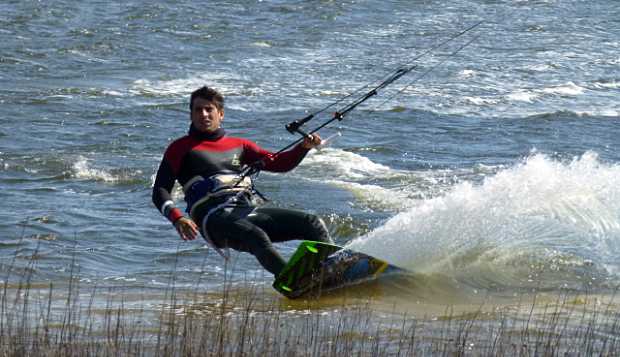
Kite surfer in the Pantano Longarini lagoon © SPA.IT
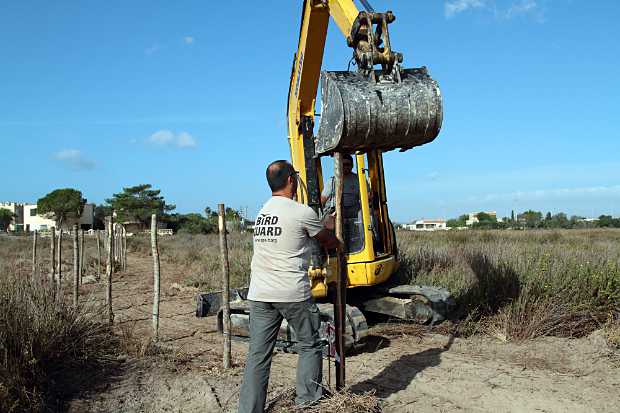
Construction of the protective fence on the southern side of the Pantano Cuba lagoon © SPA
Transformation of a bird hunting area to a migratory bird nature reserve monitored by the Foundation. Unparalleled in the Mediterranean region of Southern Europe.
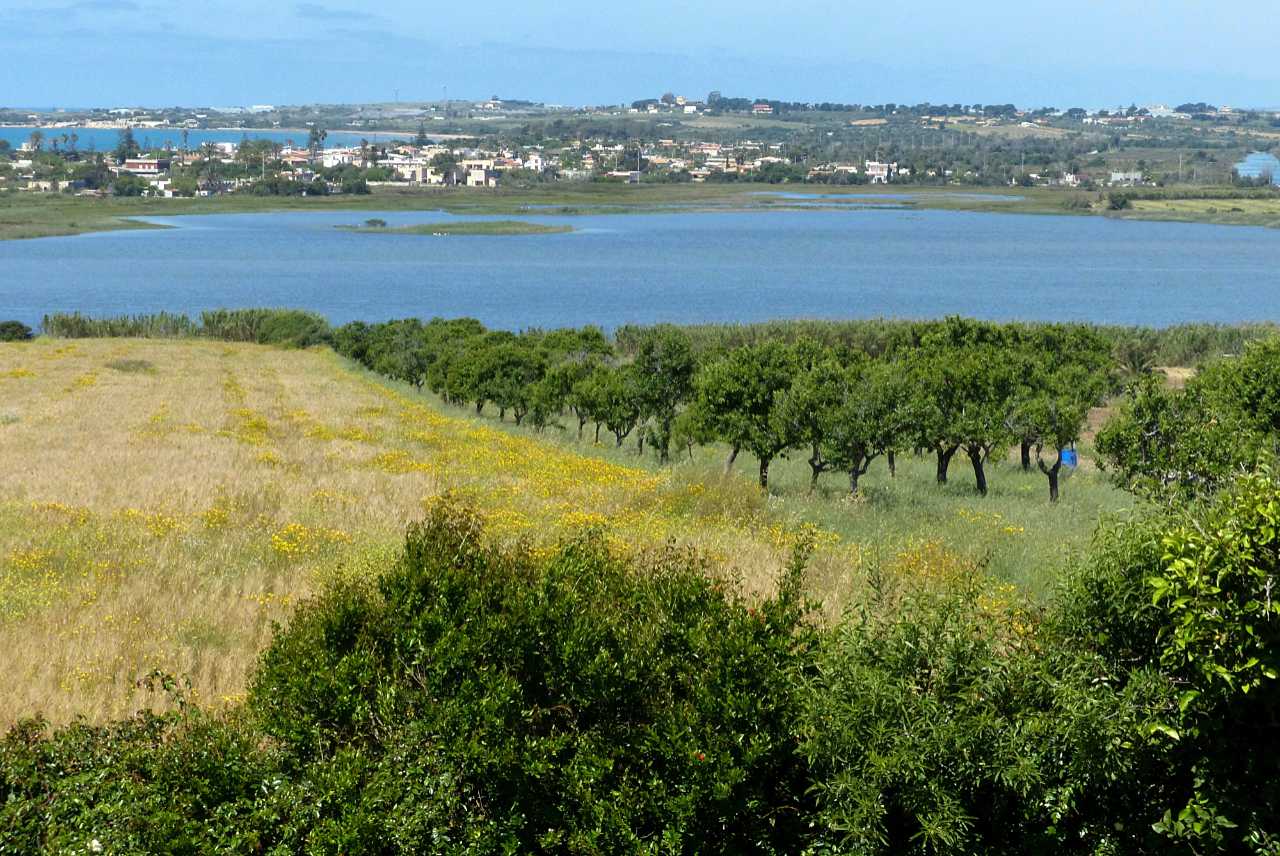
View from the slopes of our shoreline property over our Pantano Cuba lagoon, the village of Granelli and the Mediterranean coastline © SPA
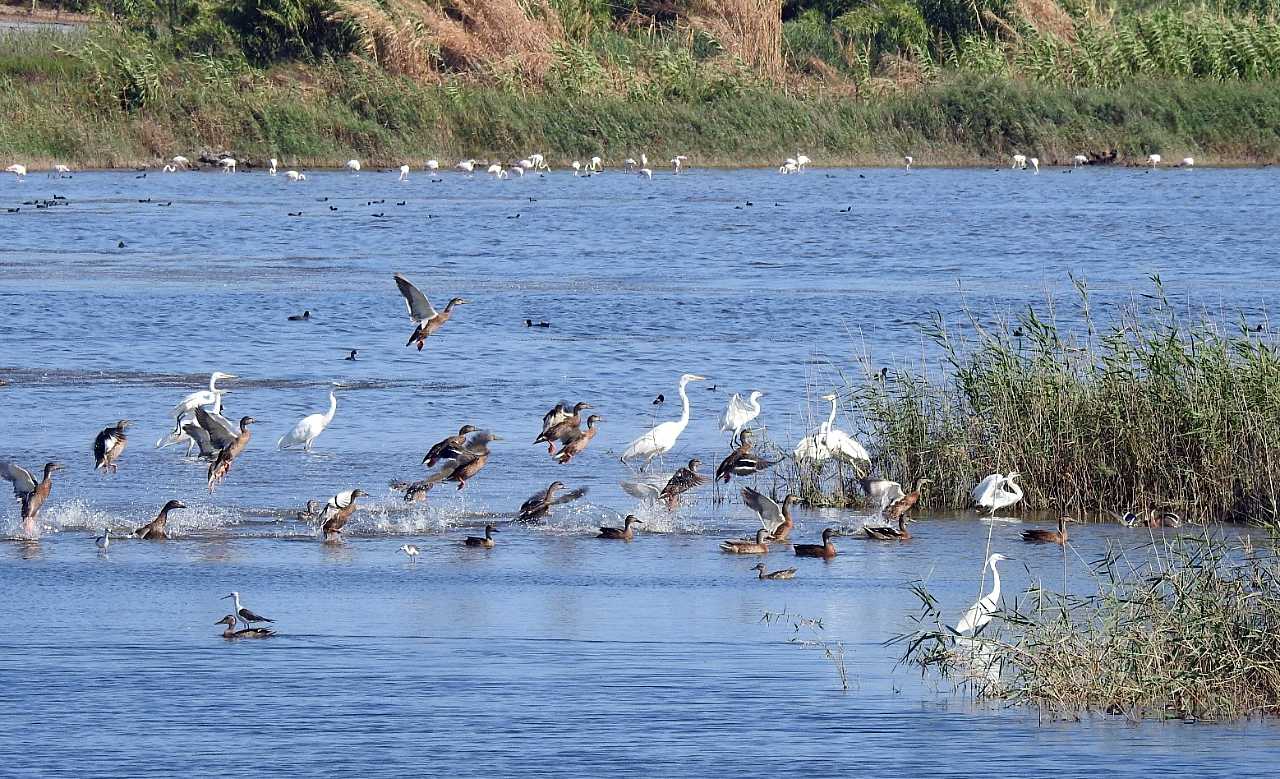
Herons, ducks, Black-winged Stilts and Greater Flamingos in the Pantano Cuba lagoon © SPA.IT
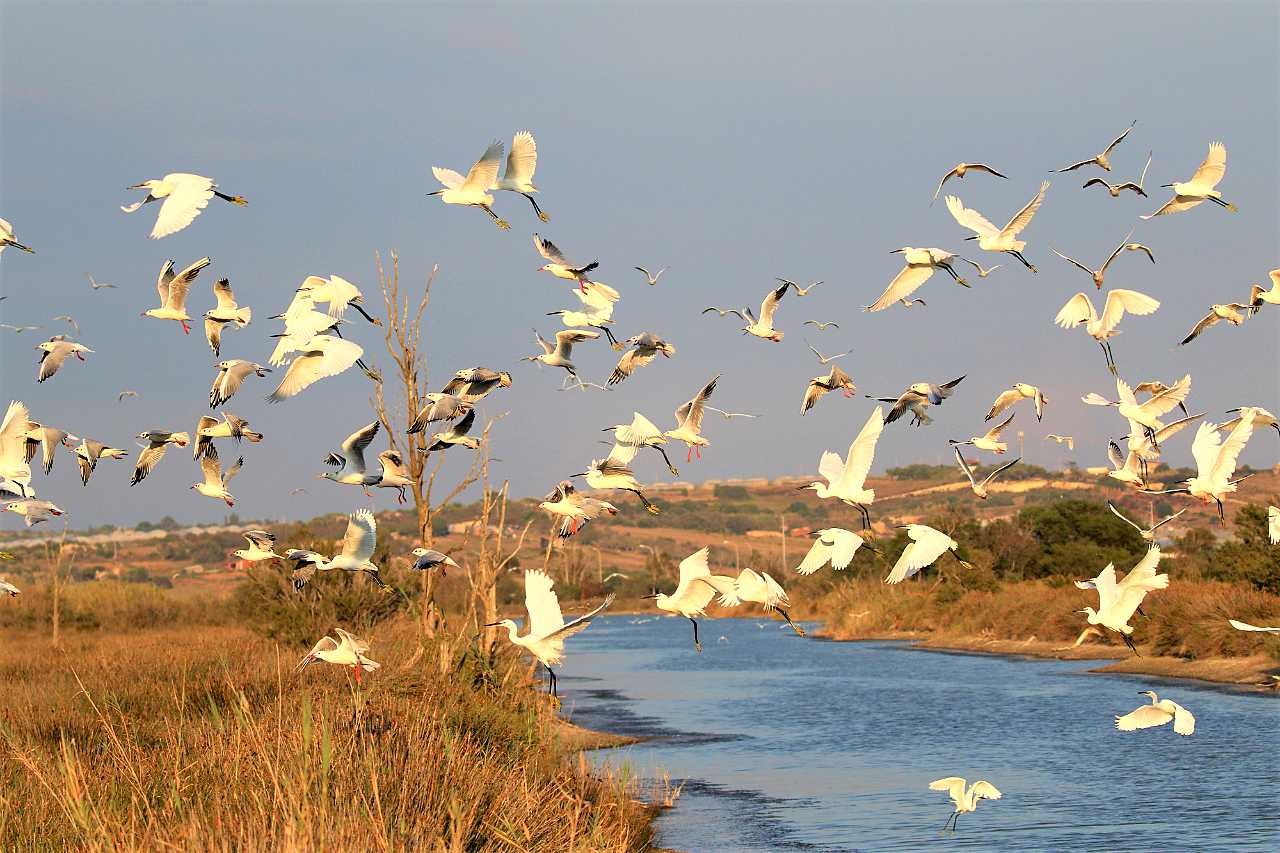
Great White Egrets and Yellow-legged Gulls above a Pantano Longarini channel © SPA.IT
Nonetheless, we still face time-consuming, labour-intensive, and conflict-ridden challenges. It takes a lot of time, energy and strong nerves to fend off these from the plots of land we own and those still planned for purchase for the benefit of migratory birds and biodiversity. But we remain defensive and, together with many Sicilian bird conservationists, friends and, if necessary, regional law enforcement officers, we bravely face all adversities and local "storms".
Mediterranean biodiversity and migratory birdlife have a good deal to thank us for. Our commitment to the Pantani protected area is evident from the results of the weekly bird species and bird population censuses, which are conducted and scientifically recorded by our Bird Guards.
Pantano Cuba/Pantano Longarini: species population comparison 2017 vs 2021 © SPA.IT

2017: 520 identified species

2021: 637 identified species Number of bird species by family
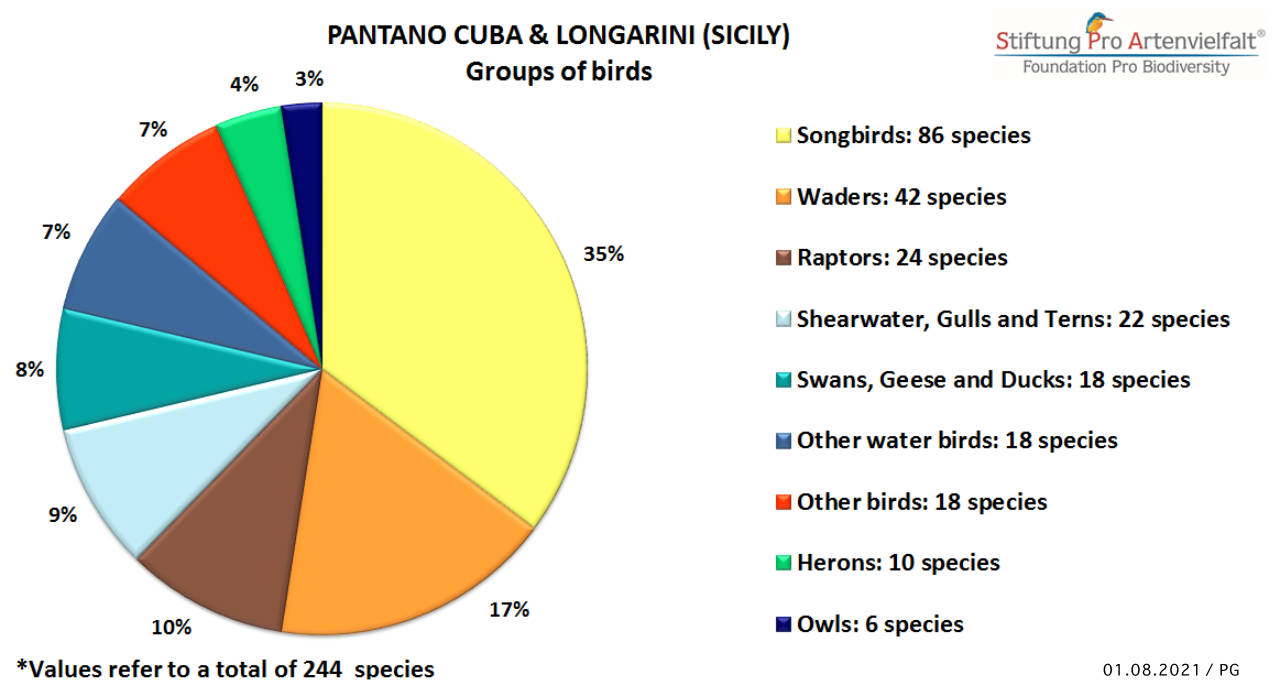
Number of bird species by family
You can obtain further meaningful information on the population development of various bird and animal species in our Pantani conservation area by clicking on the diagrams below:
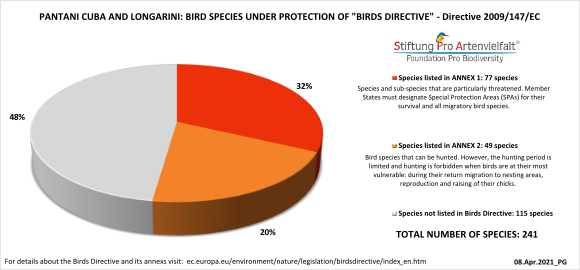
Overview of conservation status for bird species 1
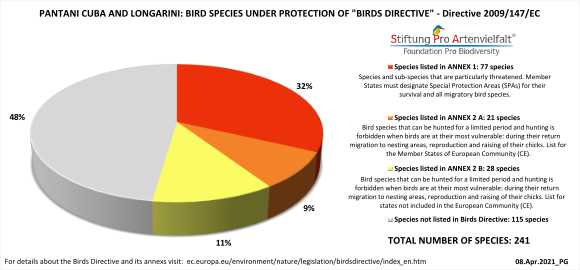
Overview of conservation status for bird species 2
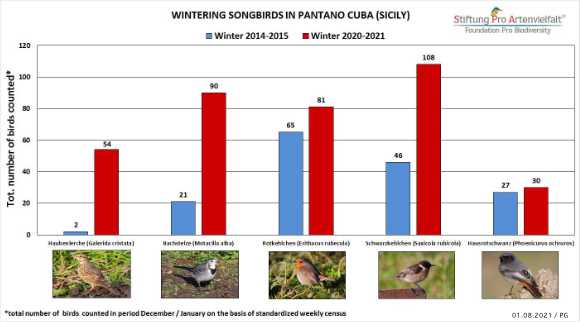
Wintering songbird species in Pantano Cuba winter 2014/2015 vs winter 2020/2021
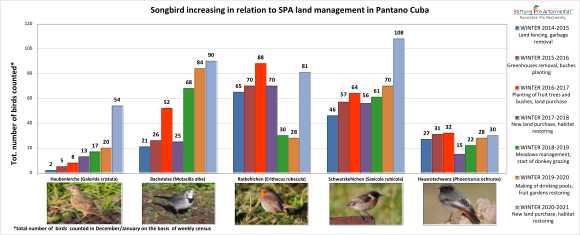
Population development of songbirds in relation to SPA biotope optimisation in Pantano Cuba
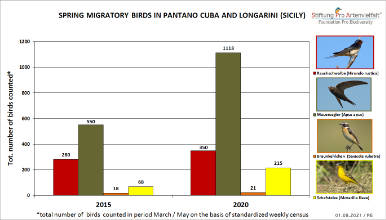
Migratory birds on stopover in Pantano Cuba in spring 2015 vs spring 2020

Bird of prey stopovers in Pantano Cuba spring/autumn 2015 vs spring/autumn 2020
Click on the links below for the PDFs "Bird species in the Pantani region":
Census of bird species in the Pantani region - Pantano Cuba
Census of bird species in the Pantani region - Pantano Longarini
European Stonechat
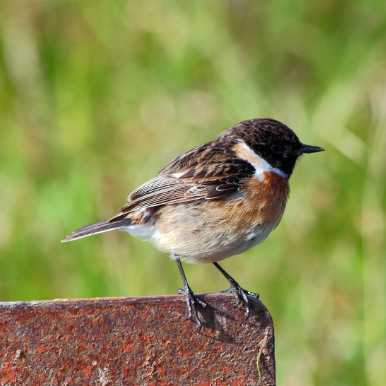
© SPA.IT
Crested Lark
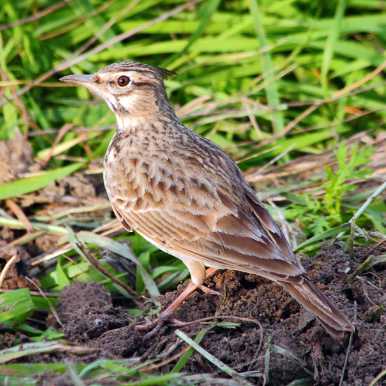
© SPA.IT
Marsh Harrier
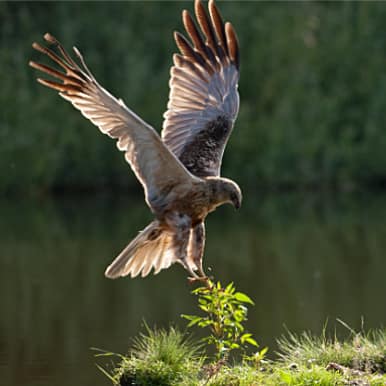
© Pröhl/fokus-natur
Shoveler
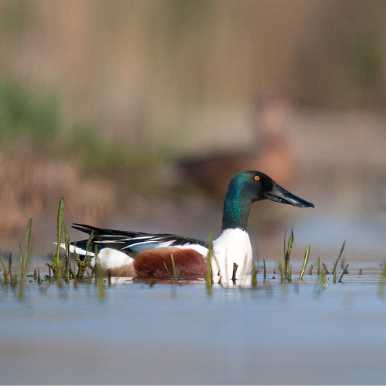
© Leo/fokus-natur
Gadwall
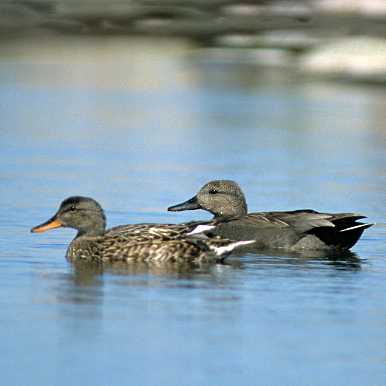
© Leo/fokus-natur
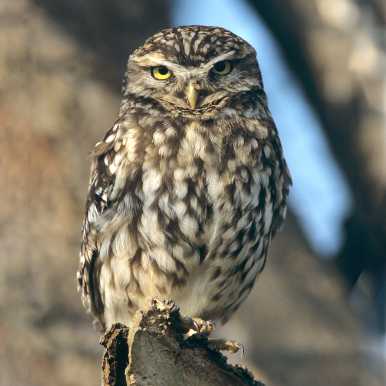
Little Owl
© H. Glader
Our many years of on-site educational work concerning our statutory migratory bird protection commitment and our bird protection goals in the Pantani region are gradually creating a basis of trust with schools and private property owners in the area and also provide us with better opportunities for forward-looking confidential property purchase talks.
The some 60 ha of hillside land bordering the Pantano Cuba lagoon to the east are of outstanding importance for our protection goals. Their at times intensive agricultural use causes artificial fertilisers and agricultural chemicals (pesticides) to enter the lagoon shoreline areas during heavy winter rains and strong summer winds, damaging the natural reed belt and affecting the water quality.
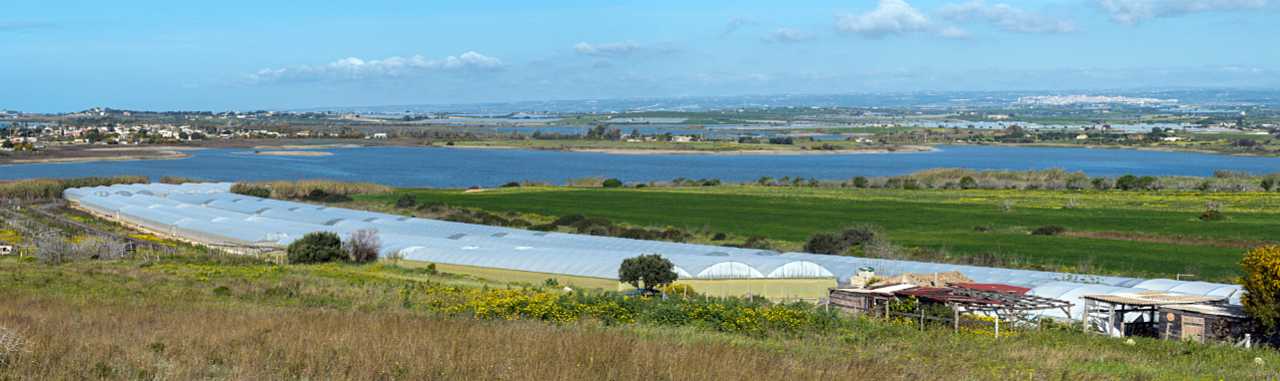
Polytunnel greenhouses that extend to the shoreline of our Pantano Cuba lagoon © F. Leo
These negative influencing factors will end only with our purchase of all of this hillside land. In this way, we can improve the water quality of the lagoon biotope for more than 60 waterbird species, herons, storks and flamingos and also for water-bound insects such as the 18 dragonfly species that have now been recorded. It will also sustainably improve conditions for the Sicilian Pond Turtle, rediscovered after an absence of 15 years.
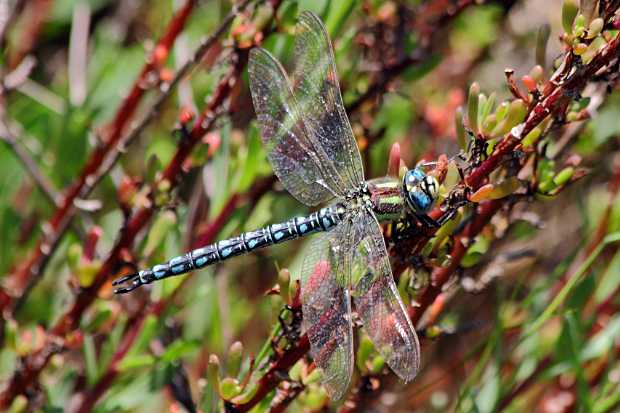
Newly discovered in our migratory bird nature reserve:
Hairy Dragonfly © SPA.IT

Rediscovered after 15 years:
Sicilian Pond Turtle © SPA.IT
Violet Dropwing

© SPA.IT
Long Skimmer
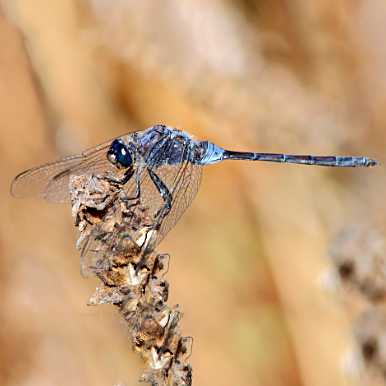
© SPA.IT
Southern Emerald Damselfly
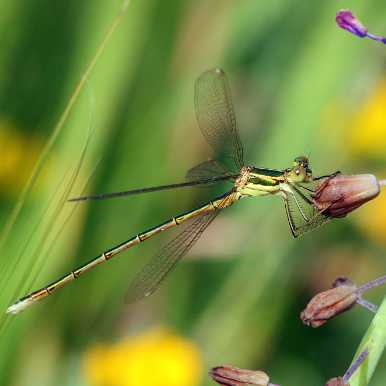
© SPA.IT
Copper Demoiselle
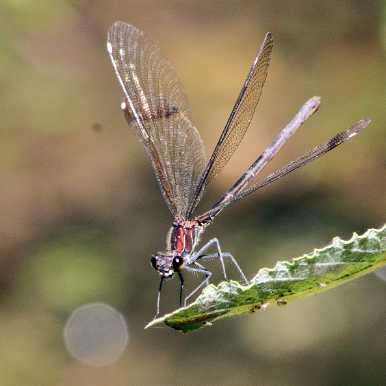
© SPA.IT
Vagrant Emperor
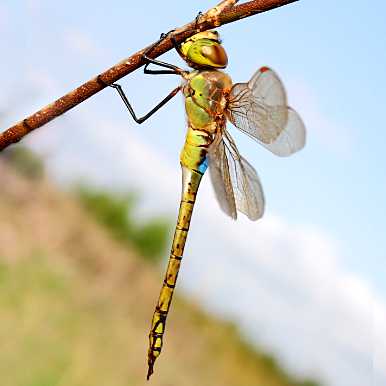
© SPA.IT
Migrant Hawker
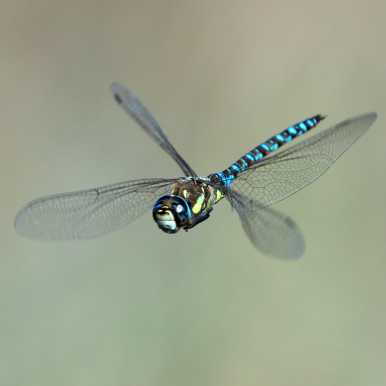
© SPA.IT
We know from small farmers in the region that songbirds (Goldfinches, Linnets and Siskins) have for years been trapped and used as caged decoys in the vineyards and the olive and almond orchards. We can only verify these abuses and end illegal bird trapping if we can purchase the orchards and arable land adjacent to the lagoons and, at the same time, monitor adjacent properties owned by others.
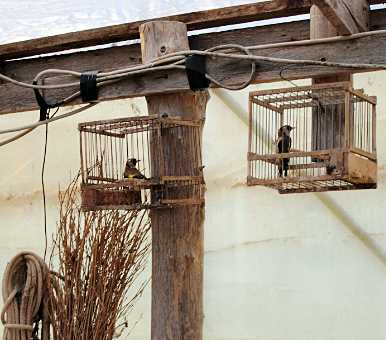

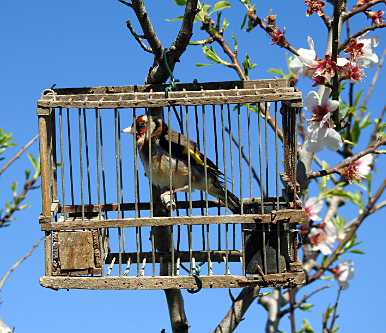
Goldfinches on migration: trapped, caged and offered for sale © SPA
After each property purchase, we agree on its future biotope structure, adapted to the location by planting Sicilian wild shrub hedges and orchards. Ecological extensive farming management is conducted to promote migratory songbird species such as European Stonechat, Whinchat, European Goldfinch, Common Linnet, European Blackcap, Common and Lesser Whitethroat and, in particular, for the migratory species of the open countryside threatened with extinction in Central Europe. These include European Turtle Dove, Crested Lark, Eurasian Skylark, Corn Bunting and Eurasian Stone-curlew.

Preparation for olive tree planting © SPA
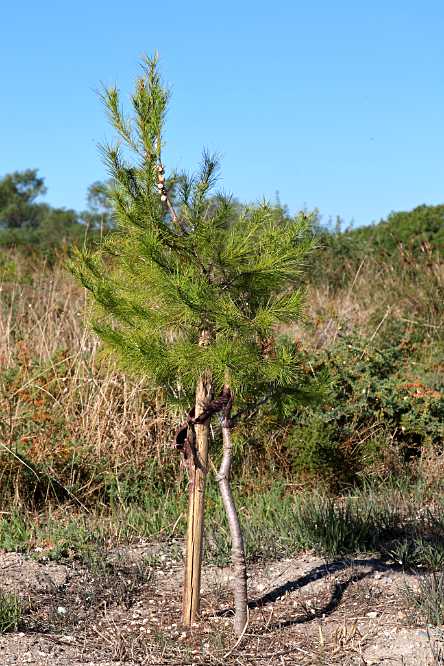
Newly-planted Pine tree © SPA.IT
Turtle Dove
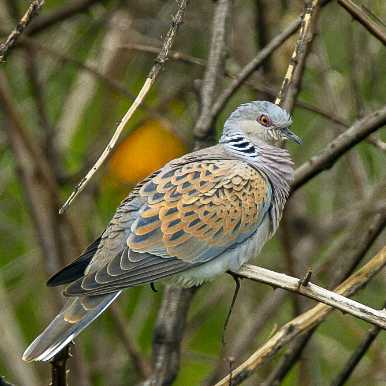
© P. Rannisi
Corn Bunting
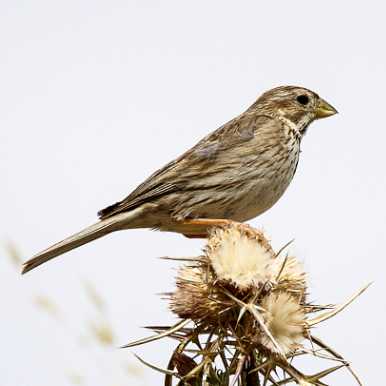
© P. Rannisi
Crested Lark
© SPA.IT
Eurasian Stone-curlew
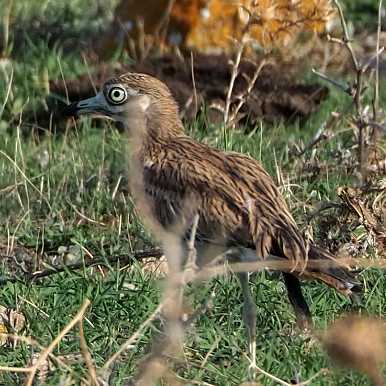
© SPA
For most migratory bird species, the food availability in our conservation areas (Pantani region) has now increased thanks to the end of the economic and illegal use of land and water. Fish, small mammals, reptiles, amphibians, mussels, snails, worms, insects, wild bush berries, plant seeds, wild cereals, wild olives and mulberry fruits offer more than 130 migratory bird species on stopover, and more than 100 Mediterranean resident bird species a wide-ranging food base that they can use undisturbed.
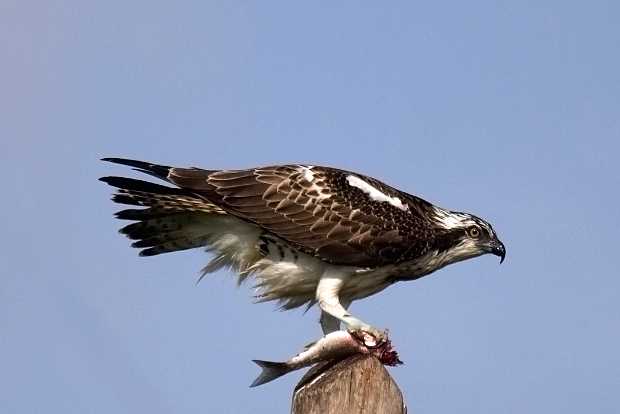
Osprey with prey © SPA.IT

White Storks, Greater Flamingos, Little Egret, Grey Heron and Black-winged Stilt in the Pantano Cuba lagoon © SPA.IT
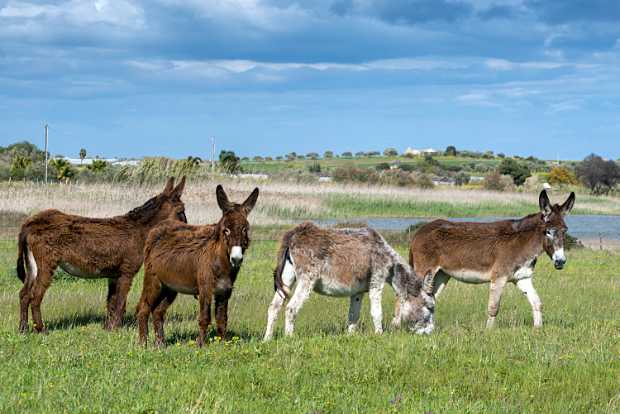
Our landscape 'architects' in Pantano Cuba © F. Leo
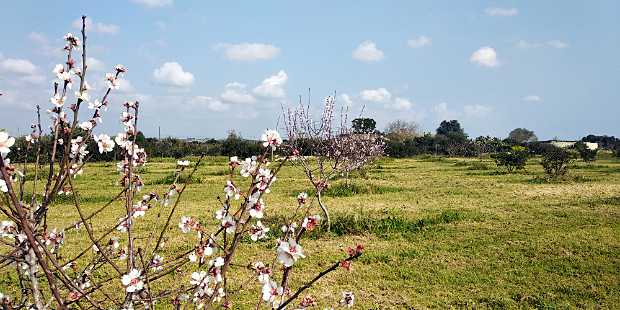
Blossoming Almond on our 'Racing Ground' peninsula © SPA.IT
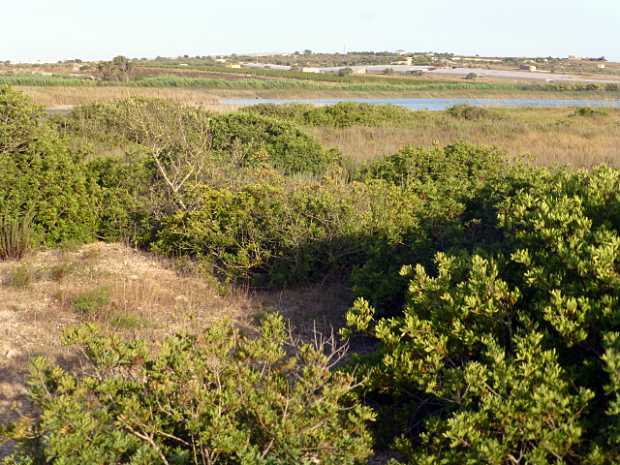
Shoreline shrubbery in Pantano Cuba © SPA
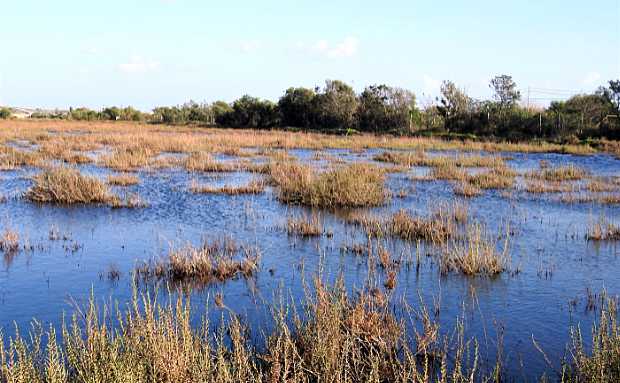
Flooded water meadow south of Pantano Longarini © SPA
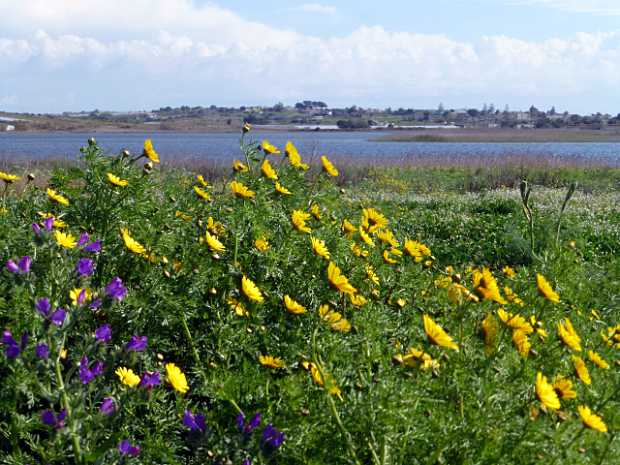
Wildflower meadows on the Pantano Cuba lagoon © SPA

Foundation-owned slope with olive grove on the eastern side of the Pantano Cuba lagoon © SPA
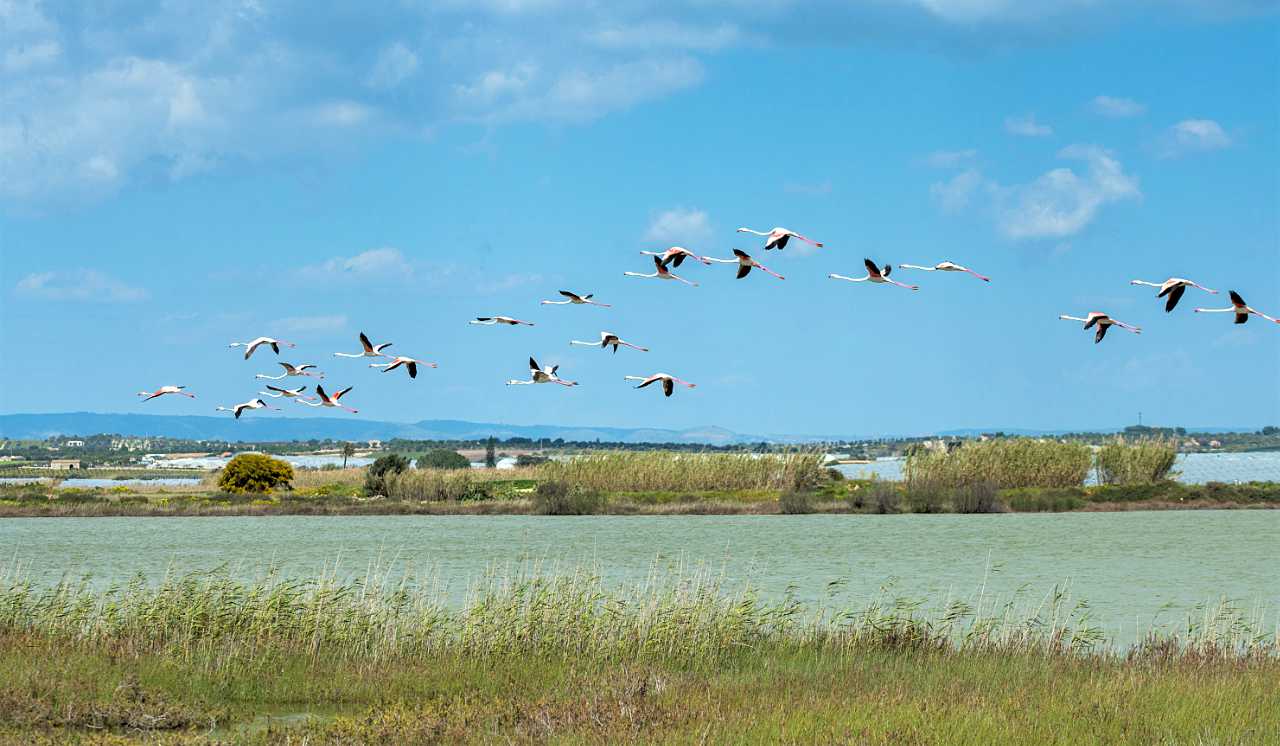
Greater Flamingos over the Pantano Longarini lagoon © F. Leo
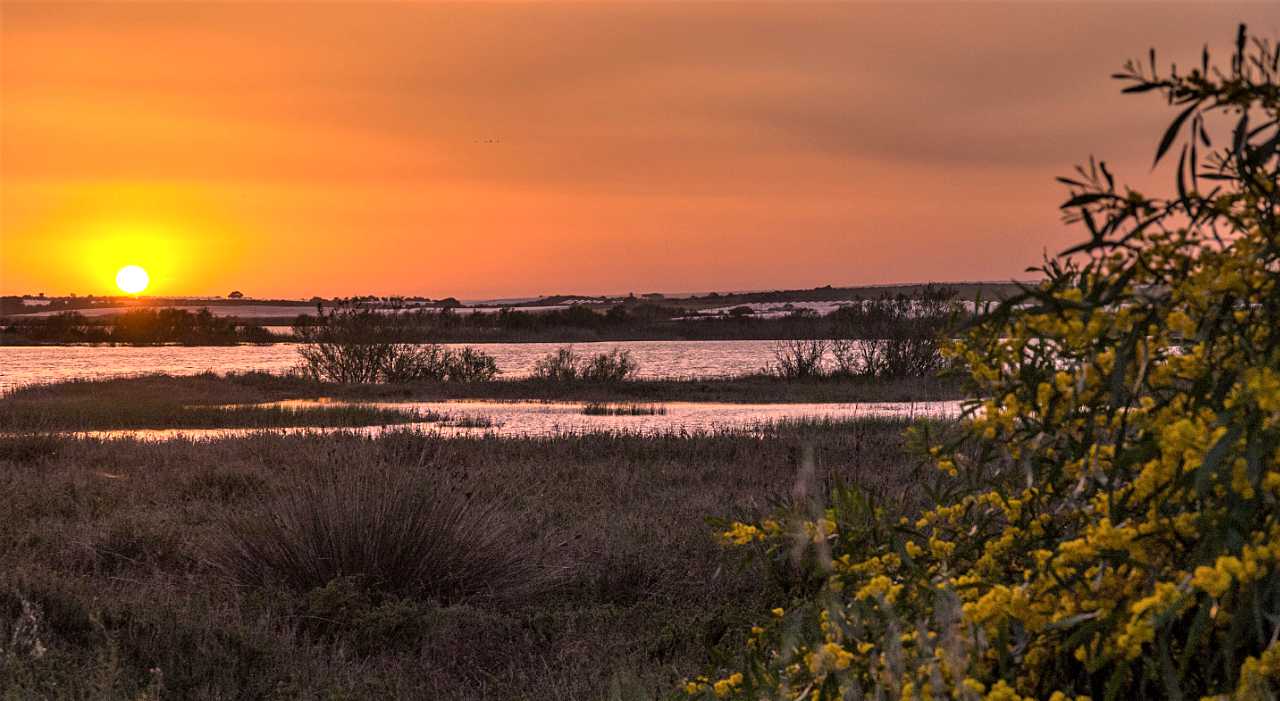
Sunset over the Pantani wetlands © F. Leo
"With the purchase and renaturation of every square metre of the Pantani migratory bird sanctuary by our Foundation, formerly strongholds of legal bird hunting and poaching, tremendous and significant steps for biodiversity are being achieved. An extensive sanctuary for migratory bird species, unparalleled in Southern Europe, has been created and is being further developed on the south-east coast of Sicily.
Our heartfelt thanks go to everyone who, with their generous donations and their testamentary provisions, made this extraordinary and unique migratory bird protection project possible and whose work and energy continue to support our important aims!"
Roland Tischbier, Chairman of the Board of the Stiftung Pro Artenvielfalt
Please click on the image to access the video directly on Youtube.
Your donation helps us to purchase further ecologically-valuable plots of land.
The information on the copyrights of the images used on this site can be found at Copyrights, unless these are already indicated in or below the image.

The relative lull on the spring bird-killing front in Cyprus didn't last into the autumn migration season: There is widespread trapping and killing, involving hundreds of illegal limesticks and mist nets. Cypriot bird poachers and hunters operating illegally are (unfortunately) living up to our worst expectations during this year’s autumnal bird migration.... more information
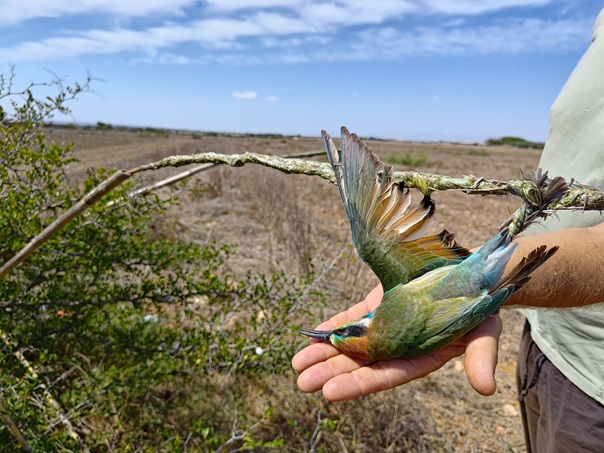
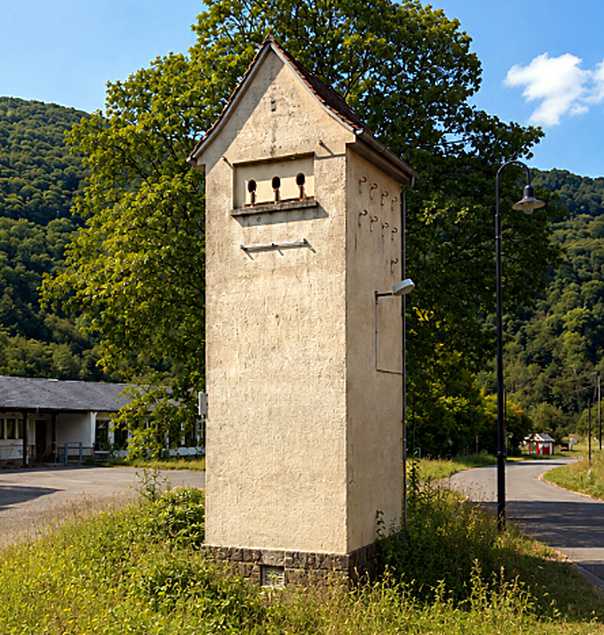
Five years after taking over a disused transformer tower in the Ahr Valley, work is now beginning on converting it into a species conservation tower. Situated right next to a nursery school, it will provide a new refuge for Common Kestrels, Barn Owls, House Martins, Sparrows, Common Swifts, bats and many other building-dwelling species – as well as a nature discovery area for children. Please help us to make this very special species conservation project in Hönningen a reality ... to the project
Postbank Hannover IBAN: DE47 2501 0030 0905 9063 07 BIC: PBNKDEFF
Stiftung Pro Artenvielfalt Meisenstraße 65 33607 Bielefeld Germany Tel. (0049) 0521 2997-883 / -884 / -889 Fax (0049) 0521 2997-885 Office Mo - Fr. 09.00 to 16.00
Foundation Management team@stiftung-pro-artenvielfalt.org Project Management projekte@stiftung-pro-artenvielfalt.org Donations, Donor Care service@stiftung-pro-artenvielfalt.org
 Donate now