Wildlife conservation project: Common Swift clinic
|
|---|

|
Wildlife conservation project: Common Swift clinic
|
|---|
|
|
Common Swifts, related to hummingbirds, have adapted perfectly to life in the air better than any other bird species. They are aerial acrobats who catch insects in the air on the wing, mate and do their personal hygiene at dizzy heights, capture even the smallest feathers and straws for their saliva-bound nest in flight and even sleep on the wing.
Common Swifts are true masters of the air, with a flight performance of up to 180,000 km a year! In late spring, they return to Europe from their southern winter quarters across the steppes and savannas of Africa.

Common Swifts against a summer sky © K. Roggel
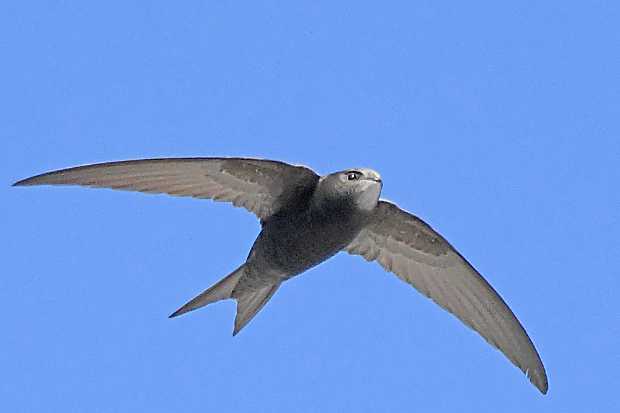
Portrait of a Common Swift above the city of Berlin © K. Roggel
Common Swifts are seasonal city-dwellers who use our building structures as substitute cliffs for nesting and breeding. Due to the warmer urban temperatures, they hunt their insect prey above the roofs of our cities and towns until late evening. Their carefree flight through the canyons of houses and streets, accompanied by their 'sriii sriii' calls, bring us a feeling of summer.
Common Swifts only have solid ground under their short, clawed feet during the breeding and rearing season from May to July – and then only at dizzy heights in niches and cavities in walls, under roofs, on rafters and behind rain gutters. Progressive building renovation and roof conversion of the old building stock increasingly destroy the nesting and breeding cavities used by the generations of swifts. Suitable substitute nest cavities are hard to find. This is exacerbated by the fact that they are genetically programmed to use the same nesting sites and nesting cavities over decades and the species-specific urge to breed in colonies.
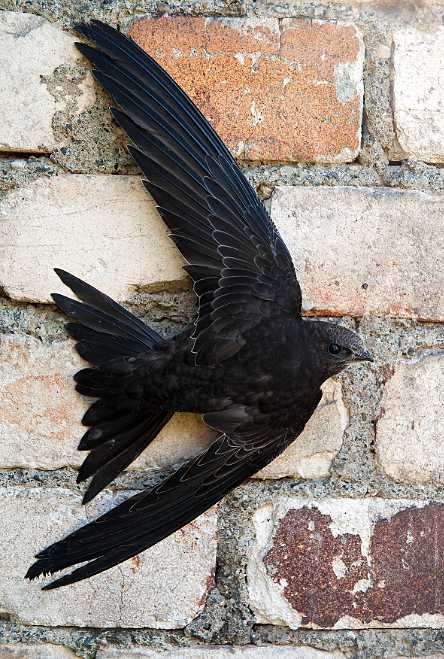
Common Swift on the wall of a building © Leo/fokus-natur

Building Renovation - a major factor for the loss of nest sites © SPA
All too often, despite strict legal protection, the nests of swifts, their eggs and young birds are destroyed by construction measures during the breeding season. After many years of observations of nest sites in several towns in North Rhine-Westphalia, Thuringia and Brandenburg, we estimate that as many as 25,000 Common Swift nest sites are lost in Germany alone every year.
The trend in urban development to predominantly glass structures or mirrored windowpanes, together with the countless antennas and wires in our metropolitan area city centres, present additional dangers for our adept flyers. Tens of thousands of swifts suffer death or serious injury every year as a result of impact or collision.
This 'exotic' bird species suffers like no other from building stock modernisation measures in our cities and towns. It has virtually no chance of finding substitute nesting sites in modern house and settlement construction. The medium and long-term survival of the Common Swift is dependent on the increased commitment of nature conservationists and species protection organisations such as our Foundation. We can only ensure the regional survival of this highly specialised species by creating new suitable substitute nesting sites and breeding cavities and the swift-friendly renovation of buildings no longer in use.
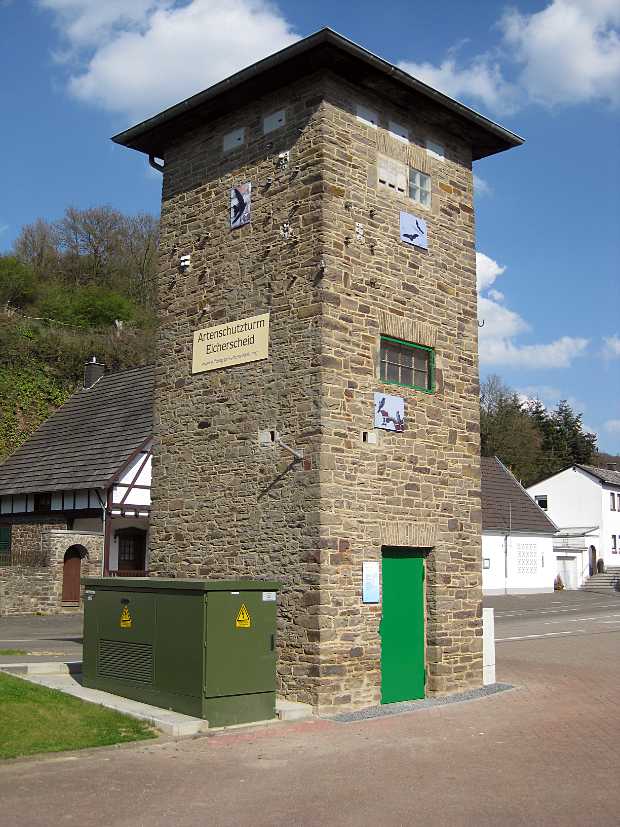
Species conservation tower in Eicherscheid designed specifically for the Common Swift © W. Zervos
No other nature and species protection organization has invested so consistently in donations for the conservation of the Common Swift as our Foundation. Our projects include the construction of species protection towers and financing of the Common Swift Clinic in Frankfurt am Main (Hesse) and the Common Swift Rescue Station in Bucharest (Romania). Swifts can now find nest sites in our special nesting boxes in town halls, schools and other public buildings. We are also continually on the lookout for more buildings to accommodate swift nest boxes!
Under the competent direction of veterinarian Dr Christiane Haupt, the Common Swift Clinic in Frankfurt am Main is dedicated to the rescue and rehabilitation of injured and helpless swifts. Dr Haupt is the foremost expert in Germany and enjoys the highest reputation throughout Europe. Since 2001, 8,600 Common Swift patients have been released from the clinic in good health. No less than 65% of all 13,300 injured patients admitted. This success is an increasingly significant contribution to the conservation of this unique bird species.

Young Common Swift with injured wing © E. Brendel
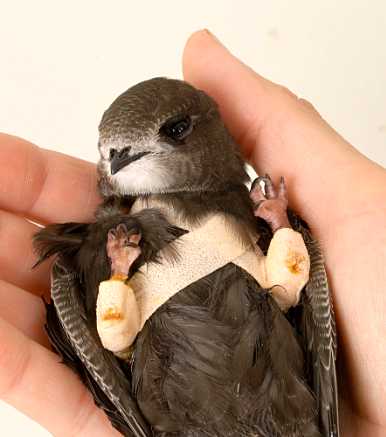
Common Swift with both legs broken © P. Hartmann
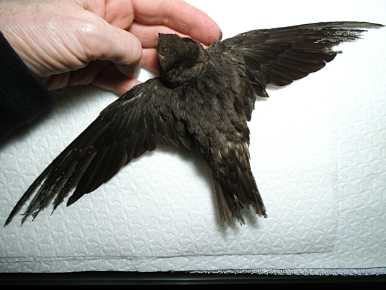
Common Swift with plumage damage © E. Brendel
Voluntary commitment alone is inadequate for the time-consuming and labour-intensive care of the flying acrobats. That is why we support the unique Common Swift rescue work of Dr Christiane Haupt and her volunteers in Frankfurt am Main, as well as the swift rescue team in Bucharest. We have provided substantial amounts of funding of up to 90,000 euros annually for many years!
It is hard for anyone to imagine the enormous time and workload necessary for the species-appropriate care of Common Swift patients. They need to be fed crickets and wax moth larvae every 2 hours from 7 a.m. to 10 p.m. Not from a feeding bowl but in single portions by hand as the insects must be stuffed deep into the bird's throat! During their rapid flight, the birds do not swallow the food until the insect lands deep in their throat!
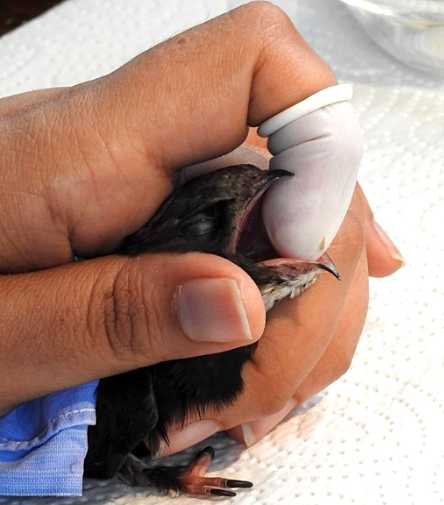
Work-intensive. Food can only be swallowed when the beak is wide open © SPA
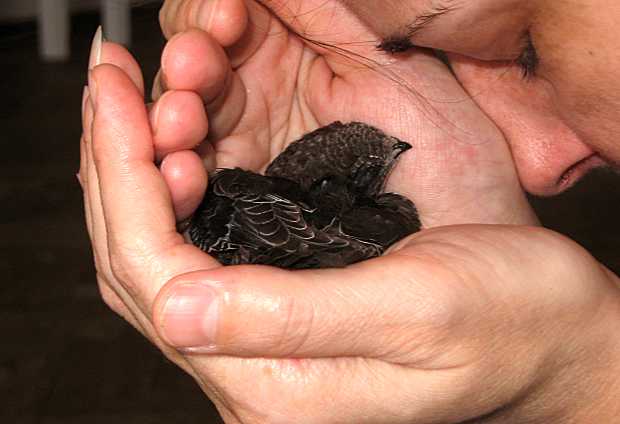
Two exhausted asleep © A. Stahl

Well looked-after Common Swift chick © SPA
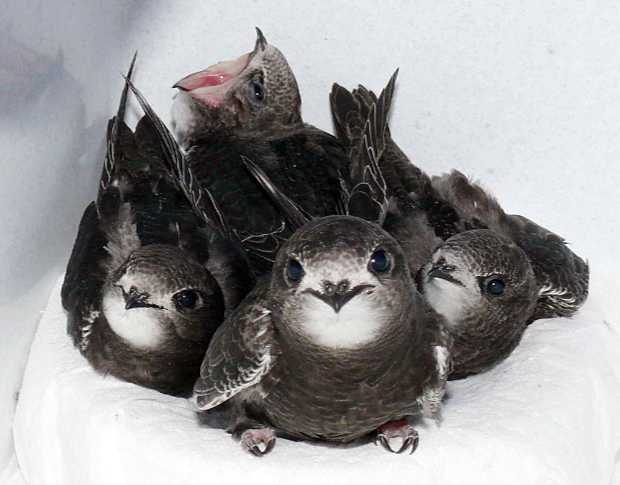
Swifts - sated and tired © E. Brendel
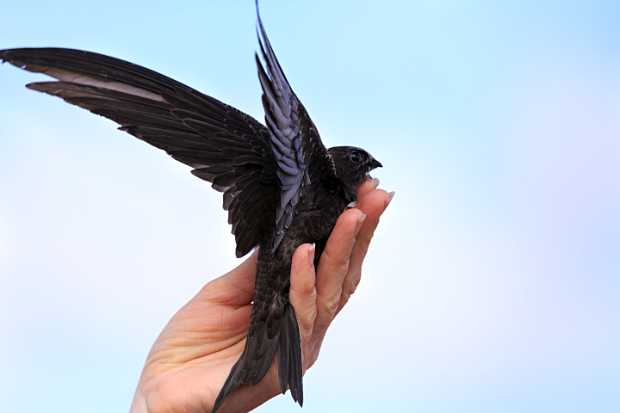
A well-cared for Common Swift is released © Klüver
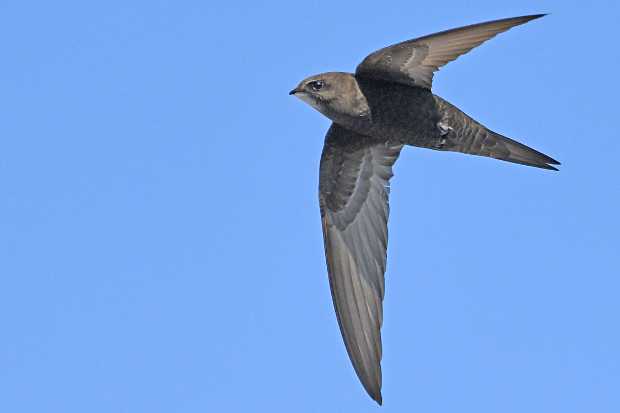
The Common Swift - born to fly! © K. Roggel
Please help us with your committed donation to provide the best possible professional help and rescue to swifts in need. With your support, the few dedicated Common Swift specialists will be relieved of worries about the costs of special swift food, veterinary examinations and care, hygiene products, and will receive a minimal wage.
The information on the copyrights of the images used on this site can be found at Copyrights, unless these are already indicated in or below the image.

Just 30 years ago, Great Egrets were an absolute rarity in Germany. Today, they are a familiar sight in many places. The story of Egret K195 is particularly remarkable: since 2018, it has been turning up time and again in our Frose nature reserve during the summer... more information

Following the successful spring bird conservation camps on Cyprus and the Greek island of Zakynthos, our local bird conservationists in Cyprus are once again standing up to the illegal operations of bird poachers and hunters. Yet again, we need your active support so that we can continue our campaign against the slaughter of migratory birds this autumn ... to the project
Postbank Hannover IBAN: DE47 2501 0030 0905 9063 07 BIC: PBNKDEFF
Stiftung Pro Artenvielfalt Meisenstraße 65 33607 Bielefeld Germany Tel. (0049) 0521 2997-883 / -884 / -889 Fax (0049) 0521 2997-885 Office Mo - Fr. 09.00 to 16.00
Foundation Management team@stiftung-pro-artenvielfalt.org Project Management projekte@stiftung-pro-artenvielfalt.org Donations, Donor Care service@stiftung-pro-artenvielfalt.org
 Donate now