Wildlife conservation project: Wild bird and hedgehog
|
|---|

|
Wildlife conservation project: Wild bird and hedgehog
|
|---|
|
|
The European Hedgehog (Erinaceus europaeus) is one of our most popular wild animals. Along with the bee and the Common Toad, it is one of the oldest existing animal species. Its ancestors lived around 65 million years ago, and its appearance has been unchanged for some 15 million years. The name hedgehog came into use around 1450, derived from the Middle English heyghoge, from heyg, hegge (hedge), because it frequents hedgerows, and hoge, hogge (hog), from its piglike snout. Other names include urchin, hedgepig and furze-pig.
In the past, one could hardly imagine hedge-lined meadow orchards, semi-natural green spaces and extensive gardens without a resident hedgehog. Here it found a variety of retreats, undisturbed daytime hiding places, safe locations for its nest, herb-rich hedge borders (fringe biotopes) and extensively used wild and orchard meadows with a rich insect food supply.
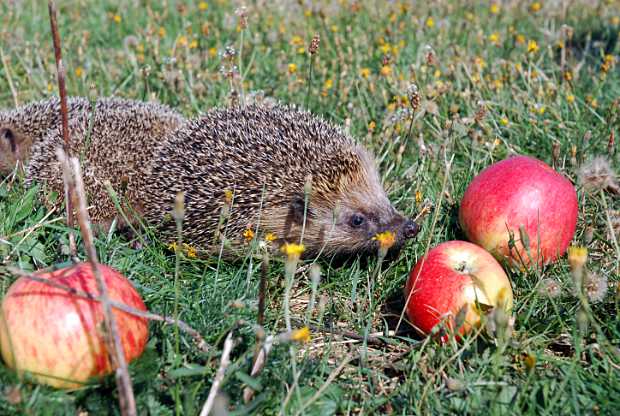
Hedgehog siblings beneath an apple tree © SPA
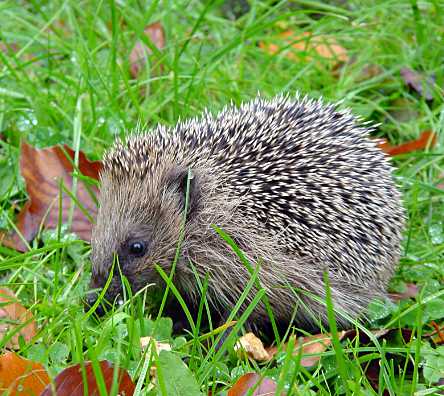
A hedgehog foraging in a garden © SPA
Nowadays, hedgehogs can be thankful if they find anywhere at all to live. Humans have become the hedgehog's worst enemy with their never-ending intervention in the landscape, the use of almost 28,000 tons of pesticides on German farmland annually, and an almost manic craze for neatness and order in the natural structures of the countryside.
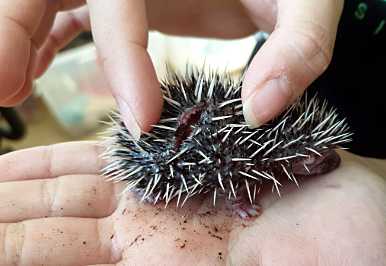
Hedgehog baby slit open by a brush cutter © A. Baronetzky
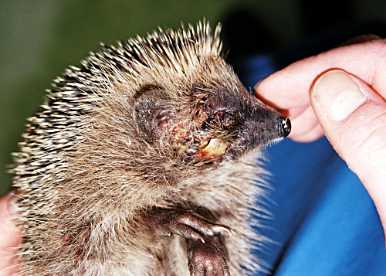
A hedgehog with severe facíal injuries © A. Baronetzky
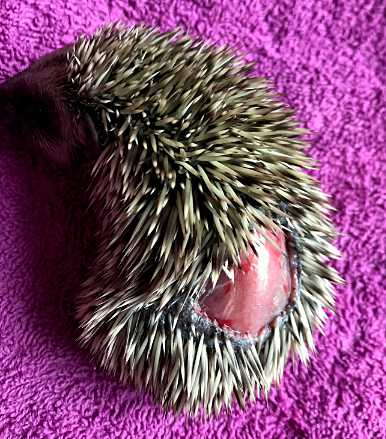
A young hedgehog scalped by a robot mower © A. Baronetzky
The dry and hot summers of the last few years do the rest:
Hedgehogs, but unfortunately not their habitats, are one of the strictly protected animal species throughout Europe. In autumn, you should not offer underweight, starving, or late-born hedgehogs unsuitable food or disease-causing cow's milk. You can find the best tips and advice for helping 'your' garden or park hedgehogs in late autumn here.
Hedgehogs in dire need found in the Eifel region, in northern Rhineland-Palatinate, in North-Rhine Westphalia and even in western Hesse, can be taken to the wild bird and hedgehog rescue station in Kirchwald/Eifel, where they will receive expert help and care.
In the Kirchwald hedgehog rescue station, which we have now been fully financing for 12 years, up to 350 needy hedgehogs are lovingly and self-sacrificingly cared for every year and, if necessary, receive veterinary treatment. It is not uncommon for the young volunteer hedgehog rescuers to work at their limit. Caring for a baby or a young hedgehog is somewhat sleep-depriving and exhausting, as with human children. Hedgehog babies, for example, need to be fed special milk every two hours.
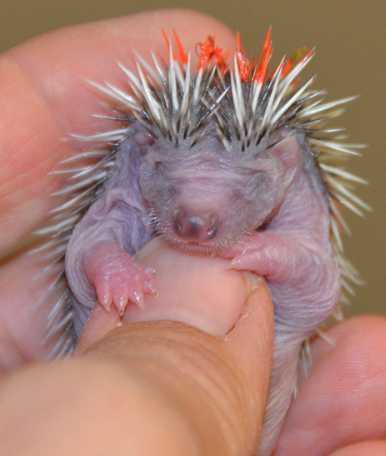
A hedgehog baby born in the rescue station © A. Baronetzky

Feeding a hedgehog baby © A. Baronetzky
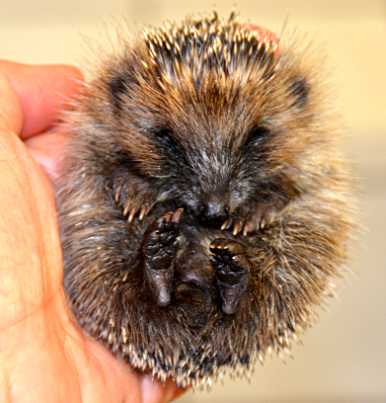
A sated and sleepy hedgehog baby © A. Baronetzky
Hedgehog fosterlings who are still significantly underweight in late autumn or who are not yet capable of surviving on their own must remain in the rescue centre for the winter. These hibernators do not sleep through the night but wake up at regular intervals and need feeding and their winter boxes cleaned.
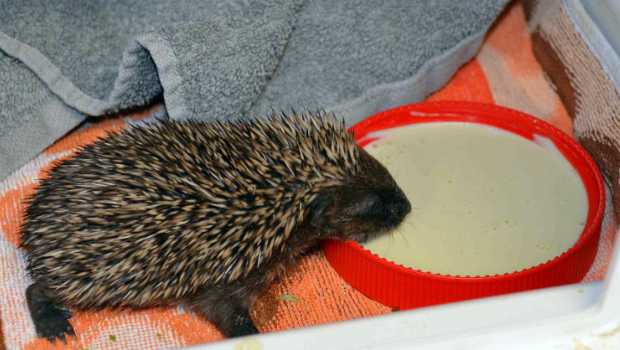
Young hedgehog with its special milk diet © SPA
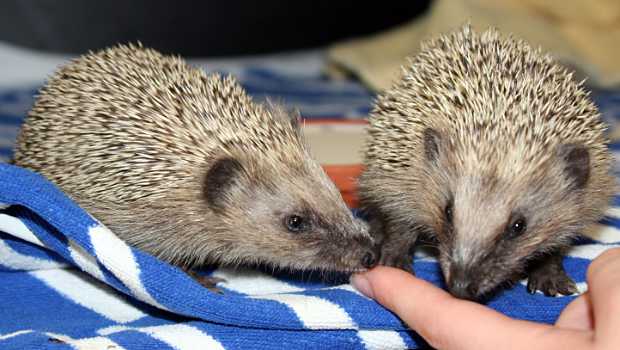
Hedgehog siblings in the rescue station © H. Segschneider
But all the effort and work are well worth it. In the Kirchwald hedgehog rescue station, since 2007, more than 3,200 helpless and injured hedgehogs have been nursed back to health and released into the wild in suitable natural habitats. This self-sacrificing wildlife protection work is only possible with regular financial support from animal lovers.
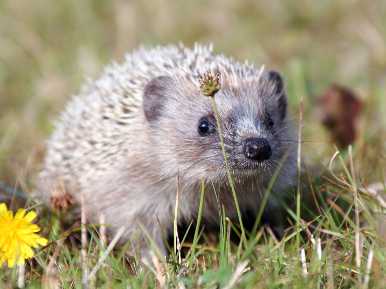
A young hedgehog discovering its world © SPA
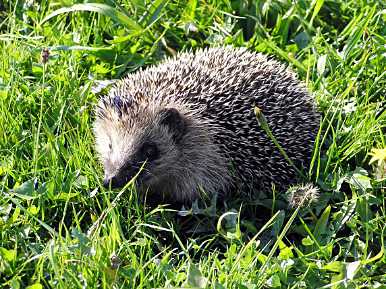
A young hedgehog sniffs its new-found freedom © SPA
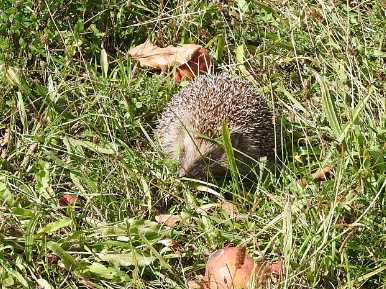
A recuperated hedgehog released into a meadow orchard © SPA
Please help us with a dedicated donation so that our lovable, fascinating hedgehogs also have a secure future with us... and we won't have to rewrite the story of "the Hare and the Hedgehog"!
The information on the copyrights of the images used on this site can be found at Copyrights, unless these are already indicated in or below the image.

Just 30 years ago, Great Egrets were an absolute rarity in Germany. Today, they are a familiar sight in many places. The story of Egret K195 is particularly remarkable: since 2018, it has been turning up time and again in our Frose nature reserve during the summer... more information

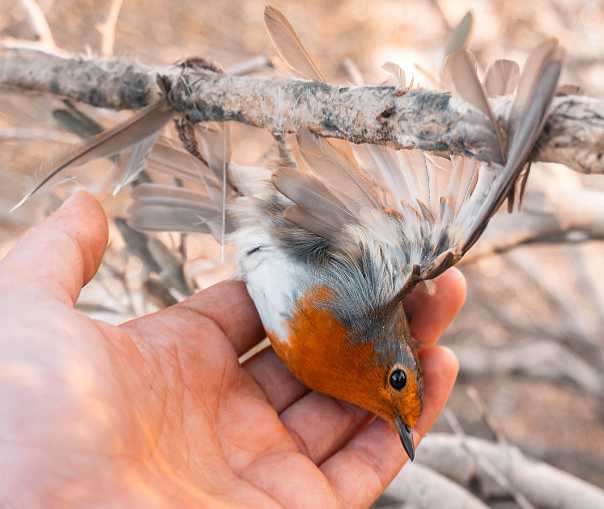
Following the successful spring bird conservation camps on Cyprus and the Greek island of Zakynthos, our local bird conservationists in Cyprus are once again standing up to the illegal operations of bird poachers and hunters. Yet again, we need your active support so that we can continue our campaign against the slaughter of migratory birds this autumn ... to the project
Postbank Hannover IBAN: DE47 2501 0030 0905 9063 07 BIC: PBNKDEFF
Stiftung Pro Artenvielfalt Meisenstraße 65 33607 Bielefeld Germany Tel. (0049) 0521 2997-883 / -884 / -889 Fax (0049) 0521 2997-885 Office Mo - Fr. 09.00 to 16.00
Foundation Management team@stiftung-pro-artenvielfalt.org Project Management projekte@stiftung-pro-artenvielfalt.org Donations, Donor Care service@stiftung-pro-artenvielfalt.org
 Donate now