Wildlife conservation project: Protection of the
|
|---|

|
Wildlife conservation project: Protection of the
|
|---|
|
|
The Little Owl was revered as a bird of wisdom in ancient Greece. It was considered a symbol of Athena, the goddess of wisdom, and bears her name in its scientific designation Athene noctua.
With a body length of at most 25 cm, the Little Owl is one of our smallest domestic owls. Only the Pygmy Owl is smaller. In contrast to other owls of the same species, the Little Owl can, with luck, also be seen during the day. When foraging for food on mown or grazed meadows, it hunts its prey, beetles or mice, by running fast or hopping on the ground.
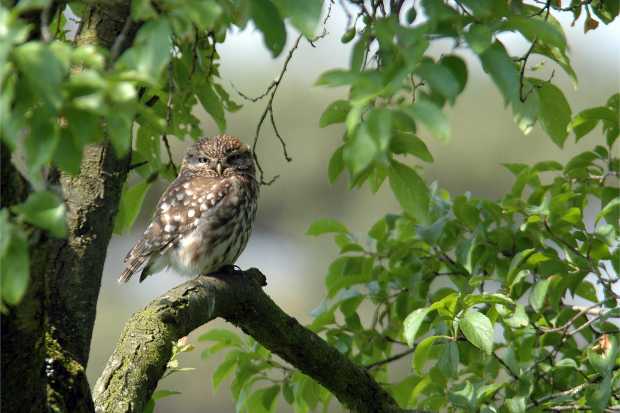
Little Owl in old fruit tree © FotoNatur
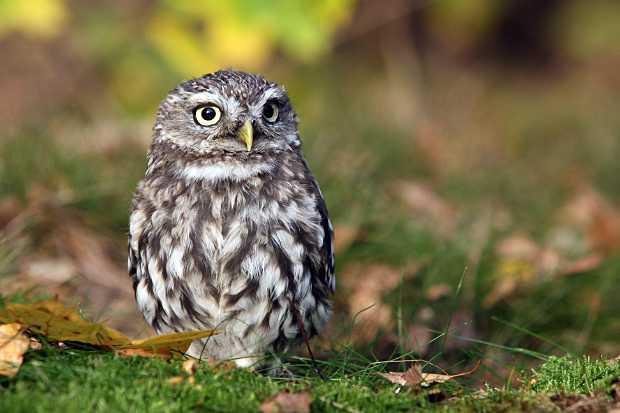
Little Owl tries its luck at hunting prey on the ground © FotoNatur
Unfortunately, the Little Owl's only permanent place is on the German Red List, where it is listed as "threatened". There are only about 6,000 breeding pairs left in Germany, and we have searched in vain for this little owlet in several federal states! With around 4,500 (75%) Little Owl breeding pairs, the lion's share is in the state of North Rhine-Westphalia. Of these, some 300 breeding pairs are still resident in the Paderborn region.
As is so often the case, man has robbed this small diurnal of its traditional habitat. Almost 95% of the old meadow orchards and well-structured cottage gardens were destroyed in Germany to make place for new buildings and village and town expansion. It takes decades for the few newly planted meadow orchards to become a suitable survival space for the Little Owl.

Unpruned pollard willow © SPA
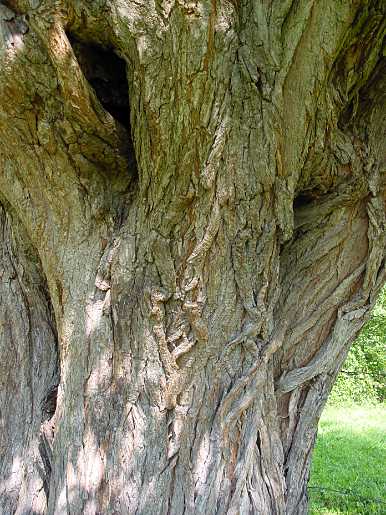
Old pollard willow with cavities © SPA
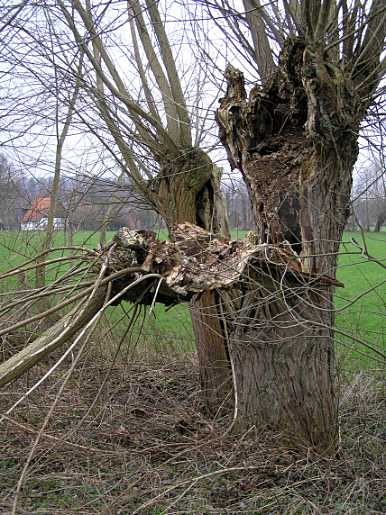
Broken old pollard willow © SPA
The massive disappearance of pollarded willows from the agricultural countryside began with the end of their economic use for basket weaving. Tens of thousands of pollarded willows along the dirt roads, damp ditches and streams were cleared, and the old cavernous, pollarded willows still existing today are increasingly threatened by wind damage and decay! The constantly growing branches of this softwood tree species break deep down into the trunk during storms and also under their own weight - this means that more and more old pollarded willows are lost as nesting/breeding places and as habitat for our Little Owls and thousands of insect species. Replacement plantings take decades to mature before they are suitable as Little Owl habitat!
Pollard willows, as natural elements characterising the landscape, are not only ecologically valuable small biotopes but also important stepping-stones, resting and feeding places for a large variety of wild birds, mammals and insect species in the increasingly cleared agricultural countryside.
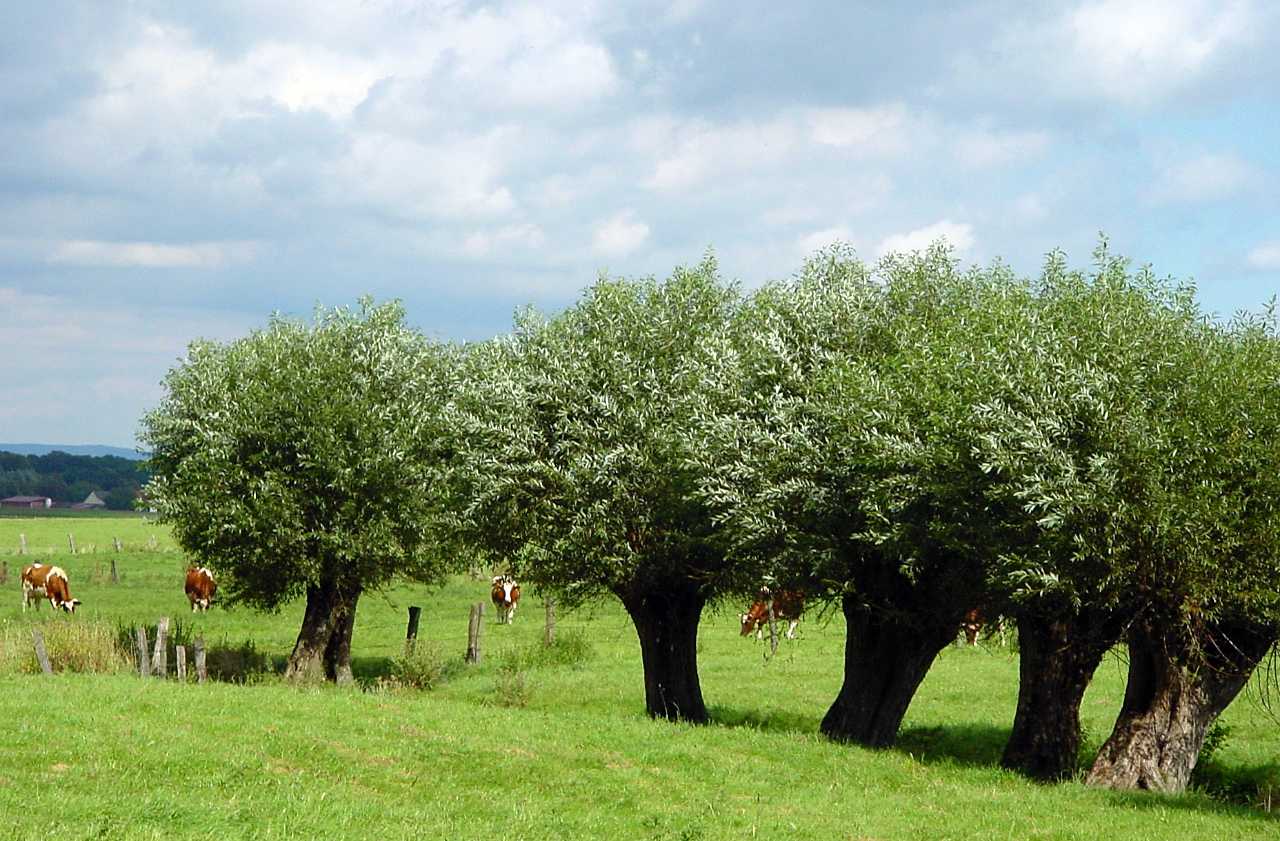
Pollard willow landscape near Thüle, Paderborner Land © SPA
Preserving the few pollard willows that still exist through professional pruning and - wherever possible in consultation with landowners - the planting of new willows is one of the most effective conservation measures for the Little Owl, now and in the future.
Our Foundation has been caring for the irreplaceable and valuable Little Owl habitat in Paderborner Land since 2005. In addition to the purchase of old meadow orchards and the replanting of high-stem fruit trees of old regional varieties, we professionally prune mature willow trees into the pollard form with the assistance of qualified tree maintenance firms. This is done with the written consent of the landowner and a guarantee of continuity. We plant new willow trees distant from roads and country lanes using arm-thick willow sticks up to 2,50 m long and build special marten-proof Little Owl breeding tubes in suitable old willow and fruit trees.

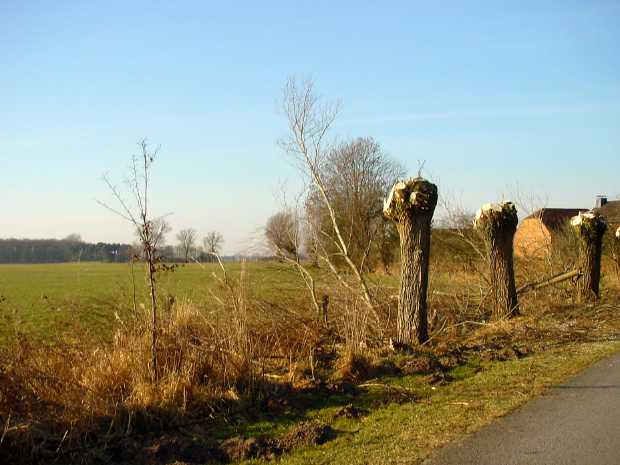
Regular pruning is essential for the protection of this unique habitat © SPA
In this way, we preserve the valuable habitat in Paderborner Land, which has long since disappeared elsewhere, for the Little Owl and hundreds of other bird, mammal and insect species for decades to come.

Little Owl © H. Glader
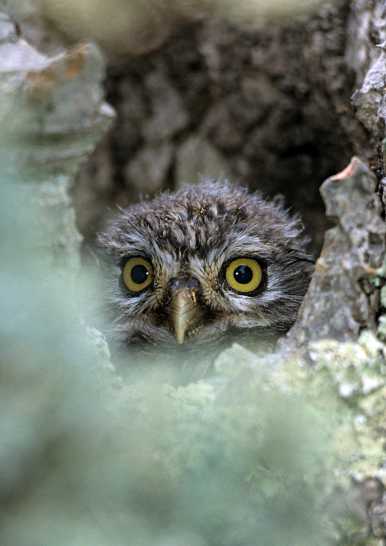
Young Little Owl inspects its surroundings © Pröhl / fokus-natur
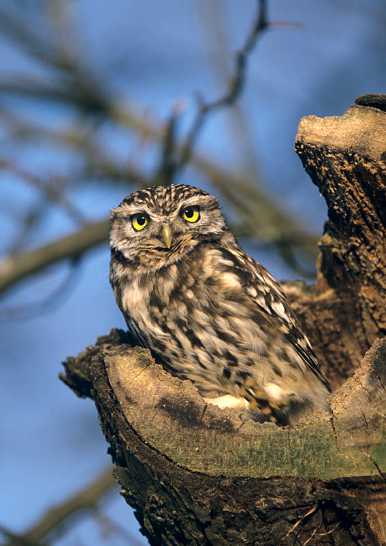
Little Owl © H. Glader

Winter pollard willow landscape in Paderborner Land © SPA
Please help us with your dedicated donation. The professional pruning of a willow tree costs between 25 and 80 euros, depending on the age and size of the tree crown. The professional setting of new willow sticks to compensate for cleared pollarded willows costs us up to 50 euros including travel.
The information on the copyrights of the images used on this site can be found at Copyrights, unless these are already indicated in or below the image.

Just 30 years ago, Great Egrets were an absolute rarity in Germany. Today, they are a familiar sight in many places. The story of Egret K195 is particularly remarkable: since 2018, it has been turning up time and again in our Frose nature reserve during the summer... more information

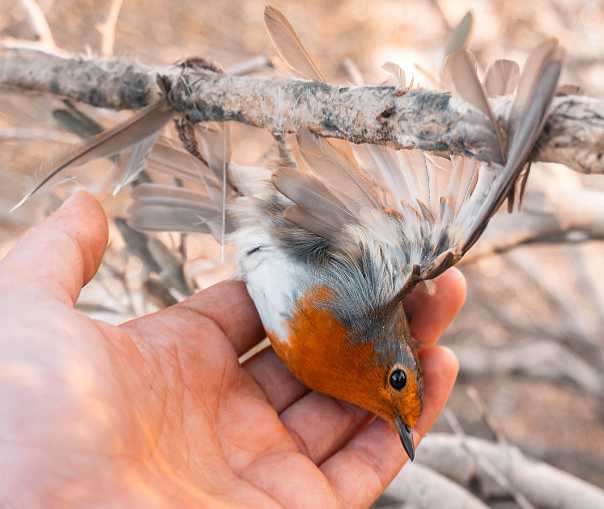
Following the successful spring bird conservation camps on Cyprus and the Greek island of Zakynthos, our local bird conservationists in Cyprus are once again standing up to the illegal operations of bird poachers and hunters. Yet again, we need your active support so that we can continue our campaign against the slaughter of migratory birds this autumn ... to the project
Postbank Hannover IBAN: DE47 2501 0030 0905 9063 07 BIC: PBNKDEFF
Stiftung Pro Artenvielfalt Meisenstraße 65 33607 Bielefeld Germany Tel. (0049) 0521 2997-883 / -884 / -889 Fax (0049) 0521 2997-885 Office Mo - Fr. 09.00 to 16.00
Foundation Management team@stiftung-pro-artenvielfalt.org Project Management projekte@stiftung-pro-artenvielfalt.org Donations, Donor Care service@stiftung-pro-artenvielfalt.org
 Donate now