Wildlife conservation project: Conservation of the
|
|---|

|
Wildlife conservation project: Conservation of the
|
|---|
|
|
In our native German countryside, bird lovers rarely get the chance to observe the strictly protected Black Stork with its shimmering metallic plumage. Whereas the White Stork seeks proximity to humans in villages, the Black Stork, which lives in the forest, is extremely shy and sensitive to disturbance and avoids proximity to people. It lives secluded in undisturbed old mixed forests - preferably in the low mountain ranges. There it also builds its nest on old trees at high altitudes. Black Storks, previously temporarily extinct through direct persecution, now have hardly any natural enemies in Germany, and some 800-900 breeding pairs currently reside here again. Despite this welcome development, human- caused habitat disturbances and destruction by humans make breeding, rearing young and thus surviving increasingly more difficult.
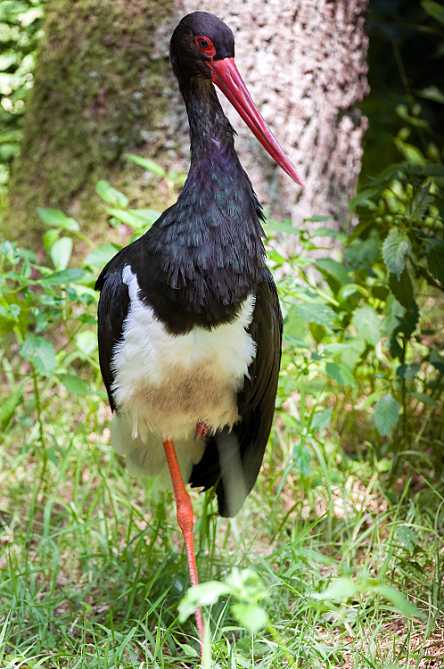
Foraging Black Stork © Leo fokus-natur
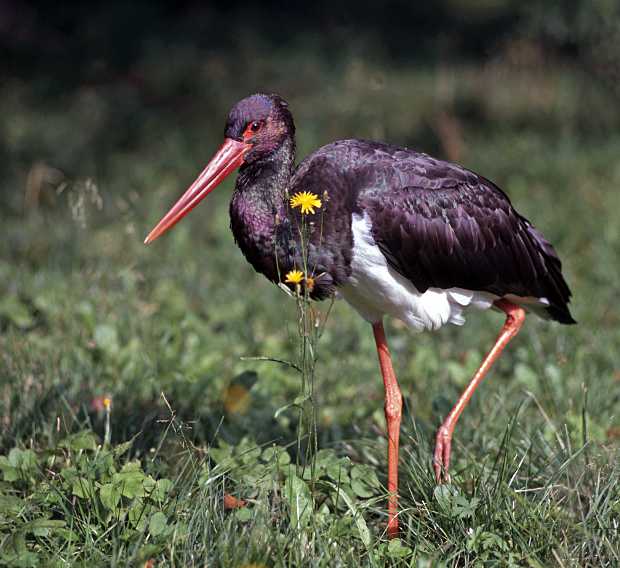
Black Stork foraging on a woodland meadow © L. Hlasek
Political will and related aims paralyse effective Black Stork protection measures and activities in several federal states. This also applies to forest authorities, as forest areas used by the Black Stork for breeding stand in the way of the conflict-free construction of wind turbines.
The Black Stork, which is strictly protected and extremely sensitive to disturbance, suffers massively from the industrialisation of our low mountain range forests as locations for new wind turbines and their access roads. For every wind turbine erected in the forest, up to 1.3 ha (13.000 m²) of forest are permanently destroyed. Worse still and unfortunate from the point of view of species protection, an alliance of politicians, environmental protection associations and climate protection activists demand thousands of new, forest-destroying wind turbine locations! At the same time, this alliance also laments the ongoing destruction of the rainforest.
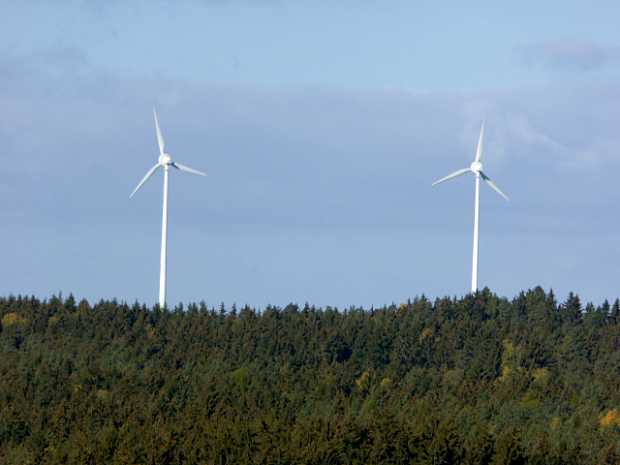
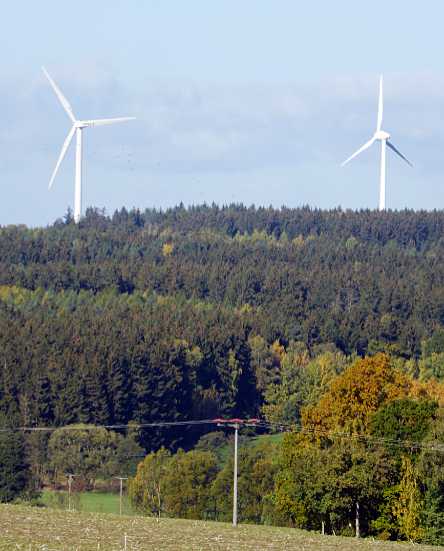
Wind farms in a forest area © SPA
Rotating rotor blades, excessive wind noise, and red and white laser flashes every second drive our rare Black Storks away from their nest trees and their breeding grounds within a radius of 1,000 m. Disturbed in this way, they leave their nest site and increasingly and unsuccessfully seek new, undisturbed nest trees and substitute breeding areas - an existential threat to our small Black Stork population. For example, in a timeframe of only six years, the number of breeding pairs on the Vogelsberg in Hesse fell by 50% with the construction of 125 wind turbines. This was demonstrated by a study on wind power in the forest by the ornithologist Dr Klaus Richarz, a member of our board of trustees. In the meantime, the population has increased again due to consistent protective measures in this densely forested region.
Where raccoons occur in the low mountain range, the invasive North American omnivores threaten the breeding activity of our Black Storks. Raccoons climb trees up to 25 m high to seize eggs and stork chicks. Plastic and sheet metal sleeves attached to the trunks of Black Stork breeding trees by conservation activists can prevent losses caused by raccoons.
All Black Stork conservation measures aim to establish protected forest areas for this rare, impressive large bird, where it can find a species-specific survival space without negative human influences. Although there is still a slight increase in the German Black Stork population, it cannot tolerate population losses without the risk of regional extinction.
So that our shy and increasingly threatened indigenous Black Storks can continue to find suitable nest trees and breeding grounds essential for their survival, our Foundation has, since 2015, financially and operationally supported the construction of Black Stork nest platforms in forest areas that are currently undisturbed today and will hopefully remain so in the future. This has been achieved with the express consent of private forest owners.
The construction of an artificial Black Stork nest in a suitable old tree at a height of up to 25 m takes up to 6 hours. It requires a head for heights and tree climbing experience and top physical condition to be able to endure hours of hard physical work hanging in a rope or standing on branches.
The artificial nests that we finance offer a sense of achievement and success, as Black Stork breeding pairs usually accept them as nesting and breeding sites after only 1-3 years. Wherever a nest platform replaces a natural nest that has collapsed in winter, the Black Storks returning from their winter quarters often accept the offer of a new breeding site immediately.

Ascent of a 30 m high nest tree © SPA
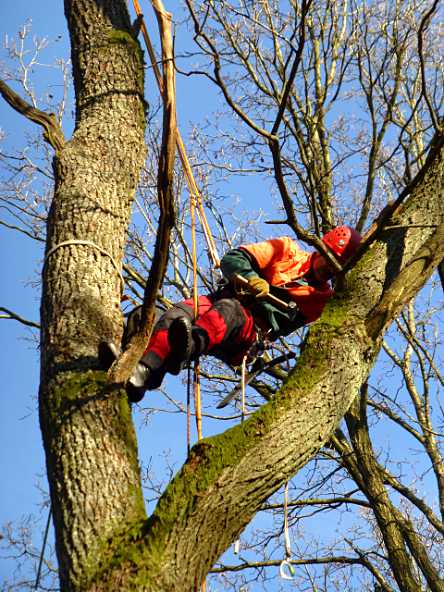
Lofty nest-building - true tightrope walking © SPA
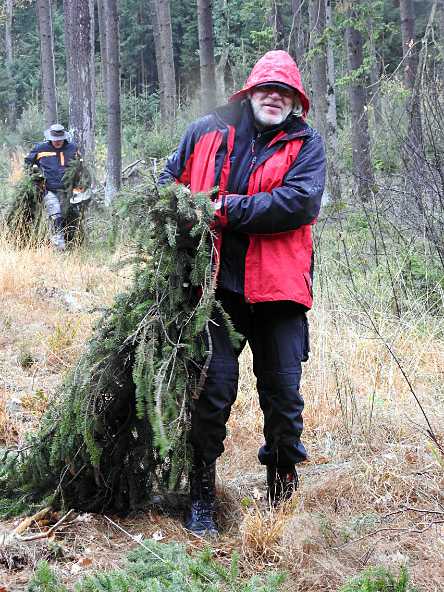
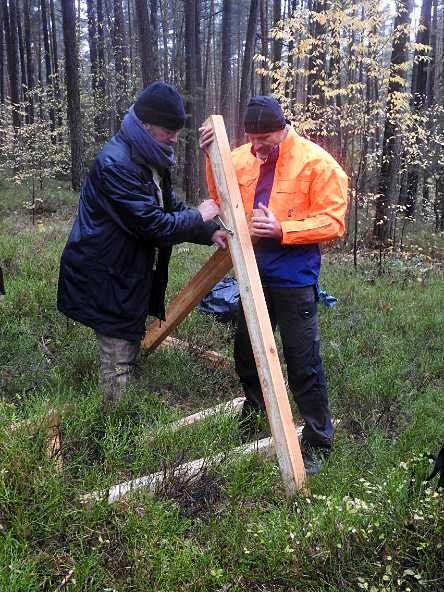
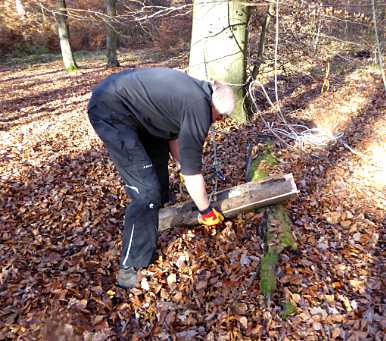
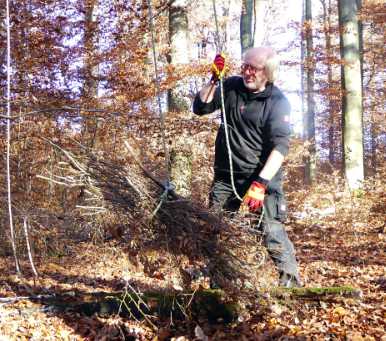

On directions from above, kilograms of dry branches, moss and fresh spruce twigs are collected and trimmed to measure. The nesting material is pulled up by rope.
All photos: © SPA
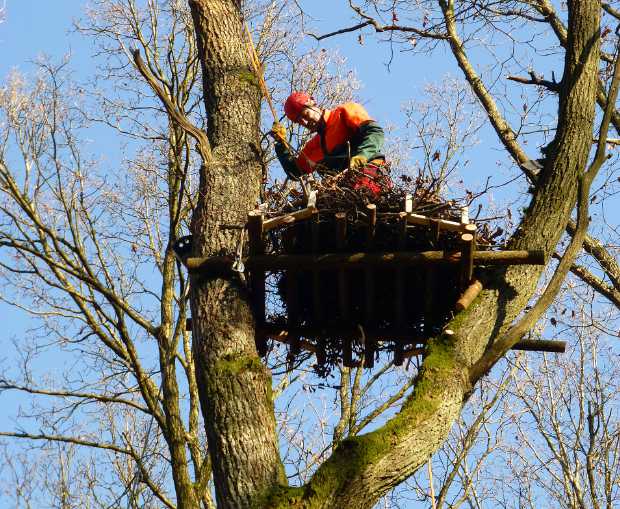
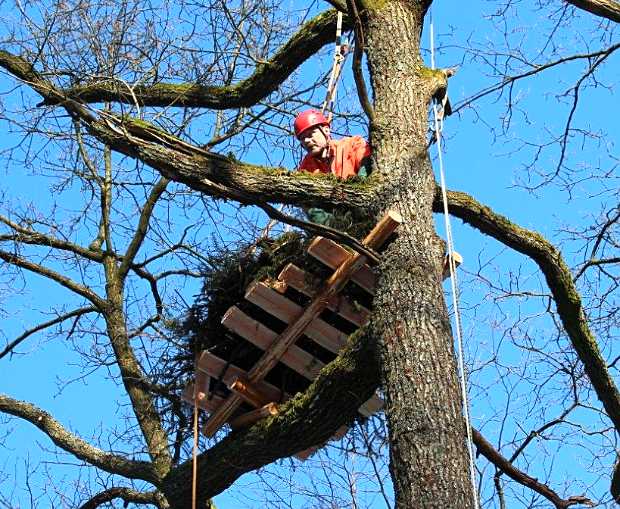
Completed artificial Black Stork nest with moss lining © SPA
To rule out disturbance and destruction, we keep the locations of our newly established artificial nests secret and refrain from inspection visits during the breeding season. The 3 to 4 young storks that fly out each year from an artificial nest represent a huge success for the protection of this rare wood stork and make a significant contribution to the preservation of this unique species.

Black Stork pair with young at the nest © N. Fiebach
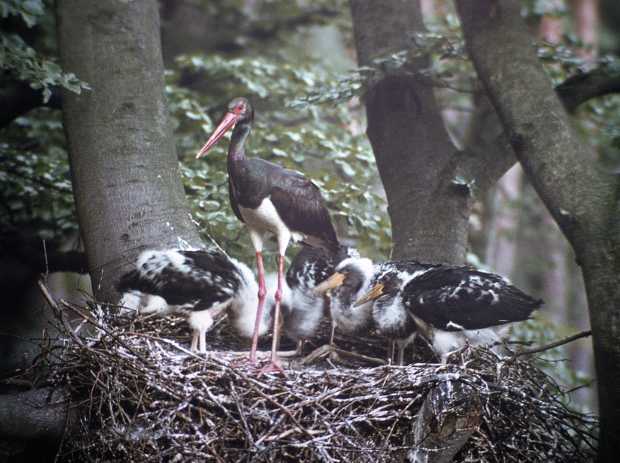
Black Stork pair with young on a naturally built nest © L. Hlasek
Please help us with your dedicated donation. The building material and the professional construction of a black stork artificial nest, including travel to and from the site, costs 750 euros.
The information on the copyrights of the images used on this site can be found at Copyrights, unless these are already indicated in or below the image.

Just 30 years ago, Great Egrets were an absolute rarity in Germany. Today, they are a familiar sight in many places. The story of Egret K195 is particularly remarkable: since 2018, it has been turning up time and again in our Frose nature reserve during the summer... more information

Following the successful spring bird conservation camps on Cyprus and the Greek island of Zakynthos, our local bird conservationists in Cyprus are once again standing up to the illegal operations of bird poachers and hunters. Yet again, we need your active support so that we can continue our campaign against the slaughter of migratory birds this autumn ... to the project
Postbank Hannover IBAN: DE47 2501 0030 0905 9063 07 BIC: PBNKDEFF
Stiftung Pro Artenvielfalt Meisenstraße 65 33607 Bielefeld Germany Tel. (0049) 0521 2997-883 / -884 / -889 Fax (0049) 0521 2997-885 Office Mo - Fr. 09.00 to 16.00
Foundation Management team@stiftung-pro-artenvielfalt.org Project Management projekte@stiftung-pro-artenvielfalt.org Donations, Donor Care service@stiftung-pro-artenvielfalt.org
 Donate now