Wildlife conservation project: Wildlife rescue station
|
|---|

|
Wildlife conservation project: Wildlife rescue station
|
|---|
|
|
More than 600,000 licensed hunters in Italy enjoy high social standing, and hunting - whether practised legally or illegally - is a men-only hobby. Illegal hunters and poachers rarely, or hardly ever, fear penalties from the police authorities.
The mountainous regions on the west (Sicily) and east (Calabria) of the Strait of Messina are still an unsafe flight route for the up to 40,000 birds of prey that pass through annually on migration. The two bird migration routes that run along the west and east coast of Italy and the north and east coast of Sicily unite here at this only 3 to 8 km wide strait between the Italian mainland and the island of Sicily.

The Straits of Messina: Sicily left in the foreground, Calabria (mainland Italy) on the background © MWRC
White and Black Storks in particular, as well as all bird of prey species, use the thermals on the mountain slopes on both sides of the Strait of Messina to gain altitude for crossing the strait and for their onward migration flight.
But as long as the tradition lives on that a young man has to prove his masculinity by shooting down an eagle, poaching of birds of prey will continue. Even worse is that most poachers cannot identify the different birds of prey. So, unfortunately, all species of birds of prey such as Osprey, Lesser Spotted Eagle, Common Buzzard, Honey Buzzard, Marsh Harrier, Hen Harrier, Peregrine Falcon and Red Kite, as well as Black and White Storks are still shot down and often left severely injured in rough terrain.

Honey Buzzards on migration over the Straits of Messina against the backdrop of the Peloritani Monti (Sicily) © MWRC
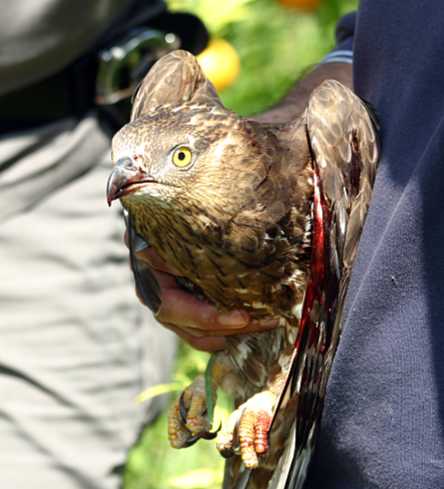
Honey Buzzard with gunshot wounds © A. Scuderi
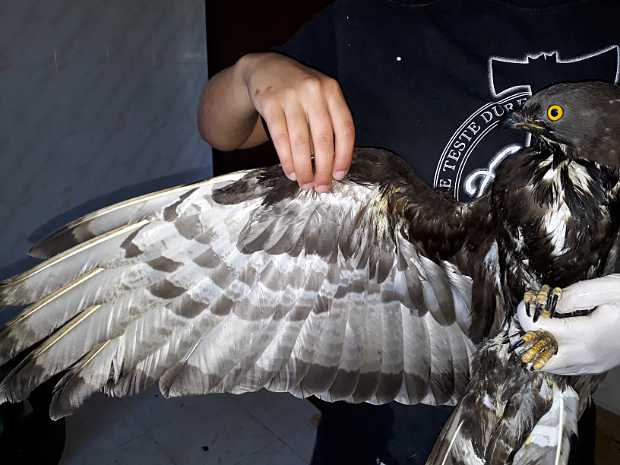
Honey Buzzard injured by shooting © MWRC
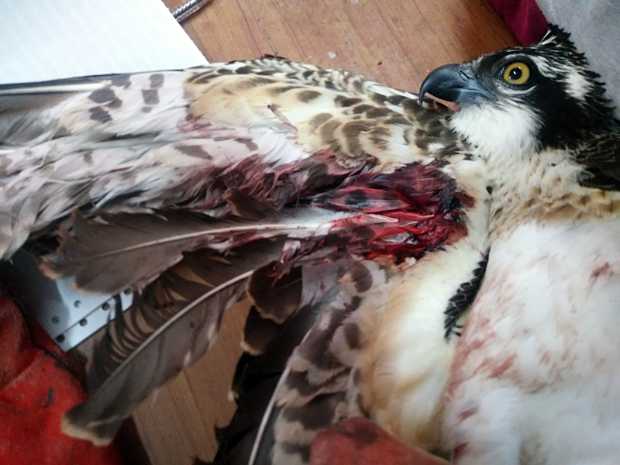
Osprey shot by poachers during autumn migration to Central Europe © MWRC

A victim of poaching. Shot Honey Buzzard © MWRC
The scenically impressive mountain regions covered with Mediterranean forests on both sides of the Strait of Messina not only offer bird poachers concealed shooting locations for birds of prey but also lucrative songbird trapping regions, in which tens of thousands of Central and Northern European migratory birds such as Goldfinches, Linnets, Siskins, Bramblings and Hawfinches can still be caught illegally and sold profitably at prohibited bird markets.

View of the Straits of Messina from the mountain slopes of Sicily © I. Adami
A conservative estimate is that up to 60,000 illegally caught goldfinches are kept in tiny cages in Sicily. Many of these beautiful singers die during the cruel animal transport and do not survive for very long afterwards, imprisoned in the far too cramped cages. The Goldfinch, a perennial singer that sings even in flight, is doomed to sing without any sign of discomfort until it perishes.
From conversations with Sicilian bird poachers, we know that the price for a live goldfinch on an illegal bird market varies from 10 to 150 euros depending on the demand, colour, song quality and survival time after trapping. In the tiny cages, which are only 25-30 cm long and 15-20 cm wide, there is usually only one perch on which the finches, which are usually so lively, have to sit for 24 hours a day!
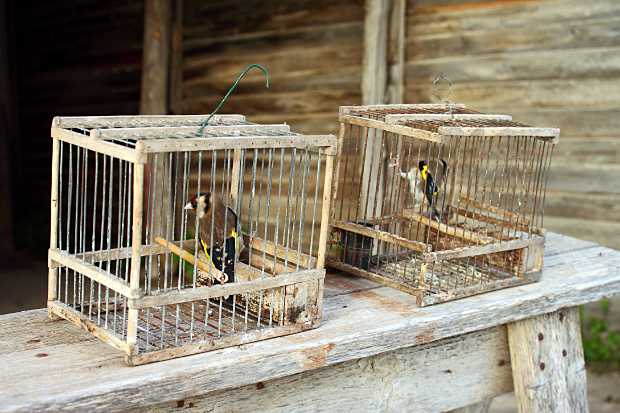
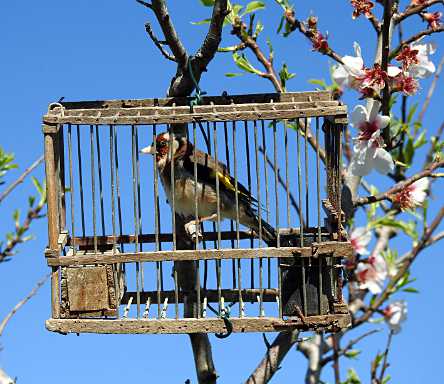
Goldfinches trapped on migration. Caged and offered for sale © SPA
With a metal wire sling around the bird's breast, along with a snap hook and a wire thread, goldfinches are misused in private gardens in Sicily as singing decoys for illegal Goldfinch trapping with nets and in aviaries.

Decoy Goldfinch with a wire sling around its breast © MWRC
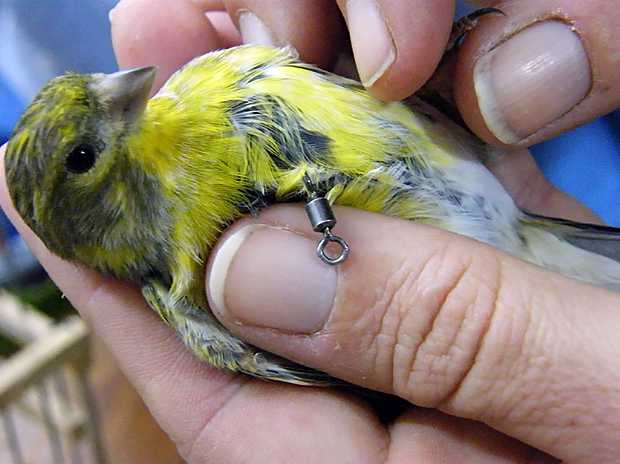
Freed from its wire sling by the Carabinieri. A decoy Serin © MWRC
The average lifespan of songbirds kept in this way is a maximum of 2 to 3 years. On the other hand, Goldfinches live up to 6 years in their natural habitat. Continued illegal goldfinch demand from bird traders in Malta also drives up songbird prices. No illegal bird trapping effort is too great for the Sicilian poachers to trap these colourful birds. And no price is too high for Goldfinch lovers to replace their gregarious singers with illegally caught wild birds after their brief life in torturously confined captivity.
The existence and continuation of the only privately organised and well-run wildlife rescue centre MWRC (Messina Wildlife Rescue Centre) is the last technically qualified rescue station for raptors, waterfowl and songbirds in Sicily and the Italian mainland region of Calabria. These bird species, which migrate through the mountain regions on both sides of the Strait of Messina, are either injured by bird poaching and illegal bird hunting, have accidents or are freed from illegal bird keeping by regional police forces.
Animal lovers, mostly courageous women, do remarkable things for practical bird protection under difficult social circumstances in this rescue station. Without it, politicians in Sicily would no longer be made aware of the existing abuses in bird protection, and their assertions that bird poaching no longer exists could not be given the lie. Without the MWRC, the door would be wide open to a renewed upsurge in bird poaching and illegal bird hunting in one of the most critical raptor migration hotspots in southern Europe.
Goldfinches and other migratory finch species are still not acutely endangered due to their flexibility in habitat requirements and their still good reproduction numbers (up to 2 broods per year). Global warming and the associated increase in flowering plants and seeds are apparently improving their living conditions. Never before have we received so many first sightings from our donors.
The MWRC wildlife rescue station, recognised as a non-profit and privately organised and run wildlife rescue centre in Sicily, has been concerned about its existence for some considerable time. For years, the regional authorities of the metropolitan city of Messina have refused to pay dedicated public funds to the wildlife rescue station the payment of promised funds, although forest police and Carabinieri continue to deliver wild birds injured or confiscated birds to this only trans-regional rescue station.
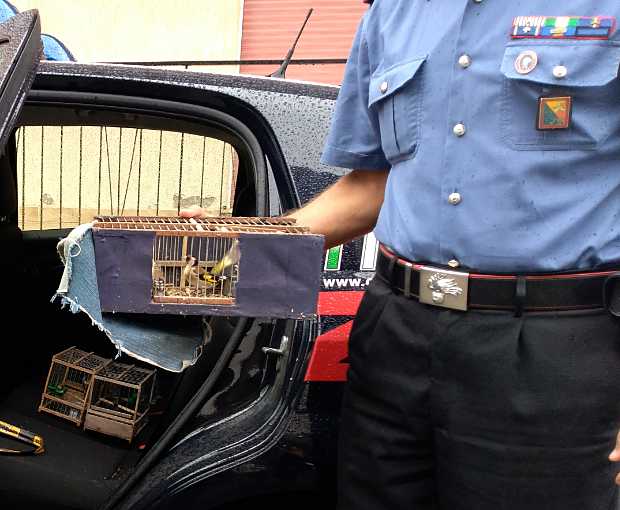
Carabinieri deliver confiscated Goldfinches to the Messina wildlife rescue station © MWRC

Illegally trapped Goldfinches in transport cages confiscated by the Carabinieri © MWRC
Nevertheless, the animal rights activists supporting Anna and Deborah kept the sanctuary alive on their own with their scarce but dwindling private funds until October 2017, thereby saving not only thousands of migratory birds injured by shooting and poaching but also mammals such as hedgehogs, porcupines, bats and Sicilian turtles.

Shot Honey Buzzard with a threat message © MWRC

Booted Eagle shot down over Calabria © MWRC
Since November 2018, our foundation, with the financial support of our sister foundation in Basel (Switzerland), has been financing the operational work, the running costs and the maintenance and modernisation of the rescue station infrastructure.
We are currently tackling the modernisation of the two large free-flight aviaries for birds of prey so that they have undisturbed places to perch and rest in the aviaries out of sight of visitors and so that the aviaries can be cleaned in a more efficient and time-saving manner.
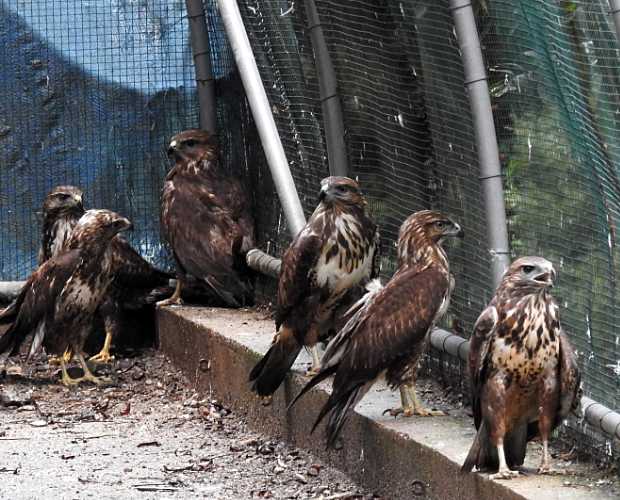
Common and Honey Buzzards in care at the Messina wildlife rescue station © SPA
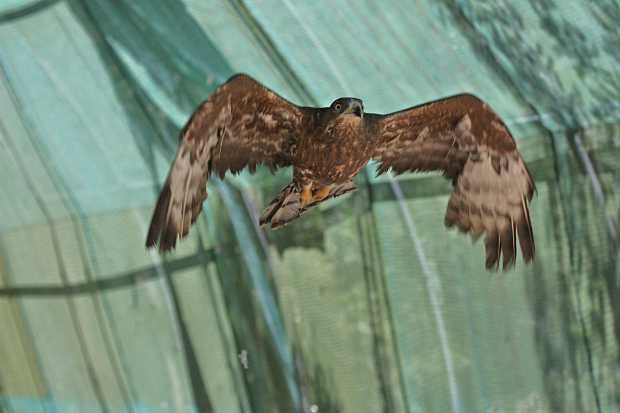
A Honey Buzzard nursed back to health in the rescue station free-flight avíary © MWRC
The annual maintenance costs of the MWRC rescue station for the collection and transport of wildlife victims (primarily birds of prey), species-appropriate food, veterinary care, hygiene products, electricity and water are as much as 48,000 euros, which we provide from annually raised donations.
Data, facts and results of the work of the MWRC can be found here.
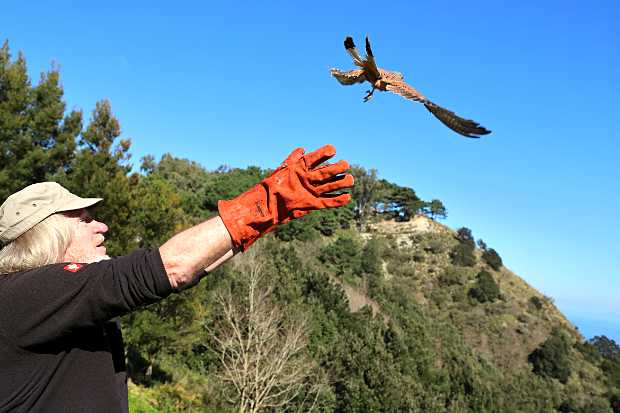
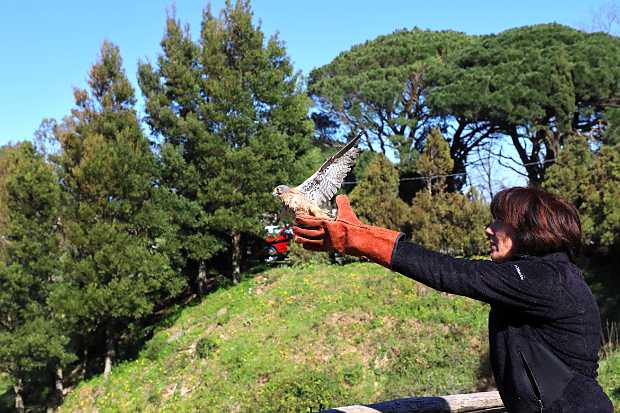
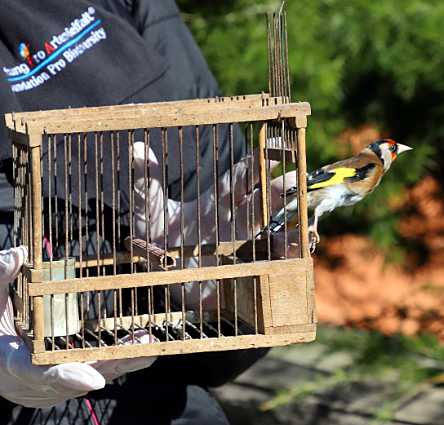
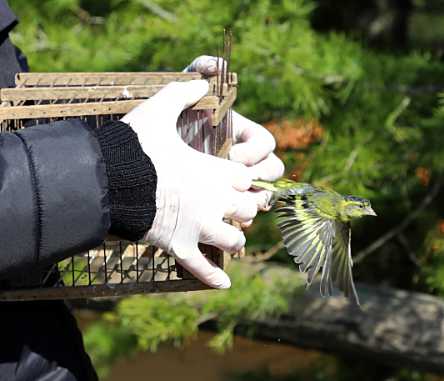
Release into the wild of Common Kestrels, Goldfinches and Common Siskins © MWRC
Please help us with your dedicated project donation so that we can continue to support the courageous and almost exclusively volunteer bird conservationists in their wildlife and migratory bird rescue work in the centre of the poaching area on the Straits of Messina.
The information on the copyrights of the images used on this site can be found at Copyrights, unless these are already indicated in or below the image.

Having obtained permission from the landowners to prune the pollarded willows during the summer months, the actual pruning of the selected trees will now begin in autumn and continue throughout the winter until 28 February 2027. This also marks the start of a second busy period for our Herbert.... more information
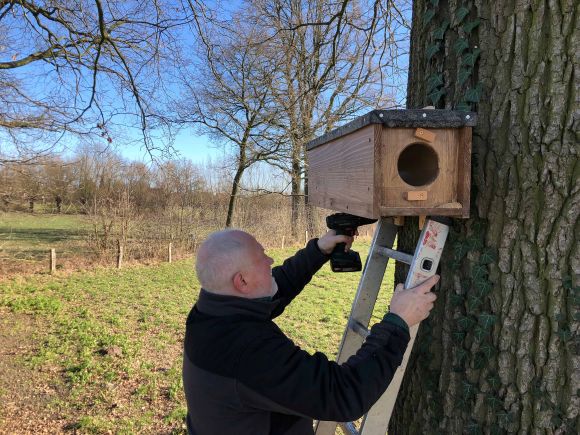
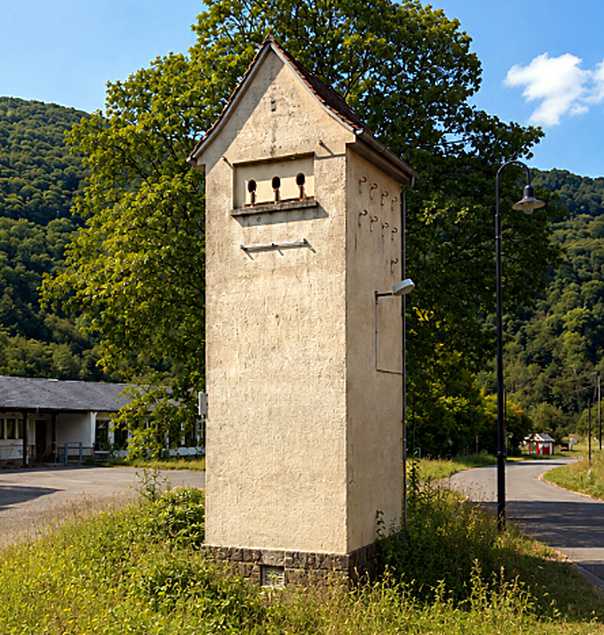
Five years after taking over a disused transformer tower in the Ahr Valley, work is now beginning on converting it into a species conservation tower. Situated right next to a nursery school, it will provide a new refuge for Common Kestrels, Barn Owls, House Martins, Sparrows, Common Swifts, bats and many other building-dwelling species – as well as a nature discovery area for children. Please help us to make this very special species conservation project in Hönningen a reality ... to the project
Postbank Hannover IBAN: DE47 2501 0030 0905 9063 07 BIC: PBNKDEFF
Stiftung Pro Artenvielfalt Meisenstraße 65 33607 Bielefeld Germany Tel. (0049) 0521 2997-883 / -884 / -889 Fax (0049) 0521 2997-885 Office Mo - Fr. 09.00 to 16.00
Foundation Management team@stiftung-pro-artenvielfalt.org Project Management projekte@stiftung-pro-artenvielfalt.org Donations, Donor Care service@stiftung-pro-artenvielfalt.org
 Donate now