Migratory bird protection project:
Bird Protection Camps
|
|---|

|
Migratory bird protection project:
Bird Protection Camps
|
|---|
|
|
For migratory birds on the eastern migration route, the south coast of the Mediterranean island of Cyprus (EU member state), in particular, is a large-scale death trap. Thousands of bird poachers and illegal hunters respect neither EU bird protection guidelines nor current Cypriot nature protection legislation, even during bird migration in spring and autumn. They illegally slaughter hundreds of thousands of strictly protected songbirds on their migration to their African wintering areas and their return flight from the south to us in Central and Northern Europe. With the increasingly milder climate, above all Song Thrushes and Starlings winter in increasing numbers on Cyprus, where they are illegally caught in nets and, with the use of illegal electronic bird callers, lured and shot down in front of thousands of rifles.
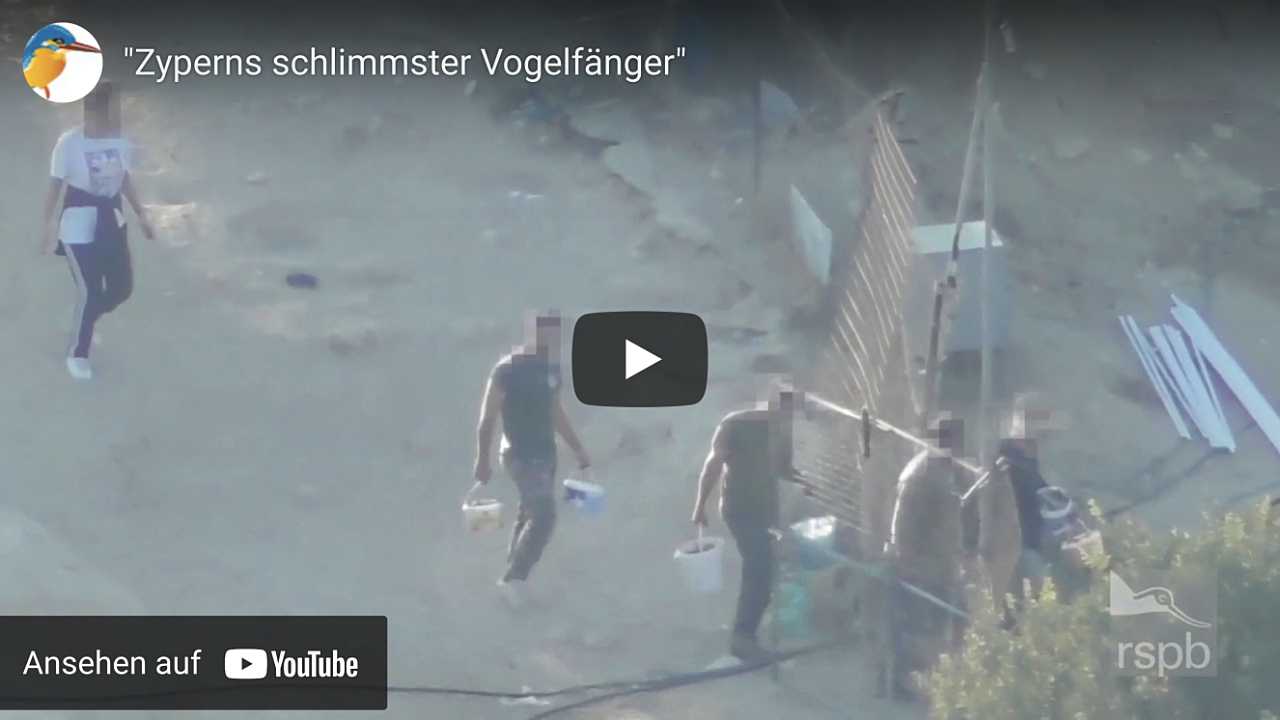
Click on the photo to view the video on YouTube.
It is estimated that up to 10,000 limesticks are set out on bushes and trees on the "Sunshine Island" during bird migration. They seductively invite migratory birds seeking food or a place to rest, but as soon as they land on these sticky death traps, there is no escape. With every beat of their wings, the songbirds spread the tenacious glue deeper into their plumage and onto their body until they die agonisingly of exhaustion or by a toothpick through the beak into the brain at the hand of a trapper. During autumn bird migration in particular, and increasingly during the winter months, mostly at night, the migratory birds are lured into hundreds of illegal mist nets by electronic birdcall decoys.
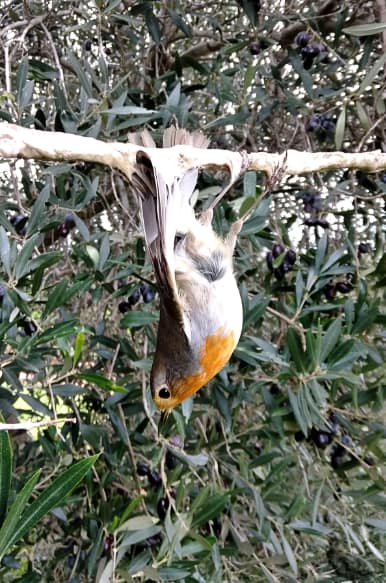
Robin trapped on a limestick © SPA.CY
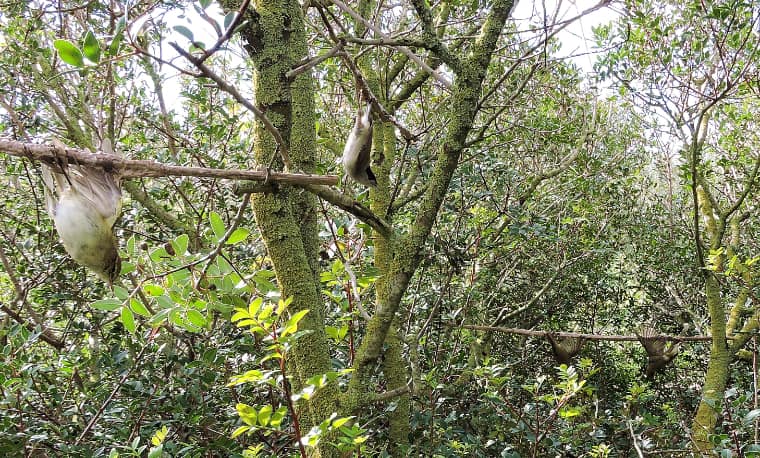
Songbirds trapped on a limestick © Committee Against Bird Slaughter (CABS)
All of the aforementioned unselective bird trapping and killing methods are expressly forbidden under the EU bird protection directive 79/409/EEC of 2 April 1979. The Republic of Cyprus ratified the EU bird protection directive with the EU membership agreement! To this day, there is still a lack of political will to enforce the directive consistently.
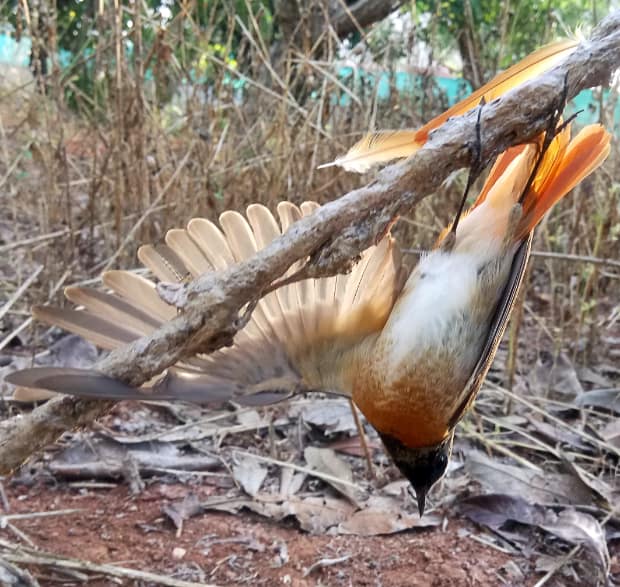
Common Redstart on a limestick © SPA
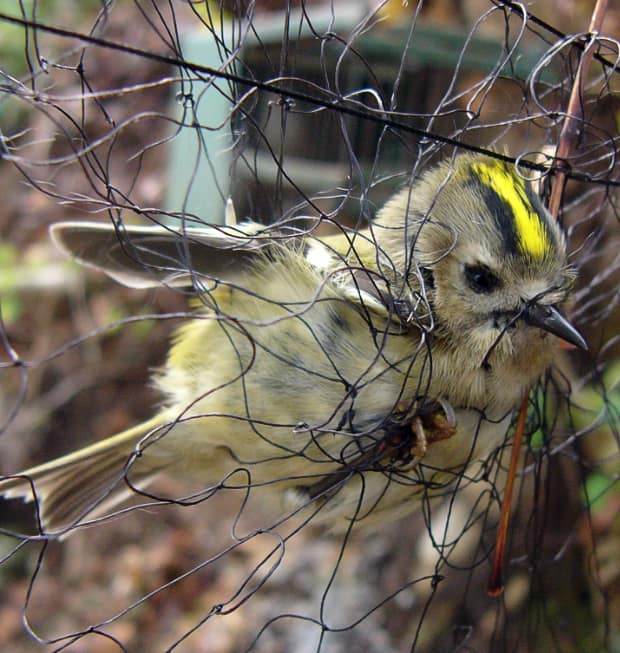
Goldcrest in a mist net © Committee Against Bird Slaughter (CABS)
The ruthlessness and cruelty to animals involved in illegal bird trapping are indescribable. As long as the bird poachers can make high profits with their feathered prey, the slaughter of strictly protected songbird species will not cease. On peak days, a bird poacher traps up to 100 songbirds. It is not surprising that the landscape is strewn with mist nets and limesticks at sites where electronic decoys play bird calls day and night to lure the migratory birds to their death.
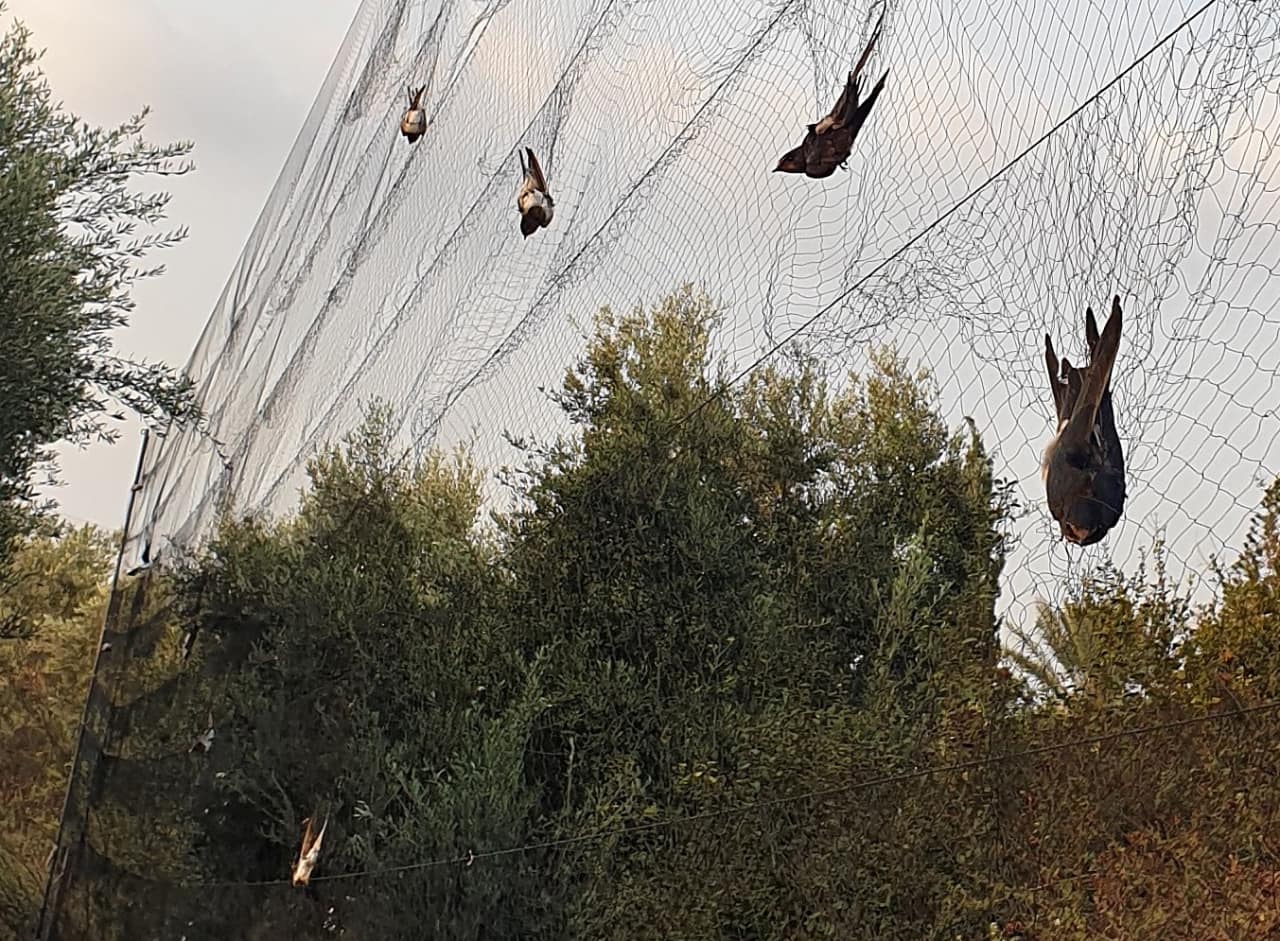
Barn Swallows in mist net © Committee Against Bird Slaughter (CABS)
Trapped birds of songbird species strictly protected throughout the EU include: Blackcap, Song Thrush, Willow Warbler, Chiffchaff, Common Redstart, Lesser Whitethroat, Garden Warbler, Nightingale, Robin, Golden Oriole and even Cuckoos, all of which run a hellish gauntlet on Cyprus. Thousands of Cypriot "gourmets" and unfortunately also tourists and "private parties" from all over the world do not want to forgo the Cypriot speciality "Ambelopoulia (birds of the vineyards)" - the traditional songbird dish on Cyprus despite a strict ban! Russian tourists, in particular, have recently discovered "Ambelopoulia" and increasingly demand this illegal speciality in dubious gourmet restaurants.
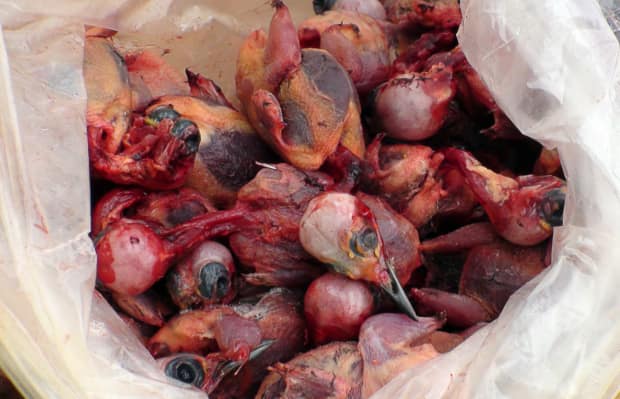
Confiscated songbirds in freezer © Committee Against Bird Slaughter (CABS)
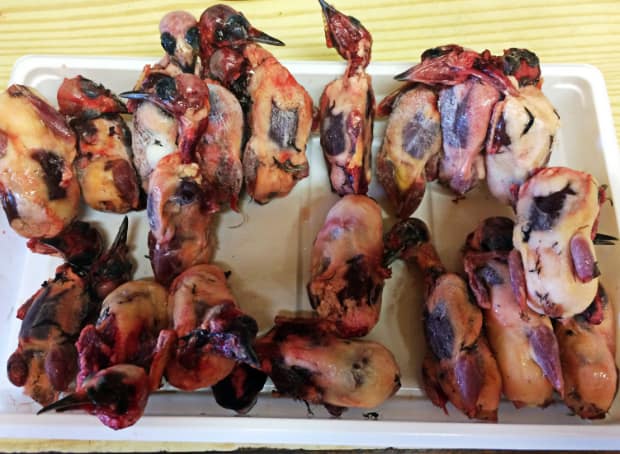
Frozen Blackcaps for the Cypriot delicacy "Ambelopoulia" © SPA
Not only gourmets, but parts of the Cypriot population also swear by the tiny morsels weighing only a few grams, the taste of which is supposed to be tantalising. Thousands of Cypriots enjoy the dish at least occasionally - e.g. on festivals and holidays - with three or four warblers on the table as the highlight of the feast, after vegetables and seafood. And they are ready to shell out more than 40 euros for this meagre meal of birds! The trappers themselves receive around 3 euros per songbird - in cash and tax-free.
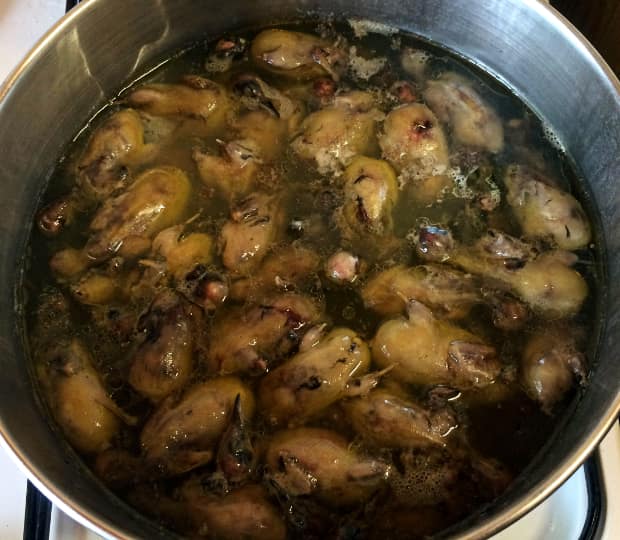
A forbidden glimpse in a pot full of illegally killed Blackcaps for the Cypriot delicacy "Ambelopoulia" © SPA.CH
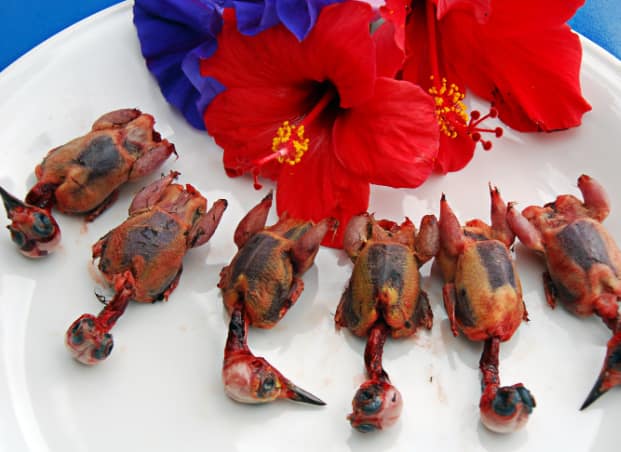
Restaurant presentation of Blackcaps © SPA.DE
Up to 4 times a year, volunteer bird conservationists from the Committee Against Bird Slaughter (CABS), Bonn and our Foundation give up their holidays and free time to participate in the far from hazard-free bird protection camps on Cyprus. These courageous women and men spend in total 20 to 26 weeks a year monitoring the main bird trapping areas on the forbidden bird trapping sites, predominantly at night. They report their finds to the police and/or state rangers, lead them to the GPS-marked trapping sites, free birds that are still alive and occasionally dismantle the bird trapping facilities together with the officials or - if possible and necessary - on their own. Employing concealed wildlife cameras, video cameras and, in future, body cameras, bird poachers and illegal hunters are caught red-handed at trapping and hunting sites and reported to the authorities.
About our work:
All our bird protection camps in Southern Europe are carried out in strict compliance with the
applicable national laws. Our actions are coordinated in advance with the state and regional
governments and the responsible police departments!
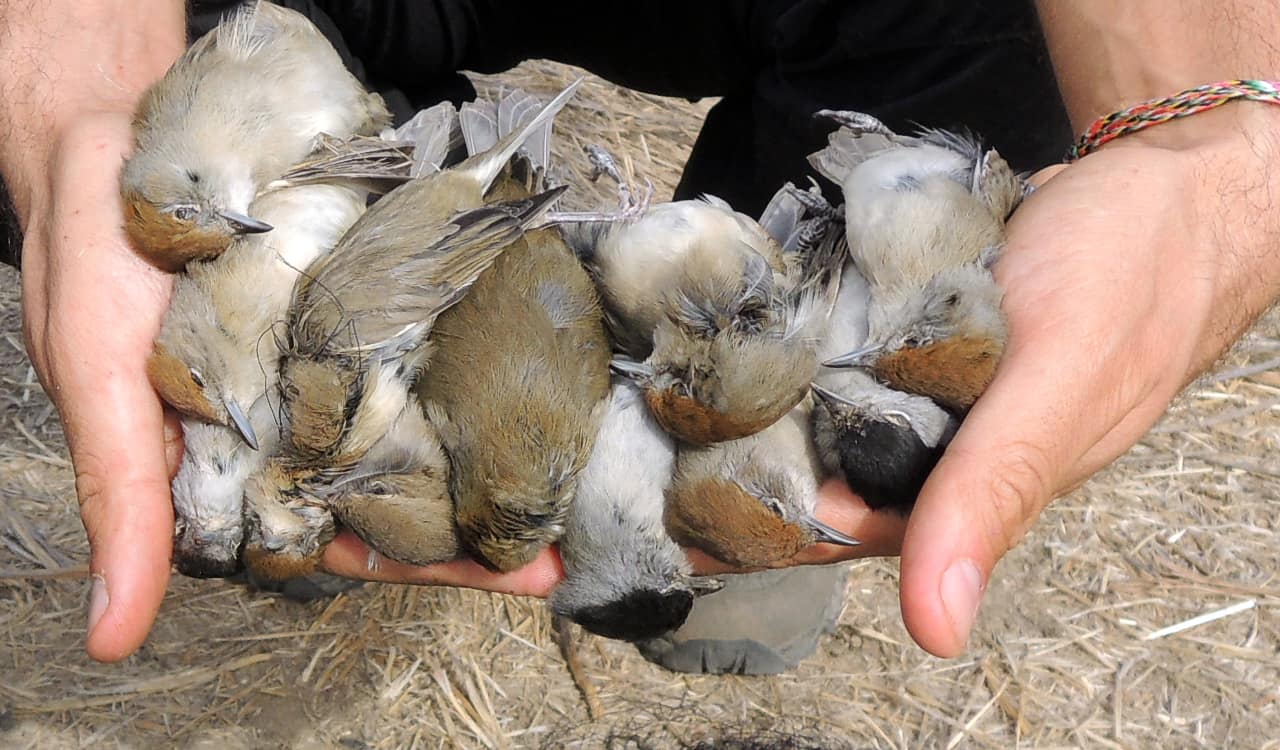
Trapped migratory birds cut free from mist nets © Committee Against Bird Slaughter (CABS)
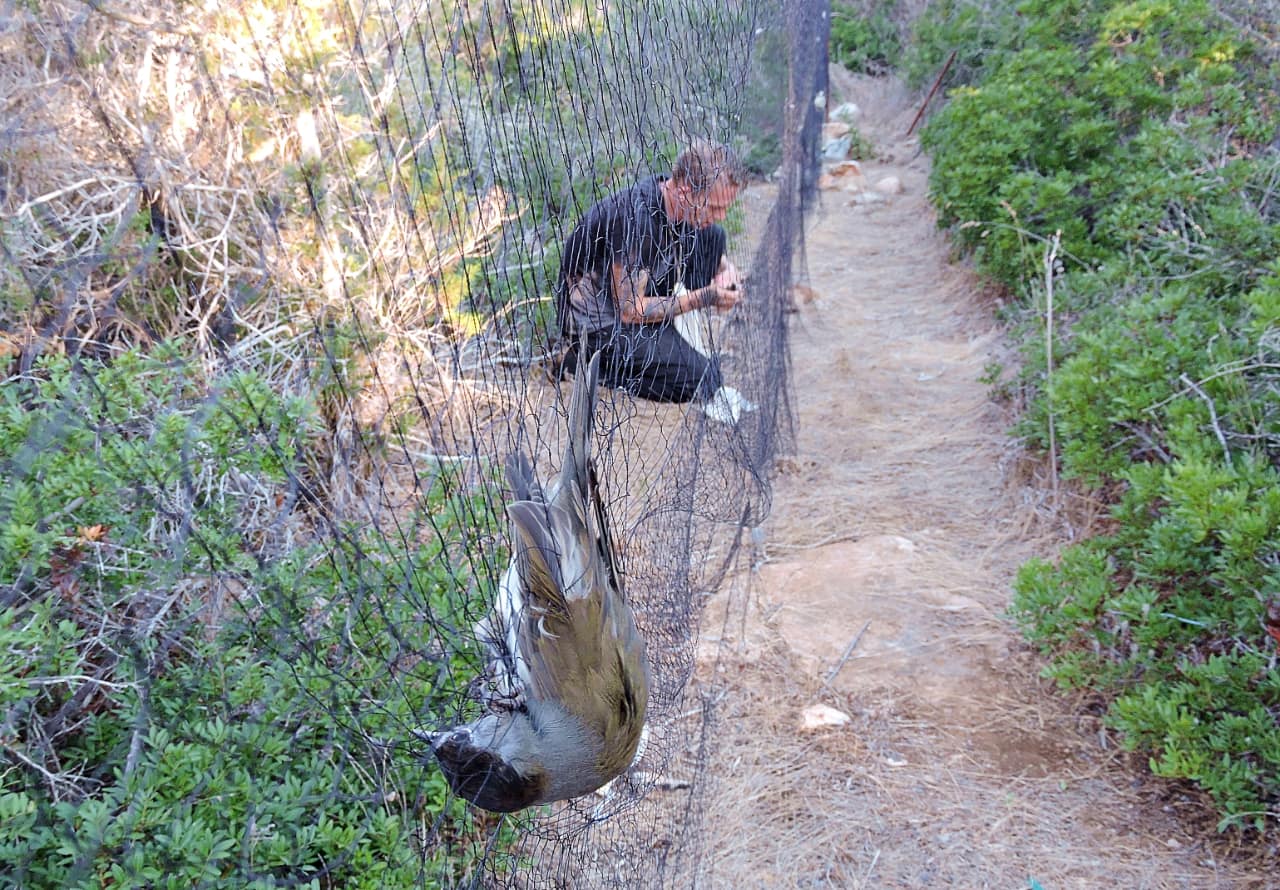
Freeing Blackcaps from mist nets © Committee Against Bird Slaughter (CABS)
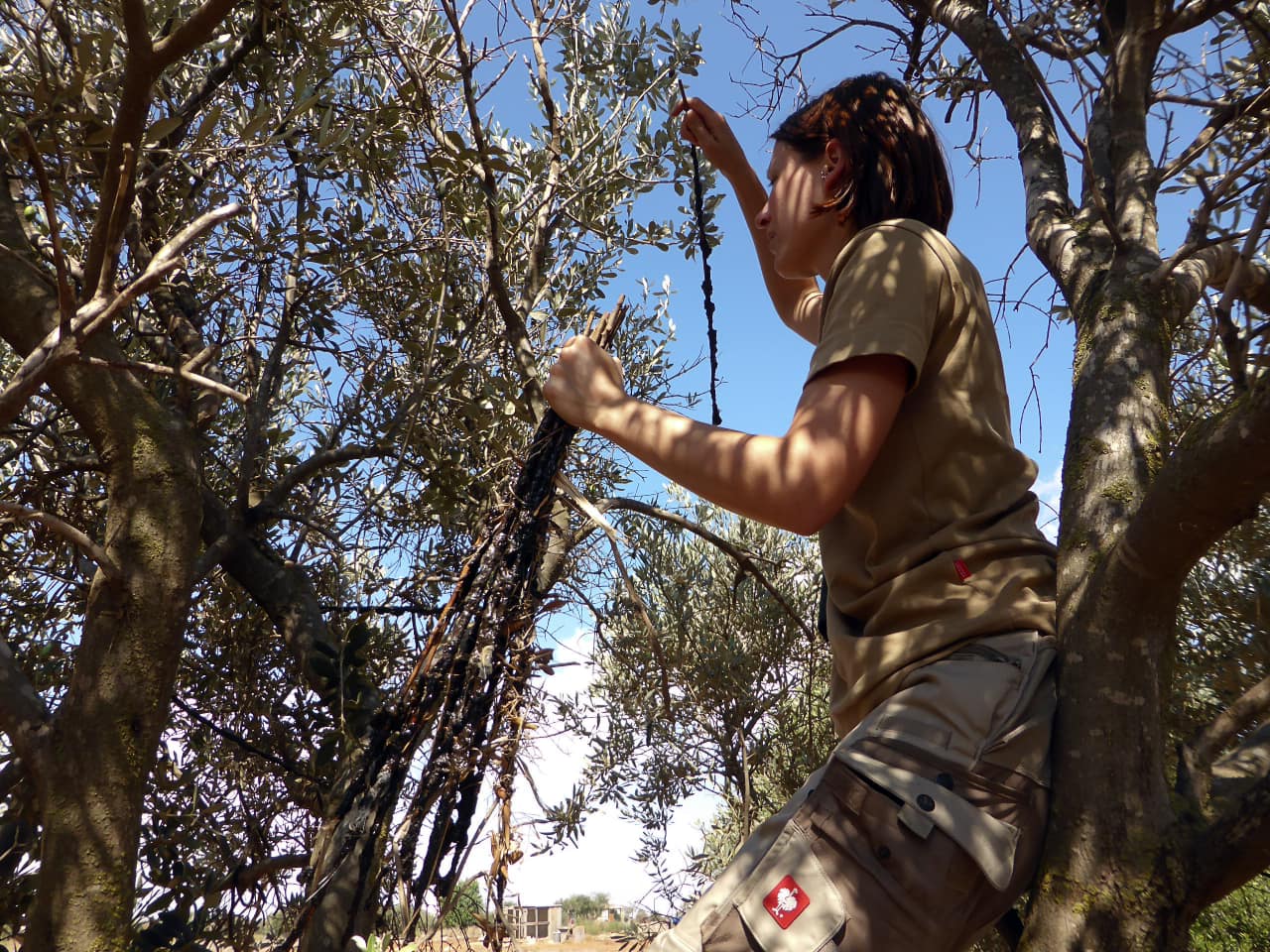
Dismantling of a limestick site © SPA.CH
The bird conservationists operate in the Republic of Cyprus in bird trapping regions profitable for poachers, including the British Eastern Sovereign Base Area (ESBA), along the UN buffer zone and currently also in Turkish-controlled Northern Cyprus. The operational experiences of the bird conservationists are unfortunately not limited to physical and mental exhaustion alone. Past attacks by poachers against bird conservationists included slashed tyres as well as broken windows and damage to the doors of our emergency vehicles, physical attacks with clubs and iron bars, warning shots in the air, and aggressive breakneck pursuits over rough gravel roads and tracks as far as the gates of the safe havens of police stations.
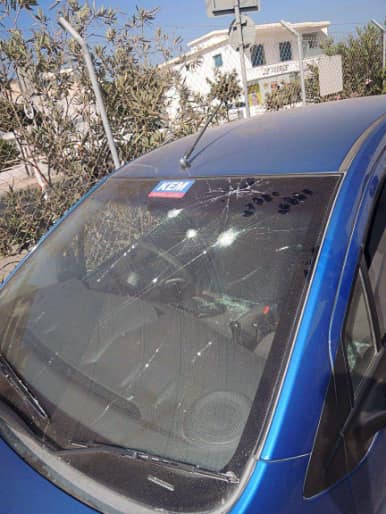
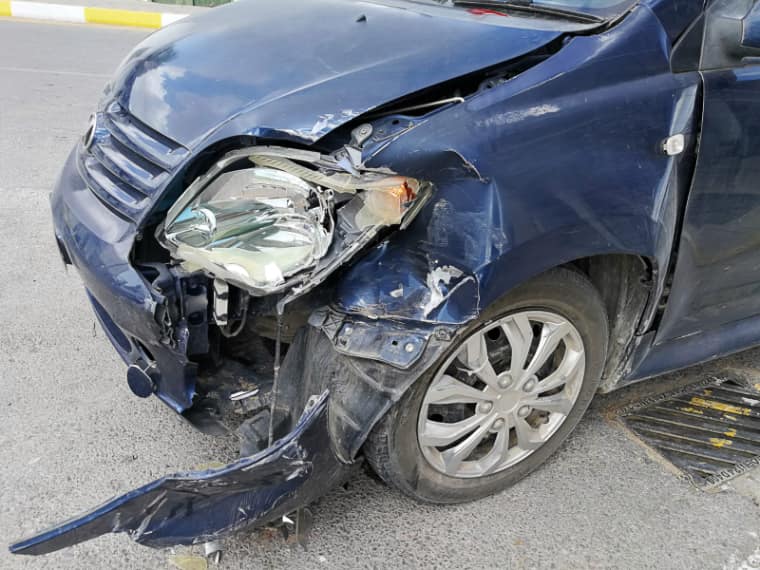
Shot at and demolished operational vehicles of our bird conservationists during car chases by poachers © SPA.CH
Details on the migratory bird protection camps can be found in the final reports of the Cyprus bird protection camps. They provide information on:
The final camp reports are in English here:
► Cyprus Bird Protection Camp Report Autumn 2025 (PDF, Englisch)
► Cyprus Bird Protection Camp Report Autumn 2024 (PDF, Englisch)
► Cyprus Bird Protection Camp Report Autumn 2023 (PDF, Englisch)
► Cyprus Bird Protection Camp Report Autumn 2022 (PDF, Englisch)
► Cyprus Bird Protection Camp Report Autumn 2021 (PDF, Englisch)
Current data and results of our migratory bird protection operation on Cyprus can be found on the website under News.
Depending on the local situation, the costs of a deployment of up to 14 volunteer bird conservationists lasting up to 8 weeks are between 18,000 and 21,000 euros. With this, we finance travel to and from the site, modest accommodation, on-site operations, as well as taxes, insurance premiums, operating costs and maintenance of our own emergency vehicles and the replacement of equipment lost, destroyed or stolen during the operation.
Please support our migratory bird rescue operations in Cyprus with your donation!
The information on the copyrights of the images used on this site can be found at Copyrights, unless these are already indicated in or below the image.

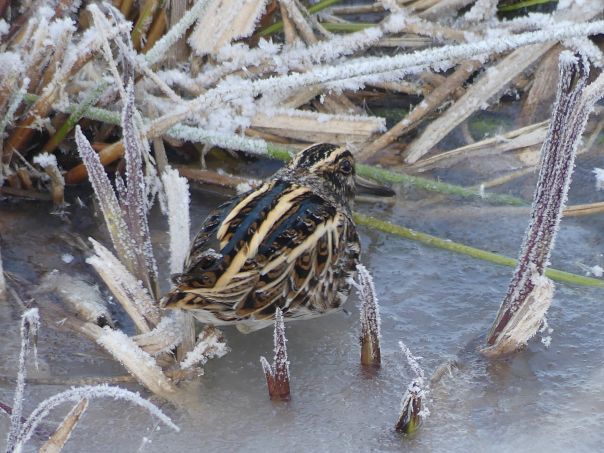
When Jack Snipes migrate south from their Russian breeding grounds, they need suitable wetland stopover sites to replenish their energy reserves for the rest of their journey. Nine of these snipes have now been spotted at our Schimmel's ponds. Five birds were captured and ringed as part of an officially authorised scientific monitoring programme.... more information
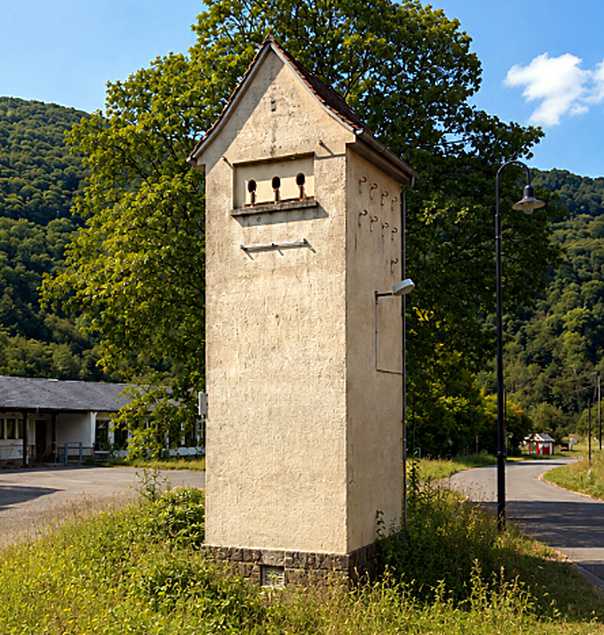
Five years after taking over a disused transformer tower in the Ahr Valley, work is now beginning on converting it into a species conservation tower. Situated right next to a nursery school, it will provide a new refuge for Common Kestrels, Barn Owls, House Martins, Sparrows, Common Swifts, bats and many other building-dwelling species – as well as a nature discovery area for children. Please help us to make this very special species conservation project in Hönningen a reality ... to the project
Postbank Hannover IBAN: DE47 2501 0030 0905 9063 07 BIC: PBNKDEFF
Stiftung Pro Artenvielfalt Meisenstraße 65 33607 Bielefeld Germany Tel. (0049) 0521 2997-883 / -884 / -889 Fax (0049) 0521 2997-885 Office Mo - Fr. 09.00 to 16.00
Foundation Management team@stiftung-pro-artenvielfalt.org Project Management projekte@stiftung-pro-artenvielfalt.org Donations, Donor Care service@stiftung-pro-artenvielfalt.org
 Donate now