News: Short & sweet / archive
|
|---|

|
News: Short & sweet / archive
|
|---|
|
|
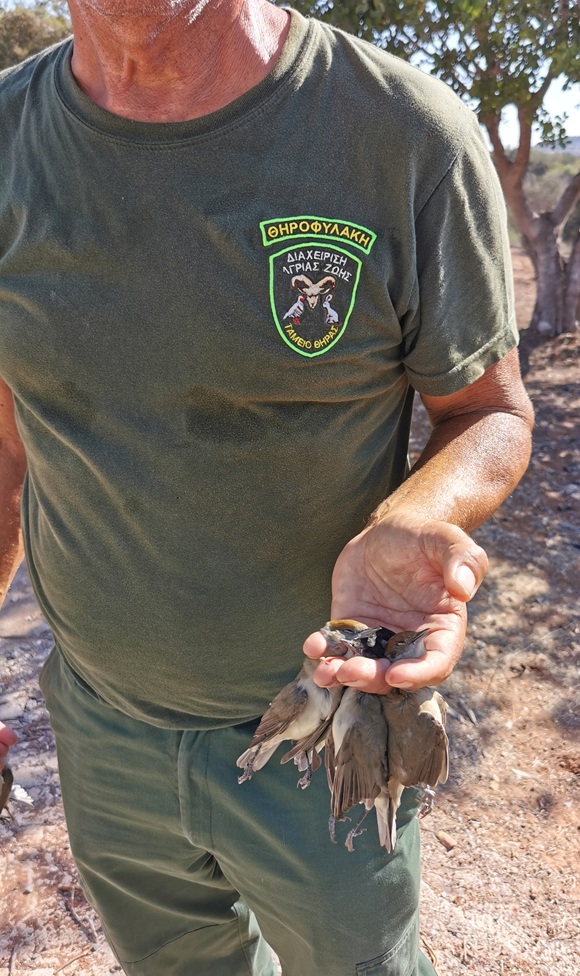
State game warden with confiscated songbird victims © Committee Against Bird Slaughter (CABS)
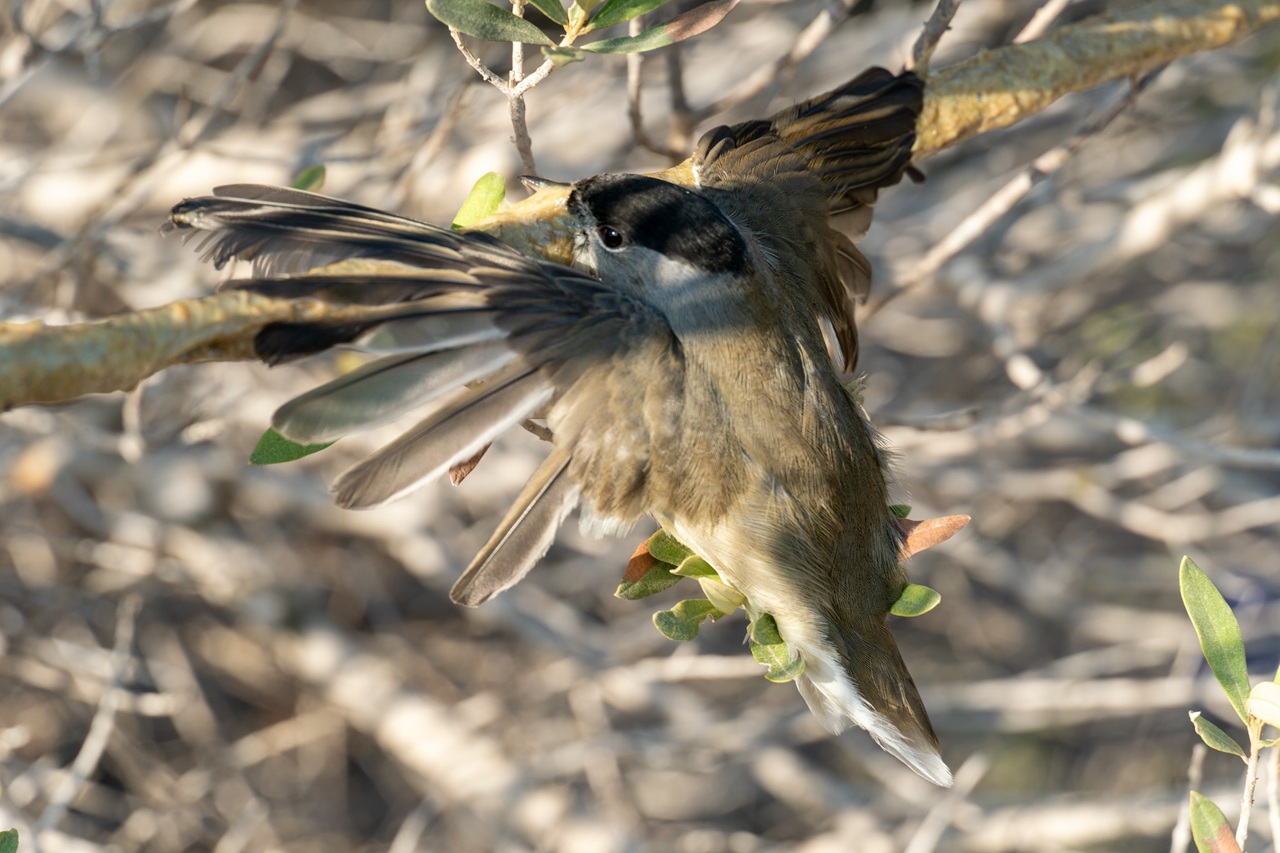
Male Eurasian Blackcap caught on a limestick © Committee Against Bird Slaughter (CABS)
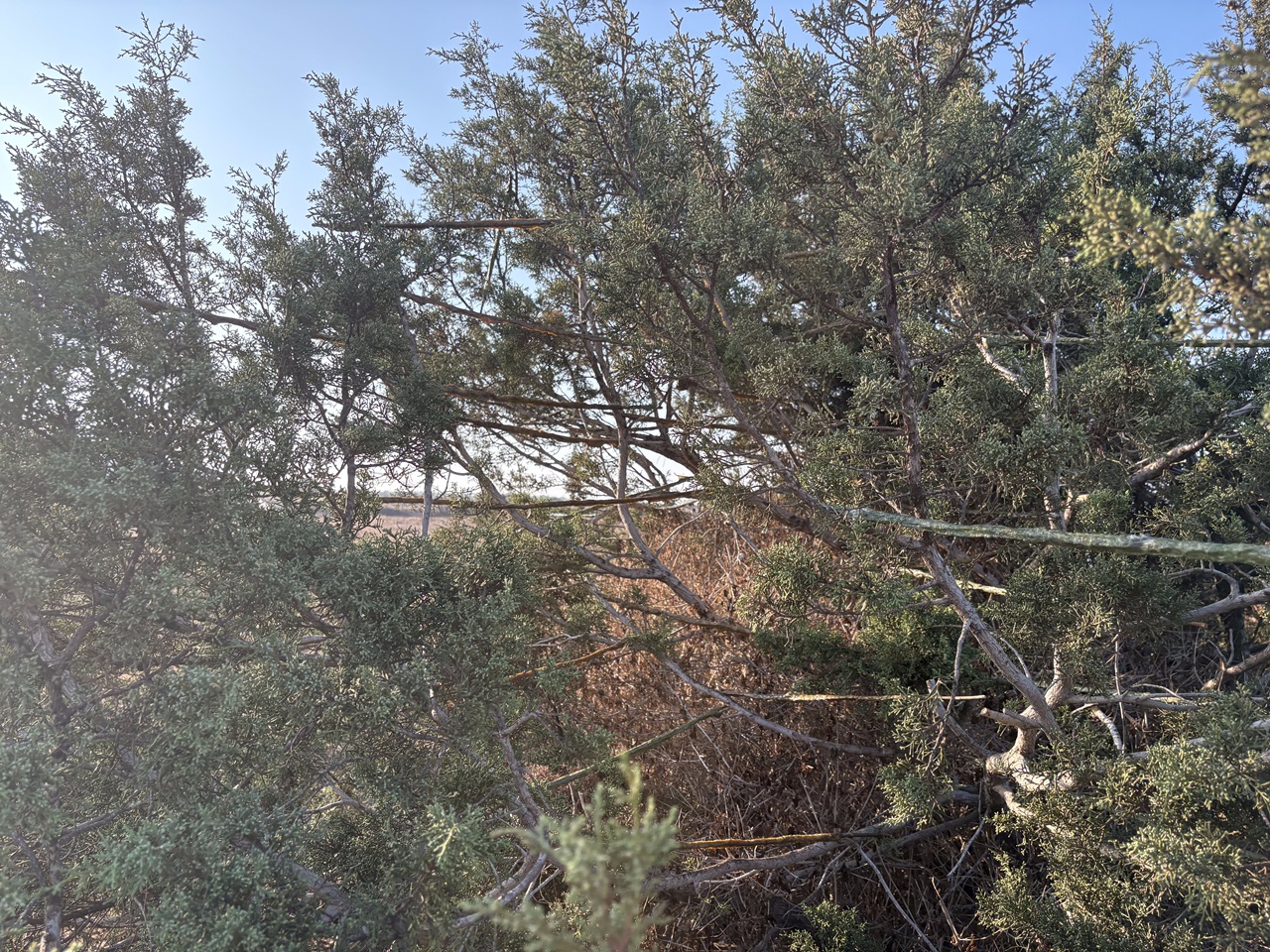
Bush with 15 prohibited limesticks installed © Committee Against Bird Slaughter (CABS)
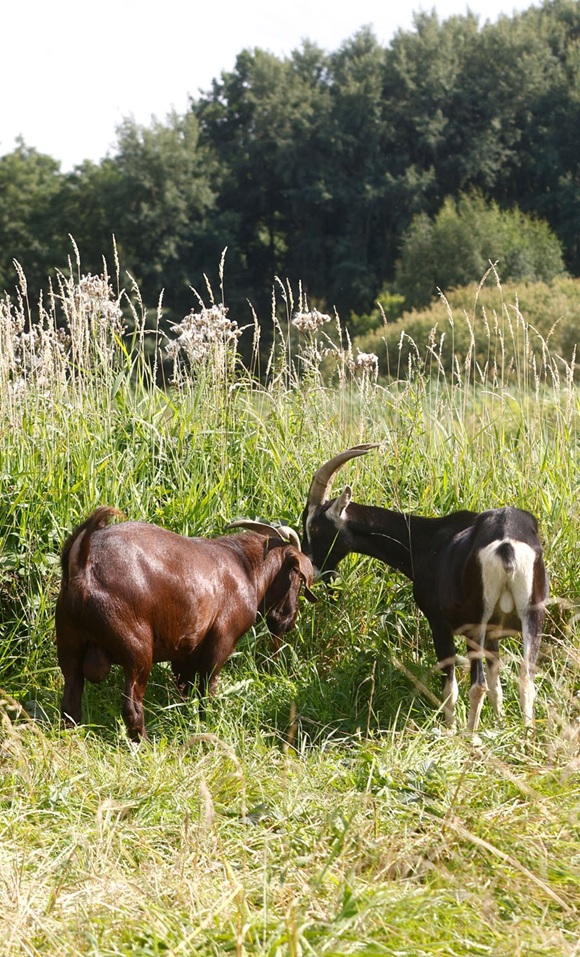
Voracious goats carrying out biotope maintenance work © M. Pfeifer
The preliminary work was lengthy and sometimes very difficult, but a milestone has now been reached at the "Schimmels Teiche" near Limbach-Oberfrohna in Saxony …
After completing approximately one and a half kilometres of sturdy electric pasture fencing, two water buffaloes have now joined the three hungry billy goats in our unique biotope with nine former fish ponds. And with a Scottish Highland cow arriving soon, we will have further reinforcement for biotope maintenance!
With their almost limitless appetite, these animals not only ensure that blackberries, shrubs and invasive Japanese knotweed are kept at bay on the pond banks, but also reduce the excessive growth of bullrushes in the ponds. These still benefit from the mud at the bottom of the ponds, which is heavily fertilised by fish excrement.
Only by reducing the biomass in and around the ponds will the water bodies and pond banks be able to develop in a variety of ways and, following the end of intensive fish farming four years ago, become species-rich biotopes.
Building the pasture fence was not the only challenge on the approximately 12-hectare pond area, which has been owned by our foundation since 2023. The extensive renovation of the pond drains, repairs to the stream inlets and careful reed cutting in an overgrown pond required a lot of work and also cost a considerable amount of donated money. Further biotope work is planned for the coming winter half-year 25/26.
The presence of the semi-wild grazing animals and the sturdy, electrified fence will also ensure that, after years of unauthorised trespassing and recreational use of our property, peace and tranquillity will finally return to this ecologically sensitive pond area.
From now on, the focus here is no longer about human activities, but about protecting the habitat of endangered bird species such as Marsh Harriers, Bluethroats and Reed Warblers, and endangered amphibians such as the Common Spadefoot Toad and the Smooth Newt.
Conservationists from the Limbach-Oberfrohna region, including well-known ornithologists, are already enthusiastic about our pond project, which will certainly bring many positive benefits for biodiversity, which is under threat in many places, over the next few years!
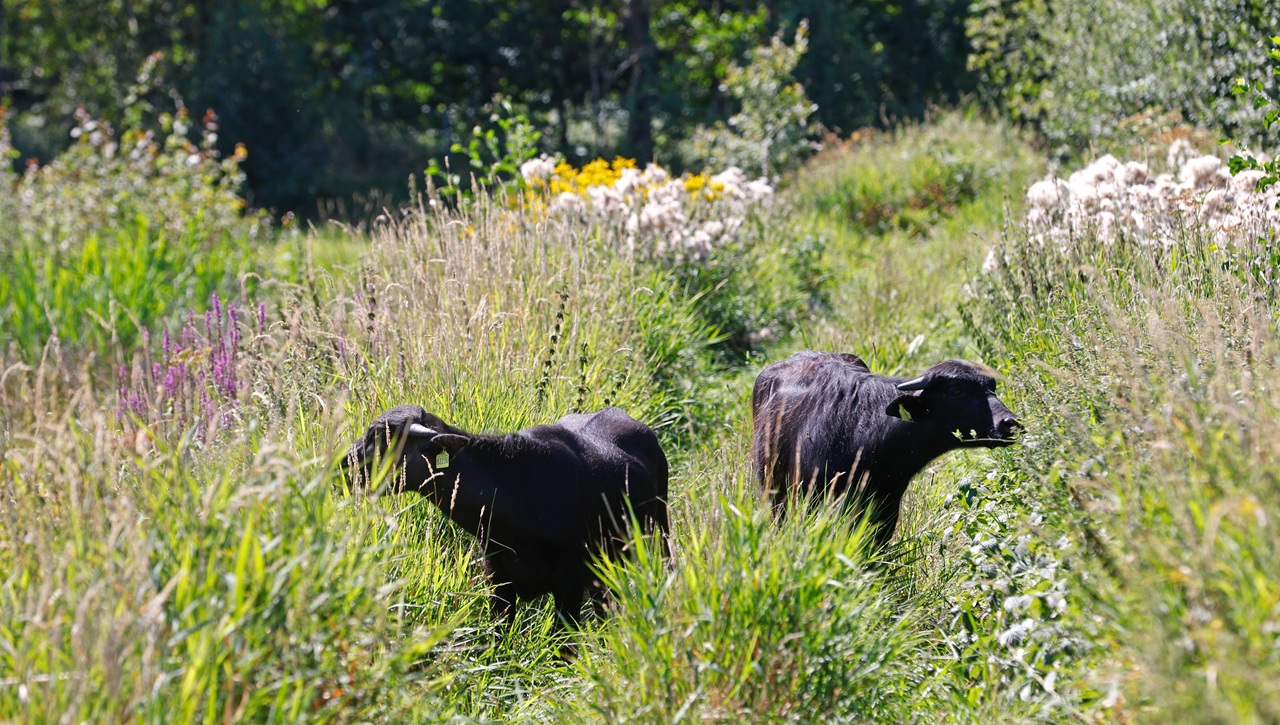
Young water buffaloes are not fussy eaters © M. Pfeifer
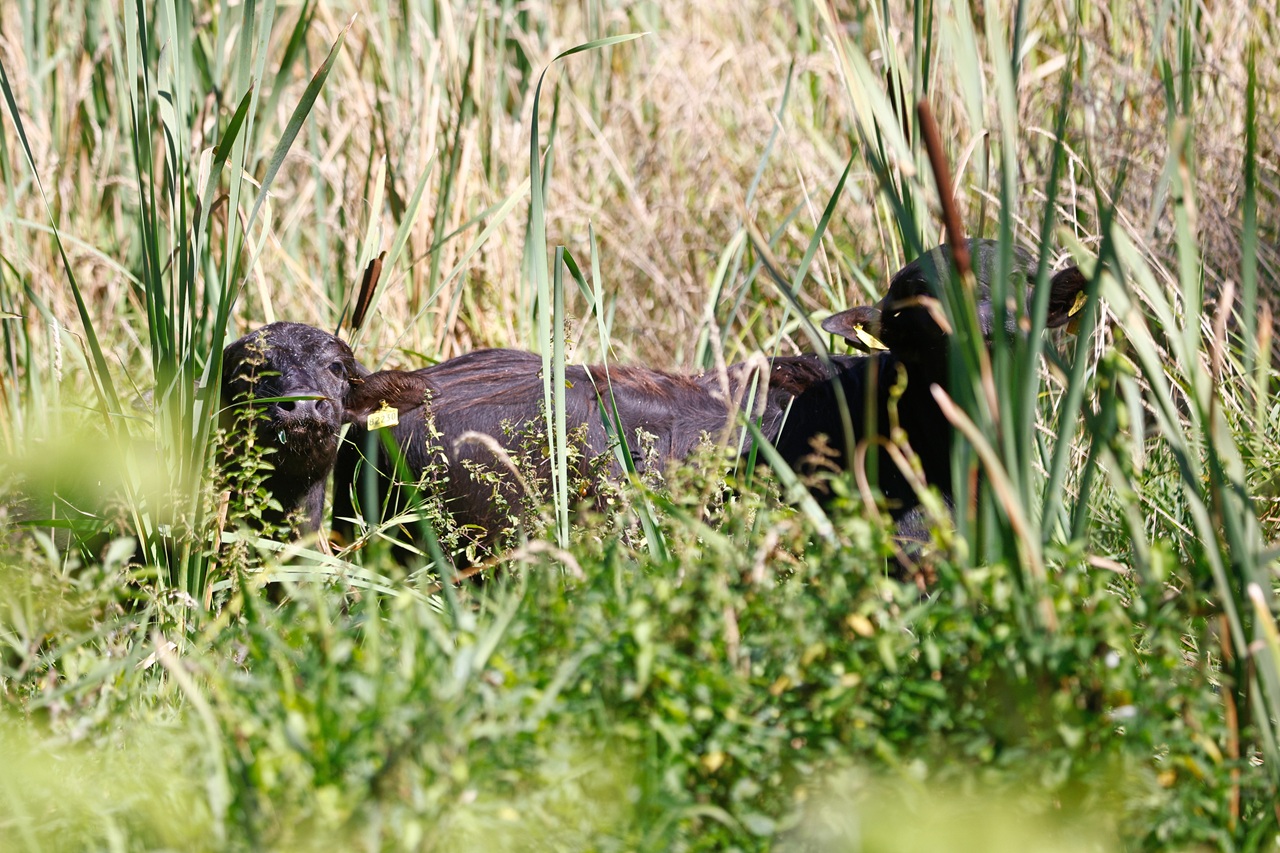
Water buffaloes enjoy the cooling ponds and shelter © M. Pfeifer
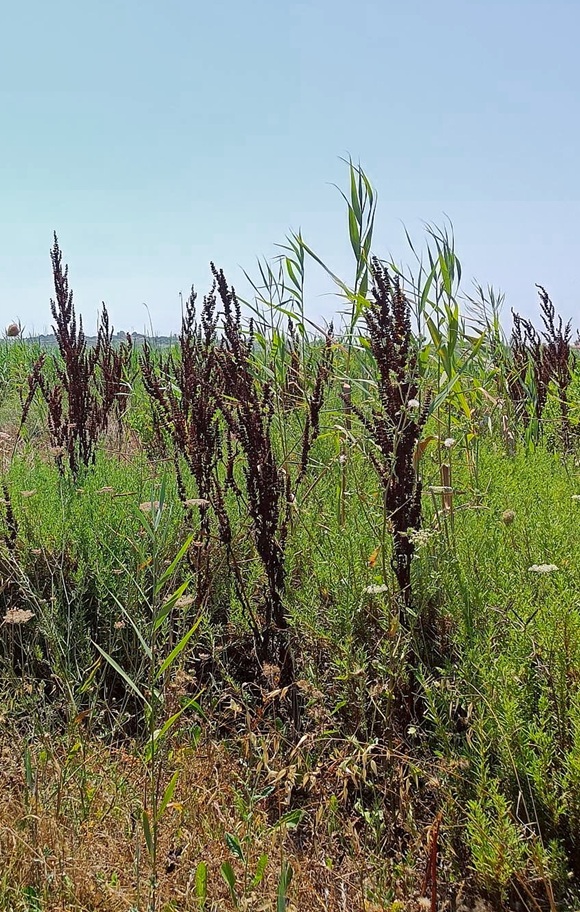
Seed heads of the invasive amaranth plant © SPA_IT
After extensive biotope restoration work for our migratory bird sanctuary Pantani Cuba & Longarini, biotope maintenance work is now increasingly on the agenda
Just as nature in Germany is confronted with invasive wild plants such as Siberian hogweed, Canadian goldenrod and Japanese knotweed, and wildlife such as raccoons, raccoon dogs and Asian hornets, which have no natural enemies here, invasive wild animals and plants from Africa and South America are increasingly colonising Mediterranean countries.
Since 2013, we have been quite successful in halting, limiting or, ideally, ending this development in our Pantani Cuba & Longarini migratory bird sanctuary. Since the extremely dry years of 2023–2024, the invasive plant amaranth, which is native to Central America and is highly prolific in terms of growth and reproduction, has begun to colonise the edges of the reed belt in our sanctuary in Pantano Cuba and Longarini, where it is already forming dominant populations in some areas.
Once again, we owe a debt of gratitude to the tireless efforts of the members of the local nature conservation group "Pirati della Marza" (Pirates of Marza), who have been helping for years with hundreds of hours of voluntary work to make our Pantani nature reserve a paradise for Mediterranean flora and fauna.
In July, despite the high temperatures, a group of loyal Pirati volunteers worked in our Pantani reserve to suppress amaranth, one of the oldest crops in South and Central America. Before hundreds of ripe ears could scatter millions of seeds, the amaranth plants were cut down individually by hand at the base, their ears collected and stored in plastic bags to be composted.
Through the targeted collection of the ears, this invasive plant species was removed from our nature reserve's reed and meadow habitats. The 'seed harvest' filled 12 sacks, each with a capacity of 100 litres.
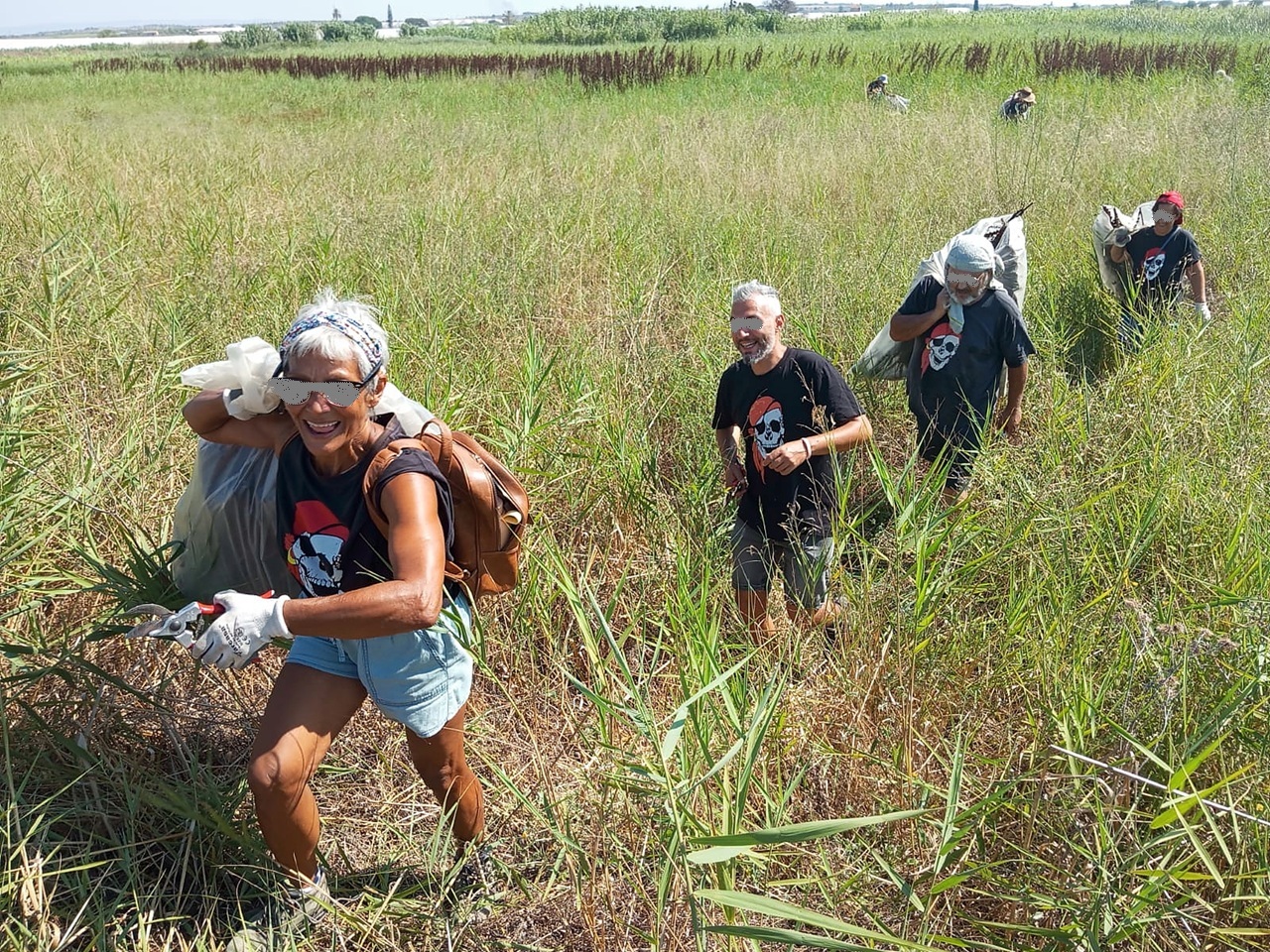
Pirati volunteers during the amaranth seed collection campaign © SPA_IT
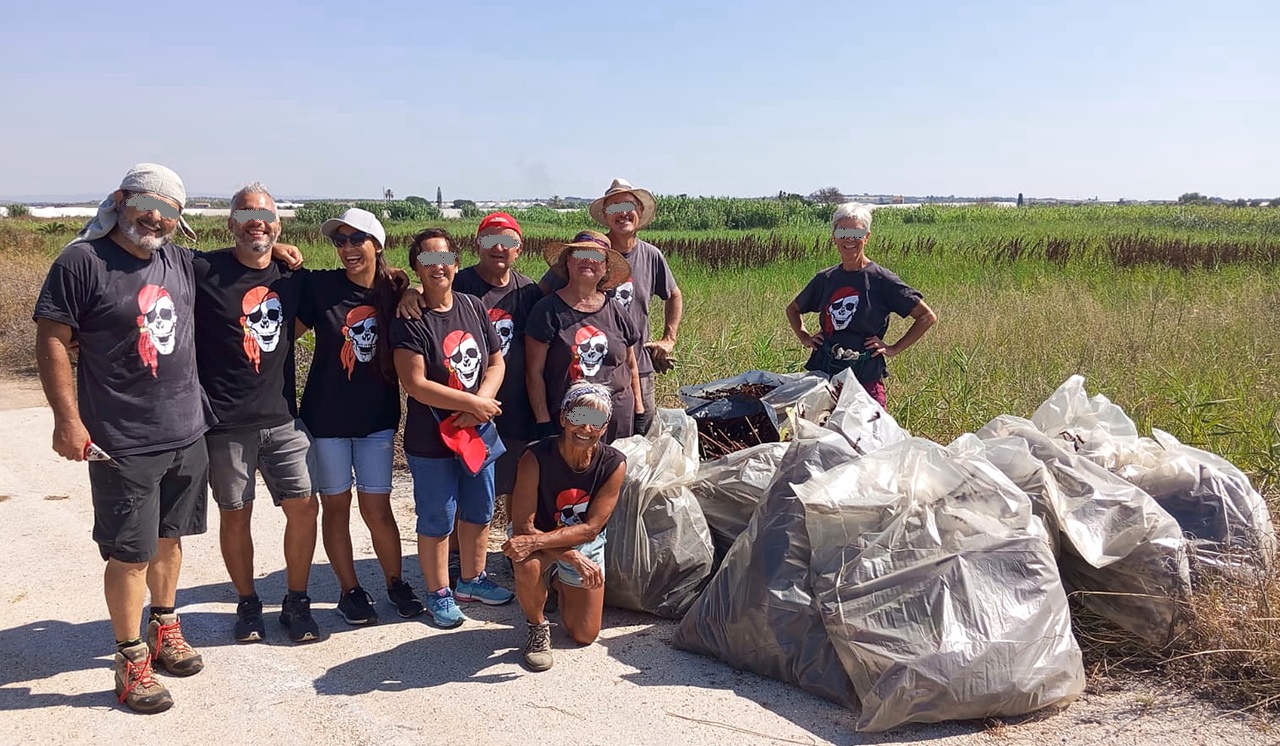
After completing the biotope maintenance, just about enough energy is left for a smile. © SPA_IT
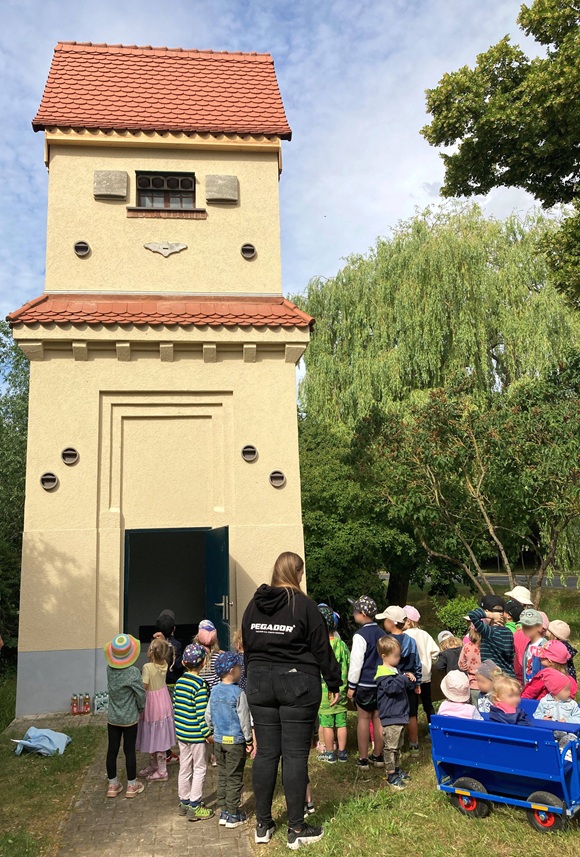
Tour of the Winningen conservation tower at its inauguration © SPA
Inauguration of our 38th species protection tower, this time in the Rural District of Salzland, Saxony-Anhalt
Under the watchful eyes of the first residents to move in – a Starling, a Great Tit and a Blue Tit – we were able to inaugurate our 38th species protection tower on 24 June 2025 with a small celebration in Winningen suburb of Aschersleben. The craftsmen involved in the construction, the district mayor, and the mayor of Aschersleben joined the numerous children from the nearby Winningen daycare centre in celebrating ‘their new species protection tower’. The children proudly presented their large banner with pictures they had painted themselves of the animal and bird residents they expect to see in the tower in the future.
The idyllically located transformer station supplied the small village of Winningen with electricity for more than 100 years before it was decommissioned in 2023. Discovered during one of our regular work assignments in our nearby nature reserve ‘Seeländereien bei Frose’, we quickly agreed with the regional energy supplier and the town of Aschersleben in April 2024 to take ownership of the listed industrial monument and convert it into a species protection tower adapted to its location.
Renovation work on the species protection tower began in autumn 2024 and, following a break during the winter, was completed in time for the 2025 breeding season. The old transformer tower station now serves a new and meaningful purpose as a species protection tower in Winningen, providing a future-proof roof over the heads of Barn Owls, Jackdaws, Swifts, House Martins, Starlings, Tree Sparrows, House Sparrows, White Wagtails and several bat species.
We hope the children's enthusiasm in Winningen for their new species protection tower will rub off on their parents, inspiring them to create suitable habitats for the wild animals inhabiting their property and gardens. It doesn't take much effort!
The conversion costs for the new species protection tower in Winningen, amounting to just under €30,000, were financed by our Pro Biodiversity Foundation from private donations earmarked for this purpose.
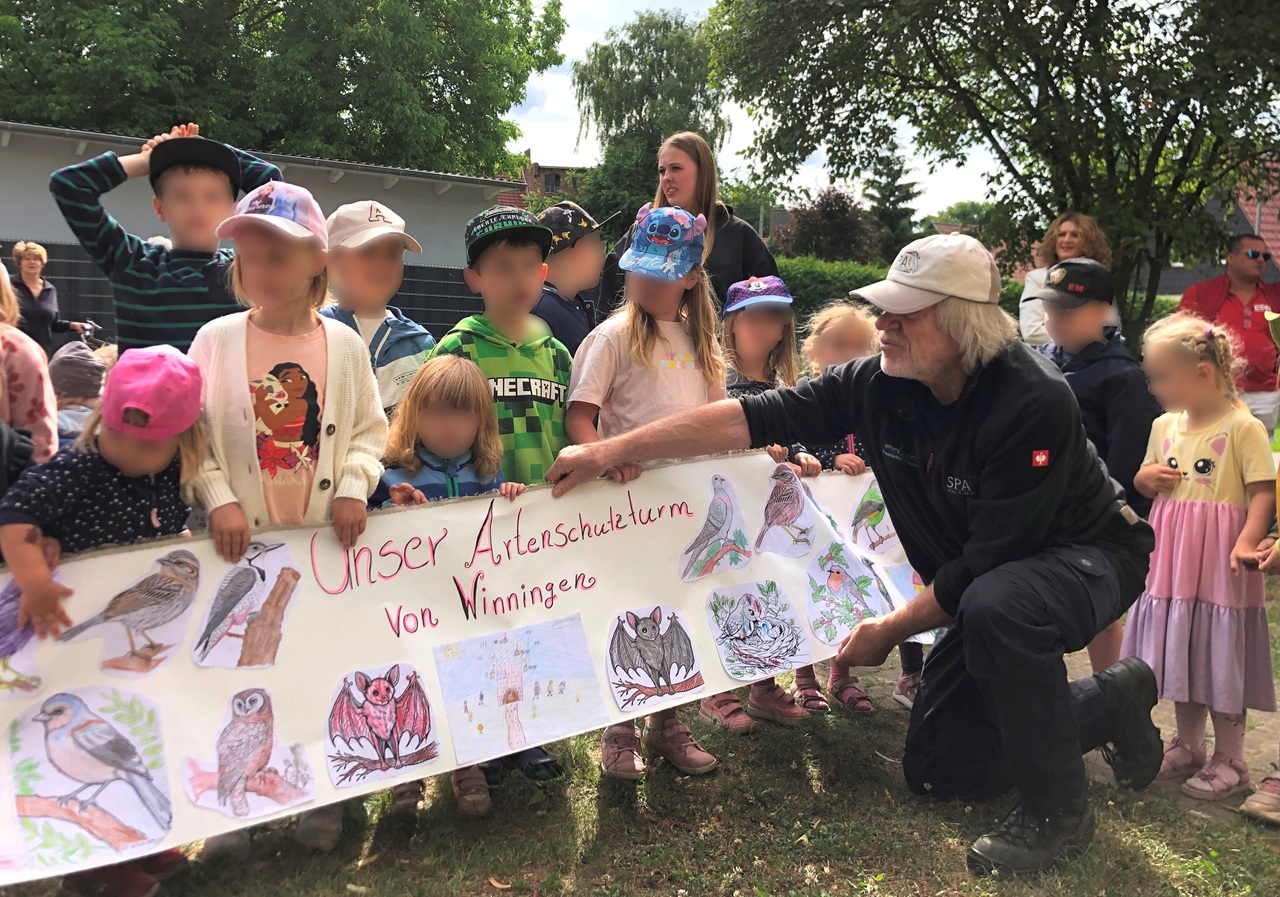
Kindergarten children from Winningen present their conservation tower wall poster © SPA
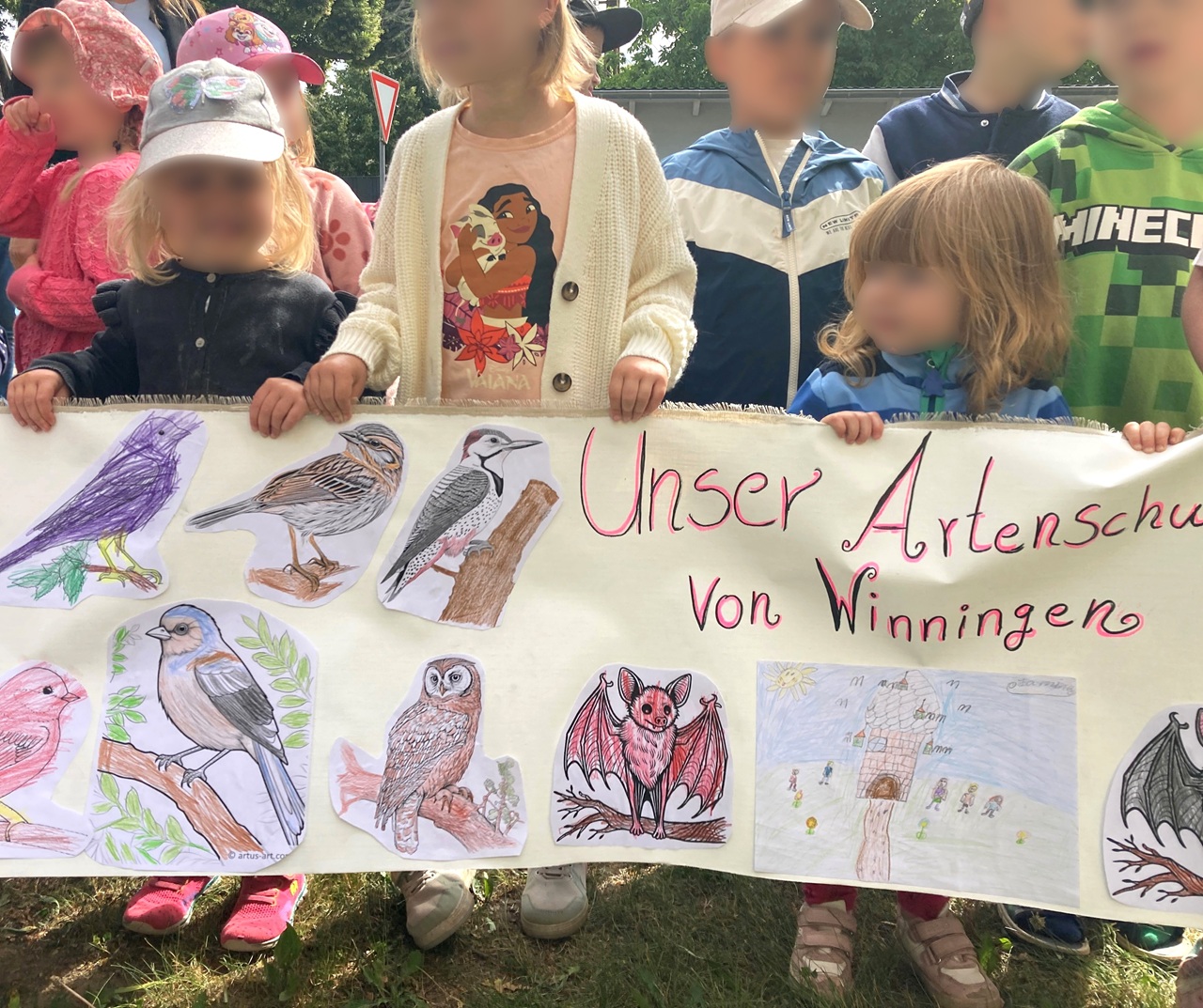
Winningen kindergarten artists at their wall poster presentation © SPA
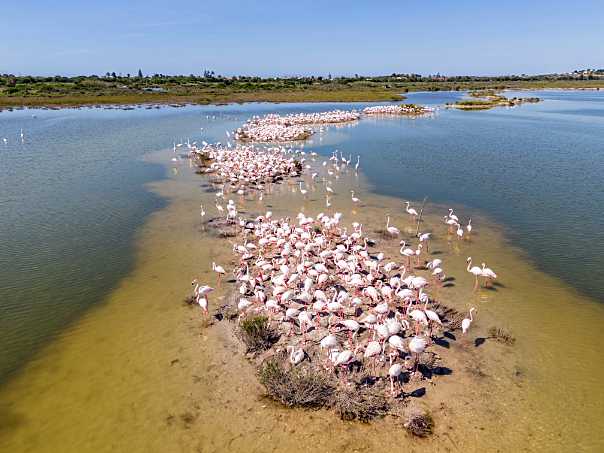
Only consistently protected areas can guarantee that the breeding grounds of the Greater Flamingo, Little Tern, Black-winged Stilt, Stone Curlew and Skylark in our Pantani Migratory Bird Sanctuary in Sicily remain undisturbed. However, new threats are increasingly emerging: for example, areas of our migratory bird sanctuary that have not yet been fenced off are being misused for illegal rubbish dumping ... to the project
Postbank Hannover IBAN: DE47 2501 0030 0905 9063 07 BIC: PBNKDEFF
Stiftung Pro Artenvielfalt Meisenstraße 65 33607 Bielefeld Germany Tel. (0049) 0521 2997-883 / -884 / -889 Fax (0049) 0521 2997-885 Office Mo - Fr. 09.00 to 16.00
Foundation Management team@stiftung-pro-artenvielfalt.org Project Management projekte@stiftung-pro-artenvielfalt.org Donations, Donor Care service@stiftung-pro-artenvielfalt.org
 Donate now