News: Short & sweet / archive
|
|---|

|
News: Short & sweet / archive
|
|---|
|
|
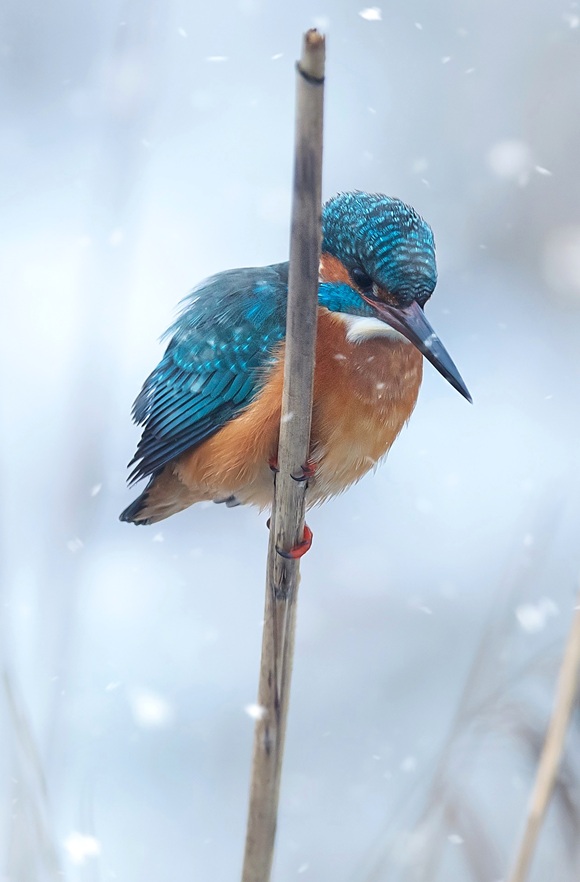
Common Kingfisher in driving snow © A. Kneifel
Our heartfelt Christmas and New Year wishes, and sincere thanks go out to all those who have been so committed and helpful to our Foundation's work in 2023.
Despite some worrying developments in Germany and the rest of the world, our 21st year of commitment and hard work to our goals was a good one for our nature and species protection project work and the biodiversity of flora and fauna. We have achieved this once again only because many loyal and new donors, supporters and nature conservation foundations have lent us their financial support for our statutory project work. Special thanks go to the tenants of our nature conservation areas, who, with considerable specialist knowledge and passion, conscientiously fulfil the ecological land use requirements we demand for the benefit of local biodiversity.
The results of our committed project work in 2023
The year 2024 lies ahead of us, our 22nd year of commitment to species protection, and we have already done many months of preparatory work for up to 20 nature and species protection projects, some of which are completely new. Let's tackle it together again in the New Year.
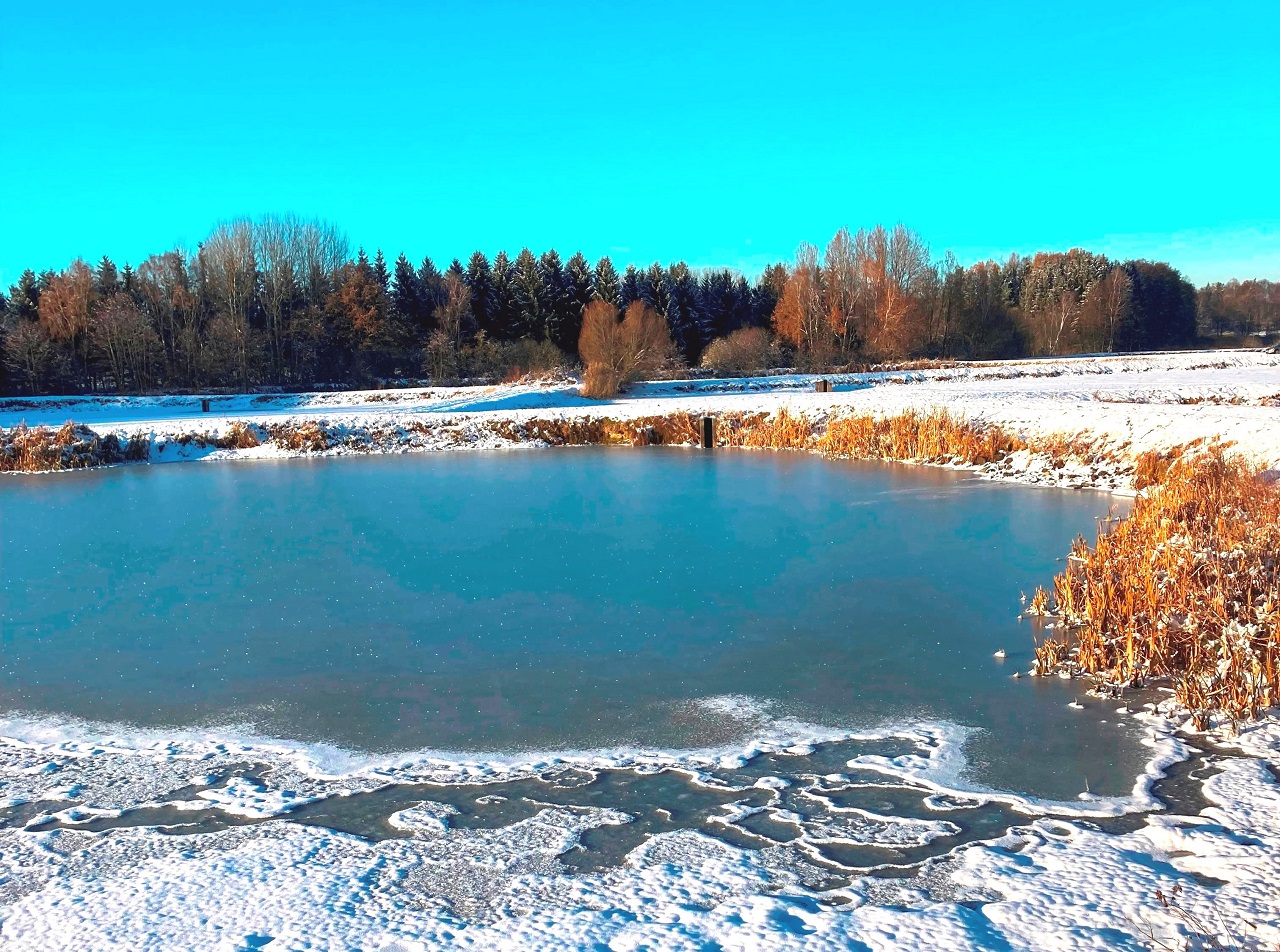
A new land purchase project: The Limbach Pond complex (Saxony) © SPA
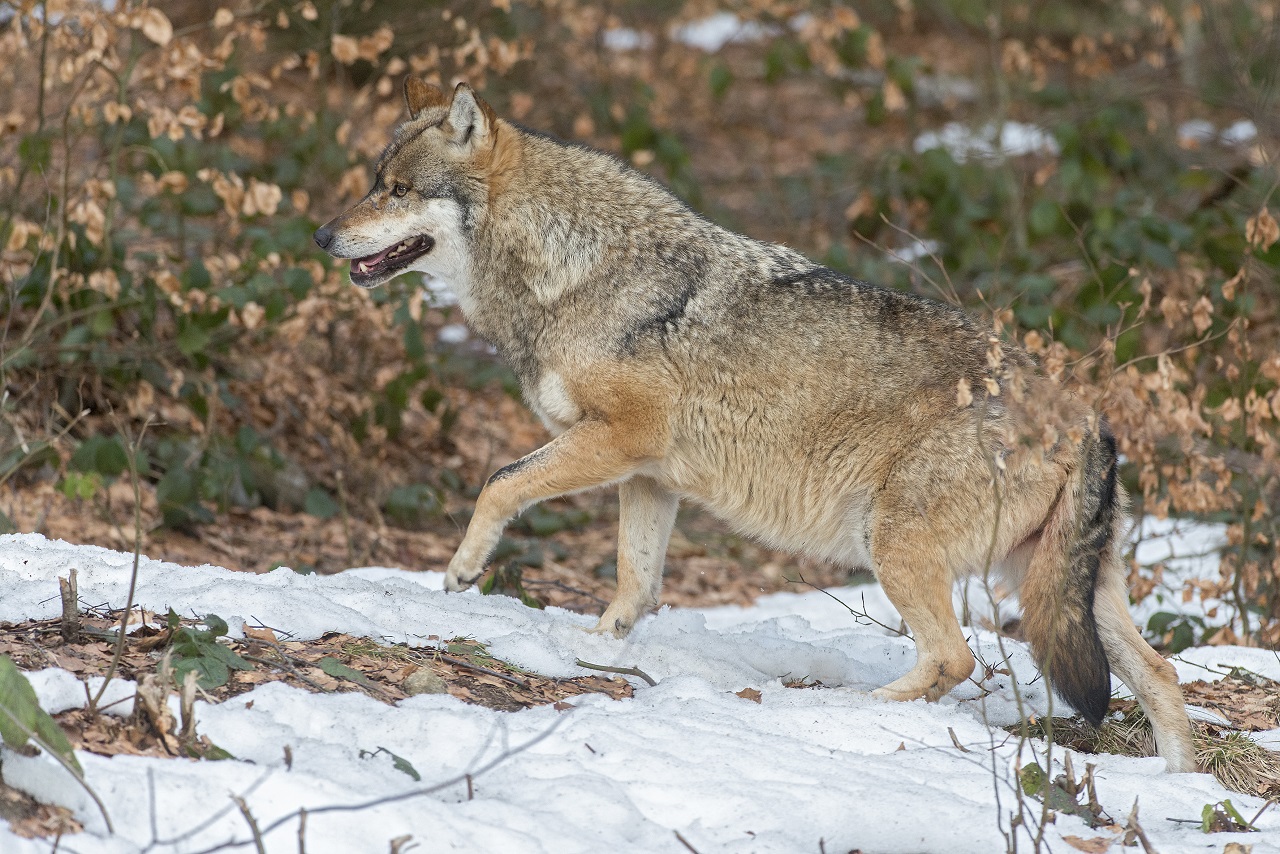
The wolf is also part of wildlife biodiversity in Mecklenburg-Western Pomerania © Leo/fokus-natur
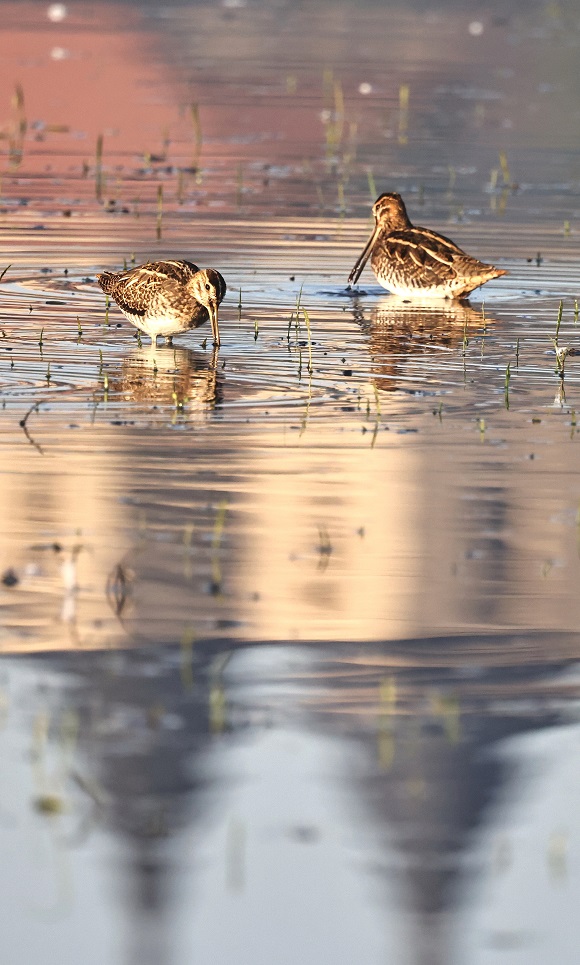
Common Snipe during autumn migration in the Frose wetland © U. Nielitz
Three years of low precipitation and a resulting lack of shallow water bodies had made life difficult for the diverse birdlife of the wetland complex near Frose. We can now hope for a good breeding season in 2024.
Uwe, our on-site project coordinator for our 33 hectares, is very optimistic this year because of the progressively rising water levels. The wetland complex near Frose has been drained several times in the past 100 years to create usable arable land. Nonetheless, the fen basin, located below the municipality of Frose, still collects and stores the precipitation from the higher-lying land.
The past few dry years, high temperatures, and the lack of precipitation, even in the winter months, had caused the small shallow water bodies to disappear quickly in the spring. As a result, many bird species that rely on shallow water, intact reed beds and wet meadows lack the habitat requirements for successful breeding and rearing of their young. The wetland complex was quiet and subdued, and the biodiversity of birds and insects dwindled visibly.
At the beginning of October 2023, the Frose wetland complex was completely dried up. Uwe reports extensive rainfall (approximately 90 mm/equivalent to 90 litres of rain) throughout October. So far in 2023, around 530 mm (530 l) of rain has fallen, while in the whole of 2022, there was only 390 mm (390 l) of precipitation. Thankfully, more extensive water bodies are finally forming in the wetland again!
This means the wetland starts the winter with a reasonably high water level. If the next few weeks bring further precipitation in the form of rain or snow, there is a good chance of normal spring water levels, which were common until 2019.
In addition to Greylag Geese, the first 150 Nordic geese are now roosting in the area, and their numbers continue to rise. Up to 2,000 Common Cranes use the shallow water bodies as a night roost. Up to 7,500 Common Starlings have also roosted in the reedbeds in recent weeks. Particularly noteworthy from an ornithological point of view is the large number of Water Pipits. Up to 20 individuals roost in the wetland and will also spend the winter here. The ringed Great Egret from Belarus, which Uwe has observed for years, was once again in the Frose wetland complex for the whole of October 2023 this year.
As has been the case for years, Uwe will check the lake areas almost every day this winter and ensure that the birds that spend the winter there can rest and forage as undisturbed as possible. Our bird-watching tower once again offers superb bird and nature observations during the winter months.
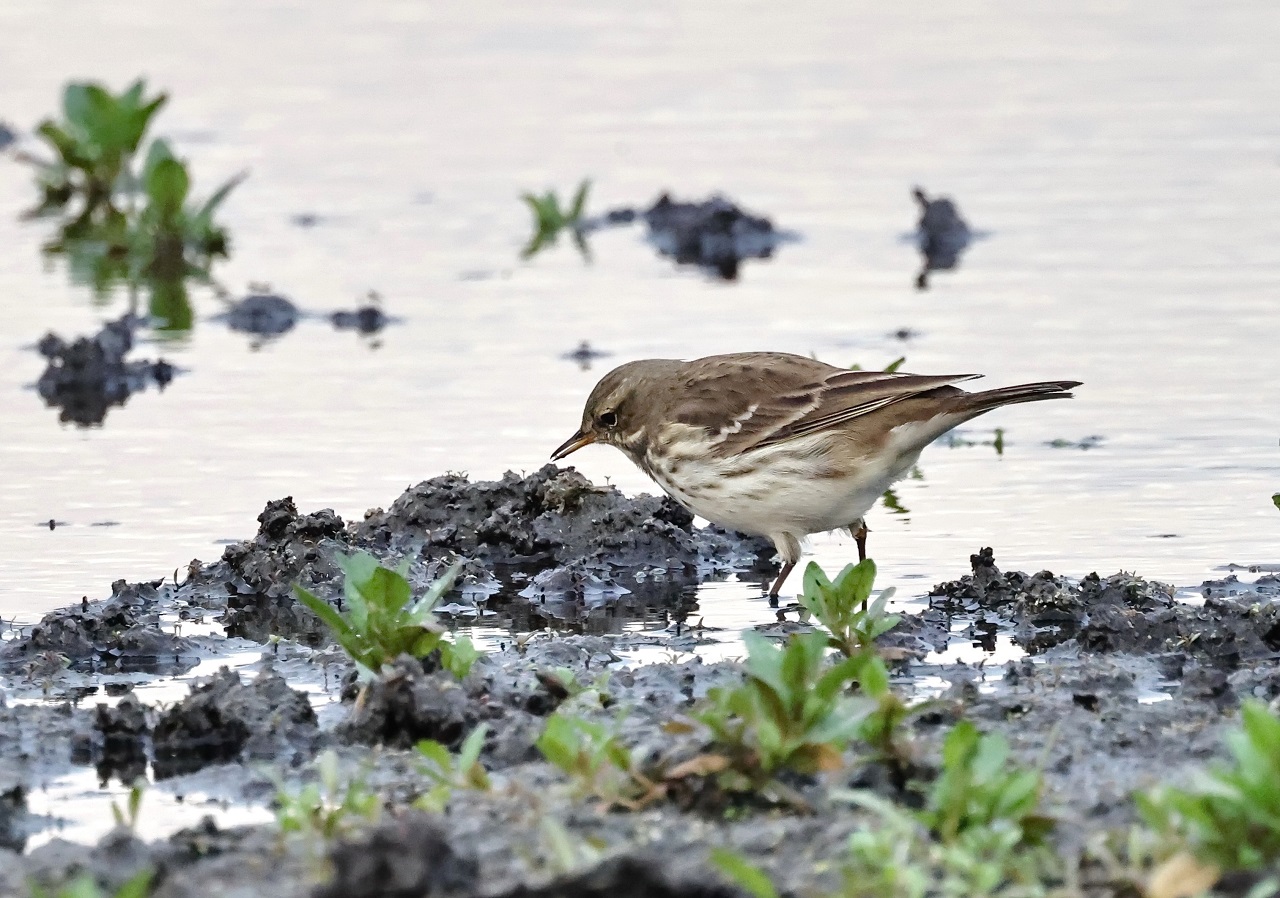
Water Pipit – a rare winter visitor - in the Frose wetland © U. Nielitz
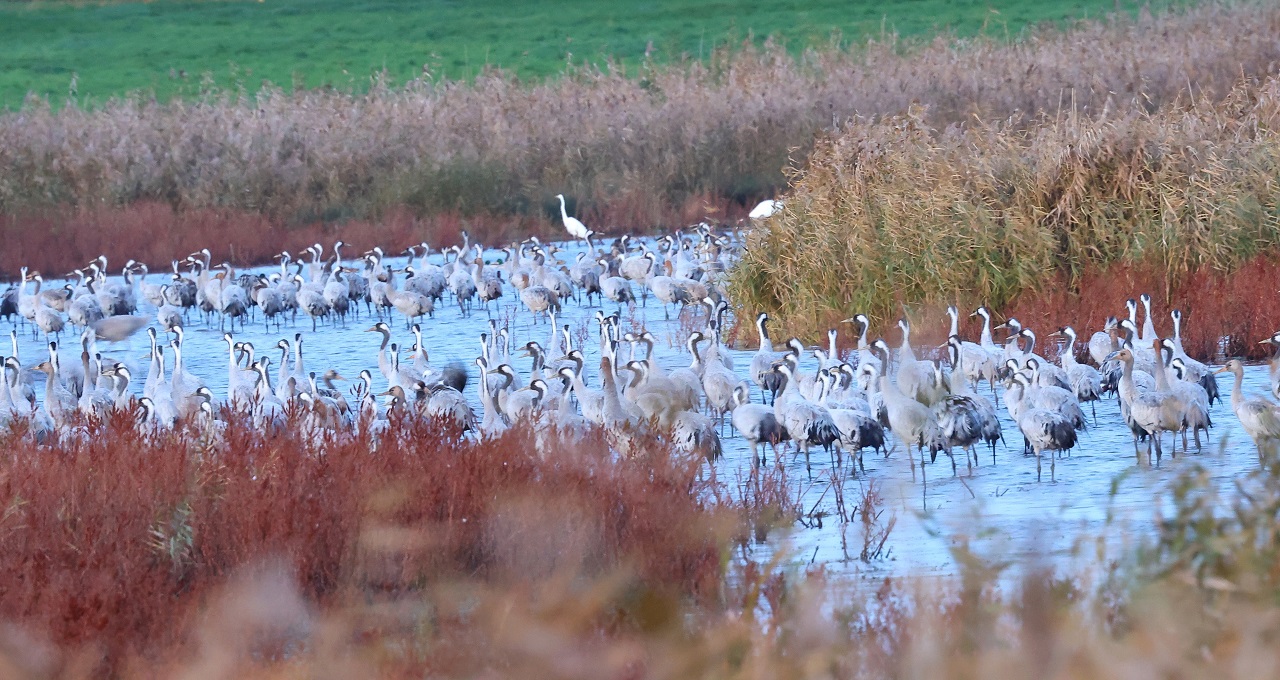
Common Cranes on 14.11.23 at their night roost in the shallow waters of the Frose wetland complex © U. Nielitz
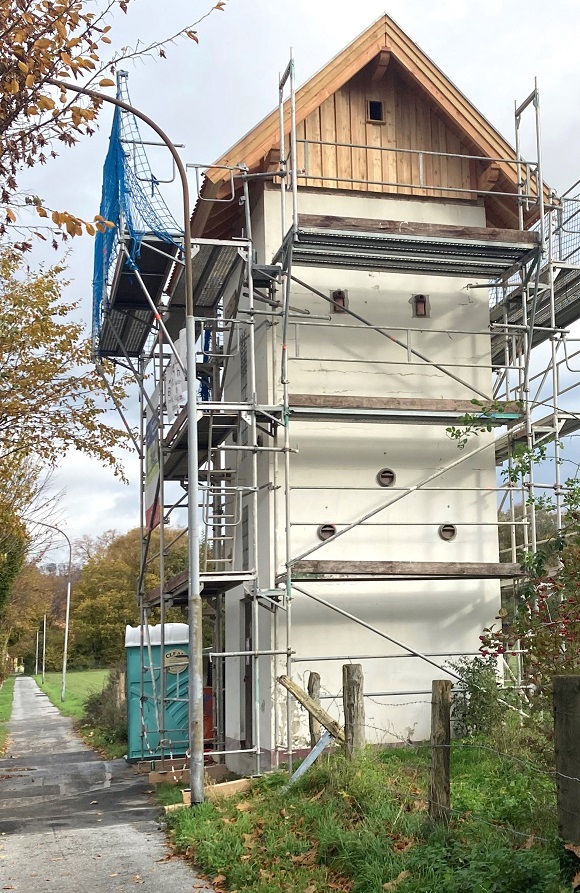
Hesseln species conservation tower © SPA
Suitable refuge space for structure-dwelling wildlife, birds, bats and insects is becoming increasingly scarce ... we are combatting this with our species protection buildings!
Despite adverse weather conditions, the handicraft firms commissioned for the species conservation tower construction wasted no time in the past few weeks.
To date, 20 artificial nesting aids have been installed in the tower's walls. The roof structure, which has now been completely rebuilt and made of weather-resistant, long-lasting larch wood, together with the roof covering with beavertail clay tiles, will soon fulfil its species-conservation and regional biodiversity-consolidation effect with its diverse nesting opportunities, daytime refuges and wintering areas.
The comments from interested citizens of the suburb of Hesseln, praising the new gable roof, confirm our project goal of making our species conservation towers real eye-catchers, or 'lighthouse projects' as we say nowadays, with which the regional population can identify!
Plastering and painting of the walls, the installation of species-specific bat multi-crevice boxes from a local bat specialist under the roof overhangs, and the installation of artificial House Martin nests are planned for the next few days.
Although construction is still incomplete, the first potential residents, such as the House and Tree Sparrow, Common Kestrels and Great Tit, are already exploring their future secure 'home from home', and we and our craftsmen are doing our best to ensure that the building can provide well-protected and species-appropriate roosts for birds, bats and insects before the real onset of winter.
Following the hibernation period, we eagerly await the start of the breeding season and the arrival of the first residents. The official inauguration of our 37th species conservation building will then take place.
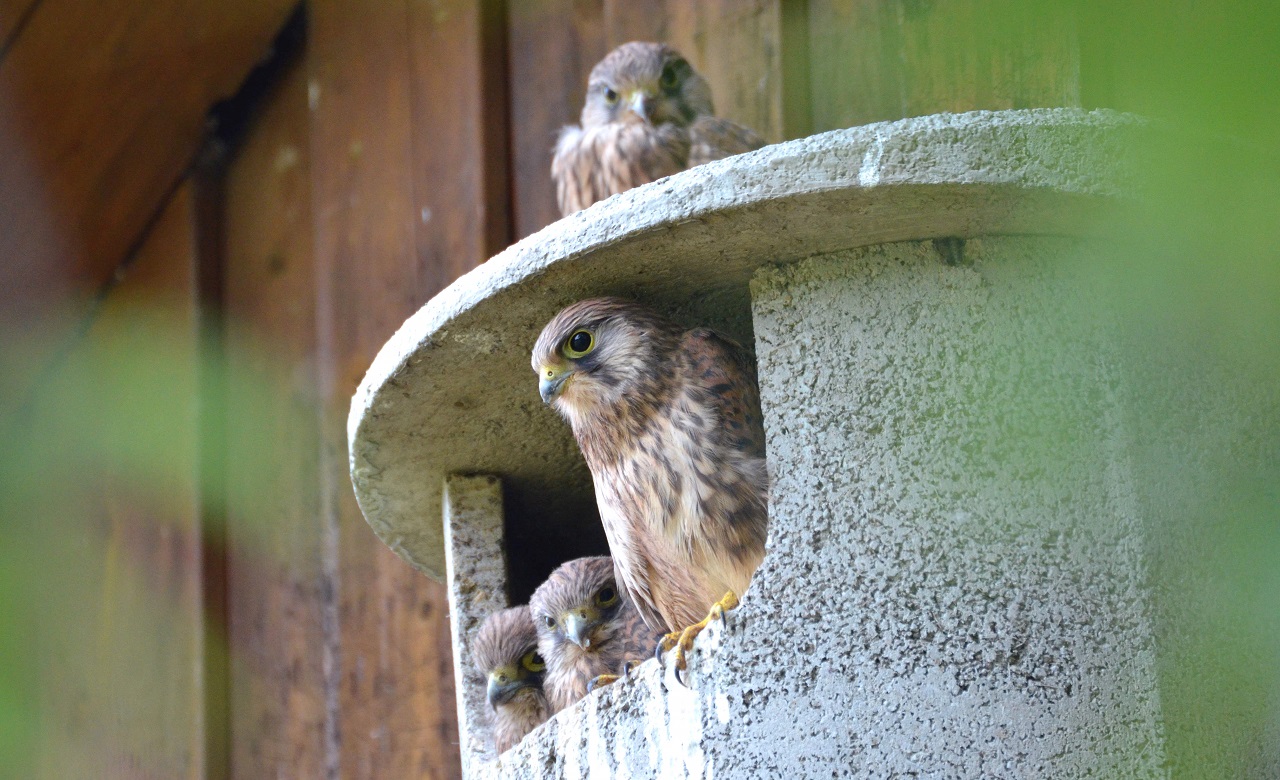
Young Common Kestrels prepare to fledge from nest boxes © SPA
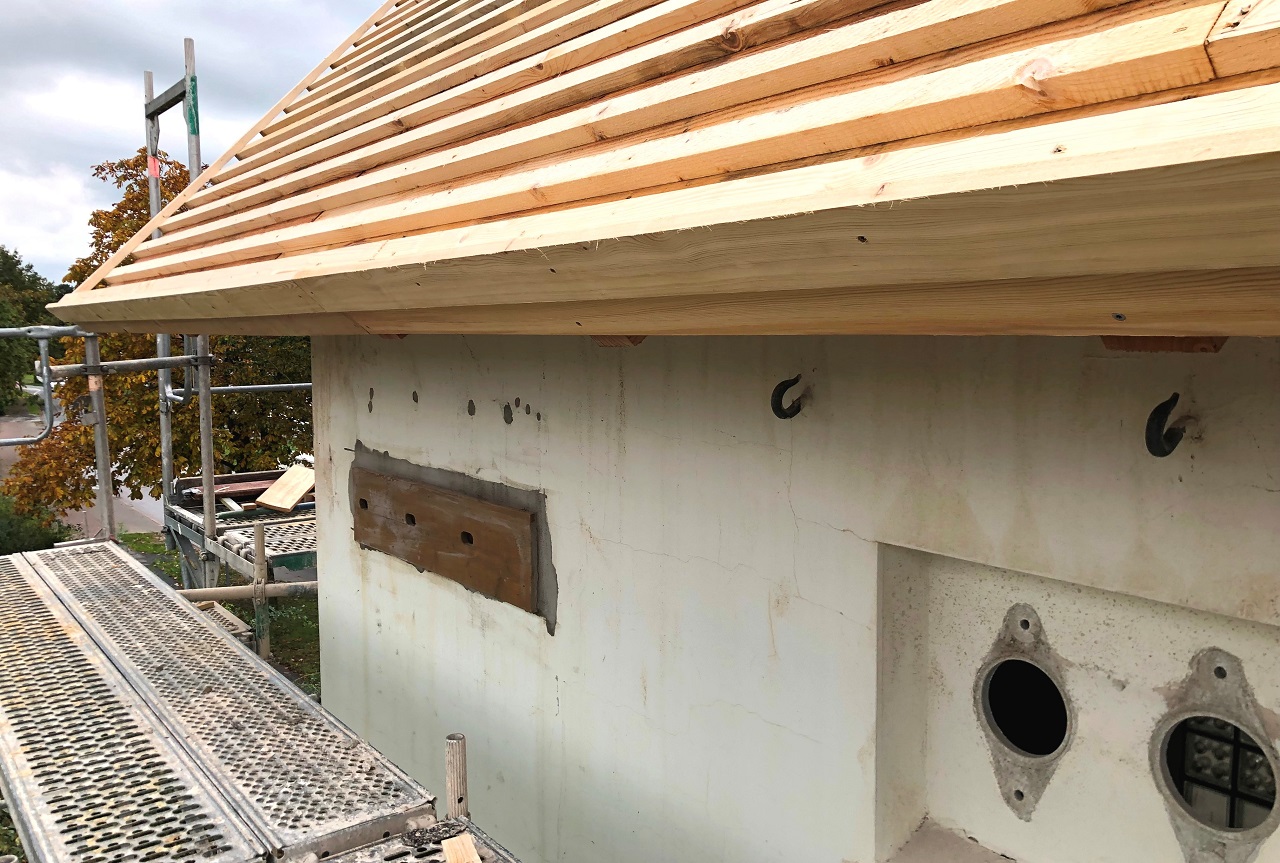
The Hesseln species conservation tower with built-in nest aids for the Common Swift and Western Jackdaw © SPA

Abandoned, littered, plastic foil vegetable greenhouse © SPA
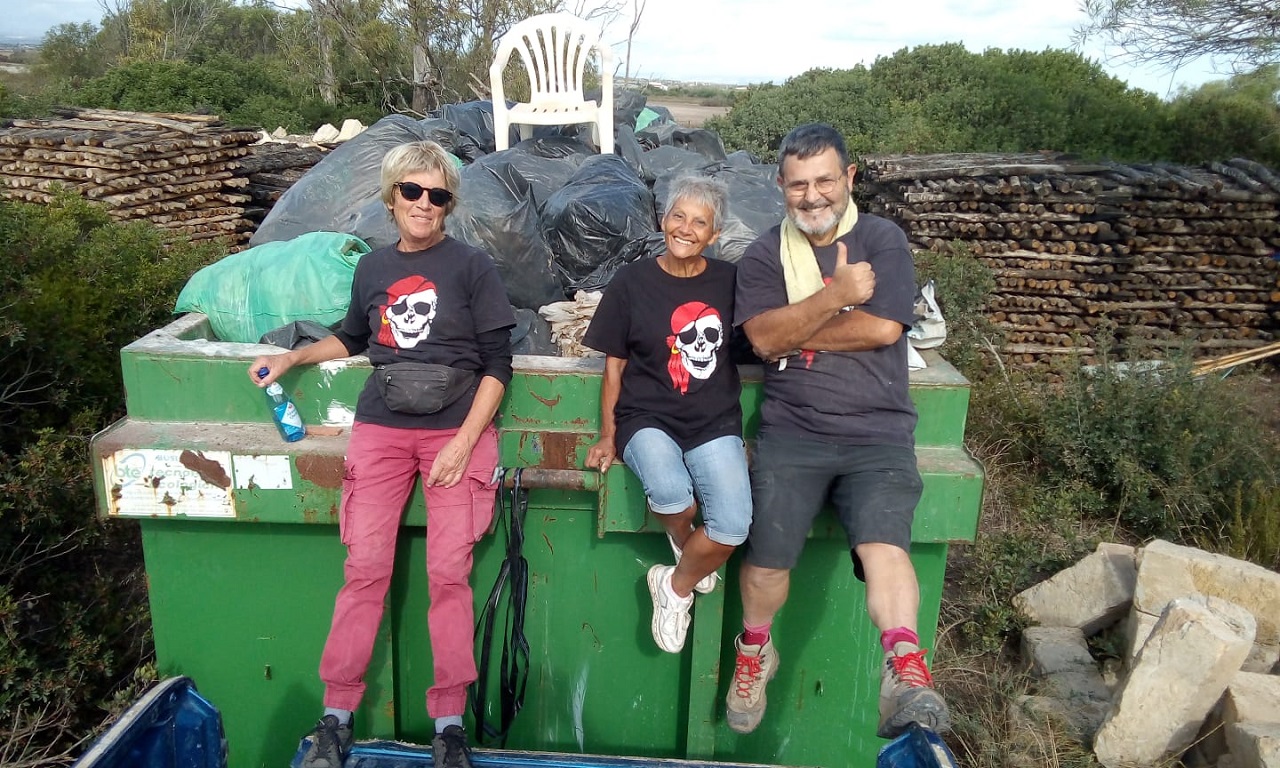
Jumbo garbage collection by Pirati nature conservation association members © SPA_IT
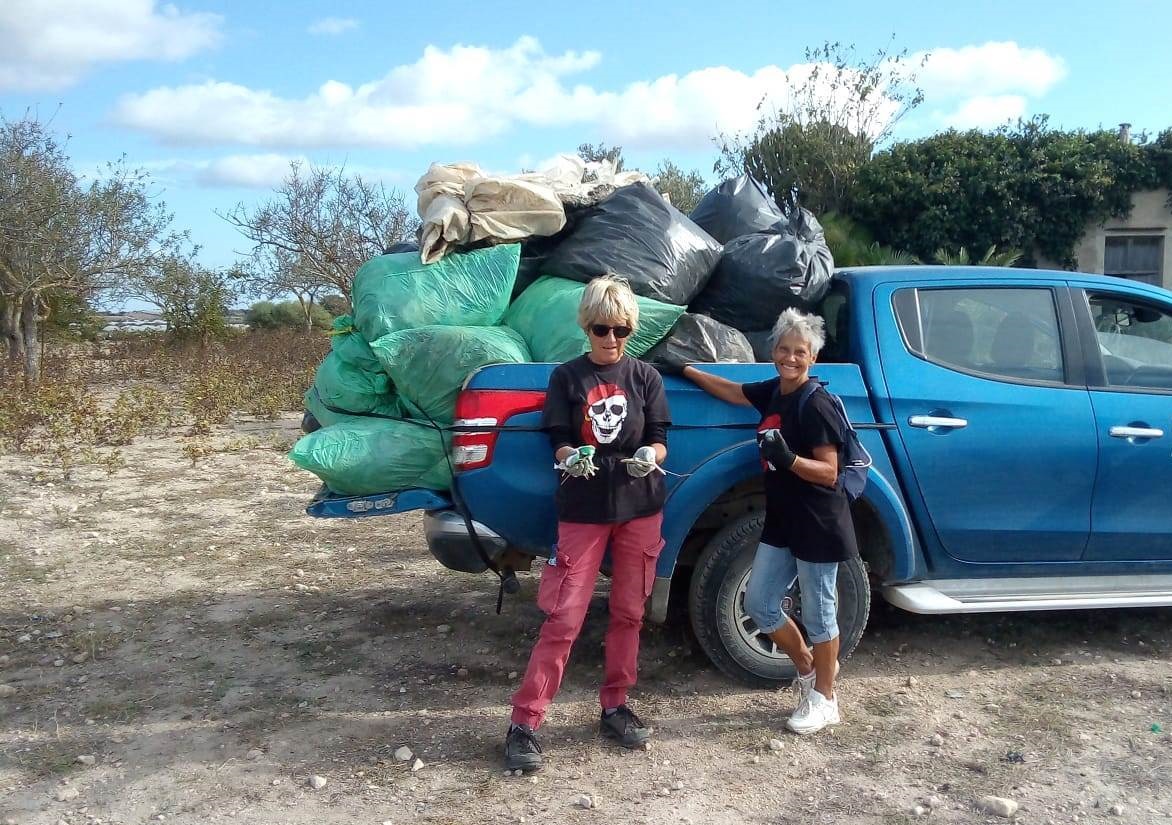
Pirati garbage collection on newly purchased properties on the Pantano Longarini Lagoon © SPA_IT
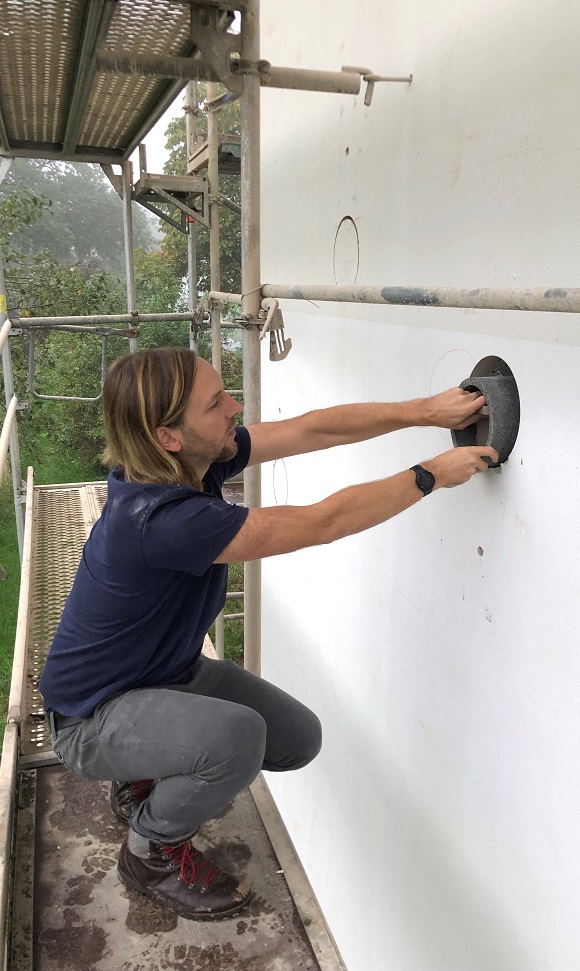
The project manager installing the first 20 nesting aids © SPA
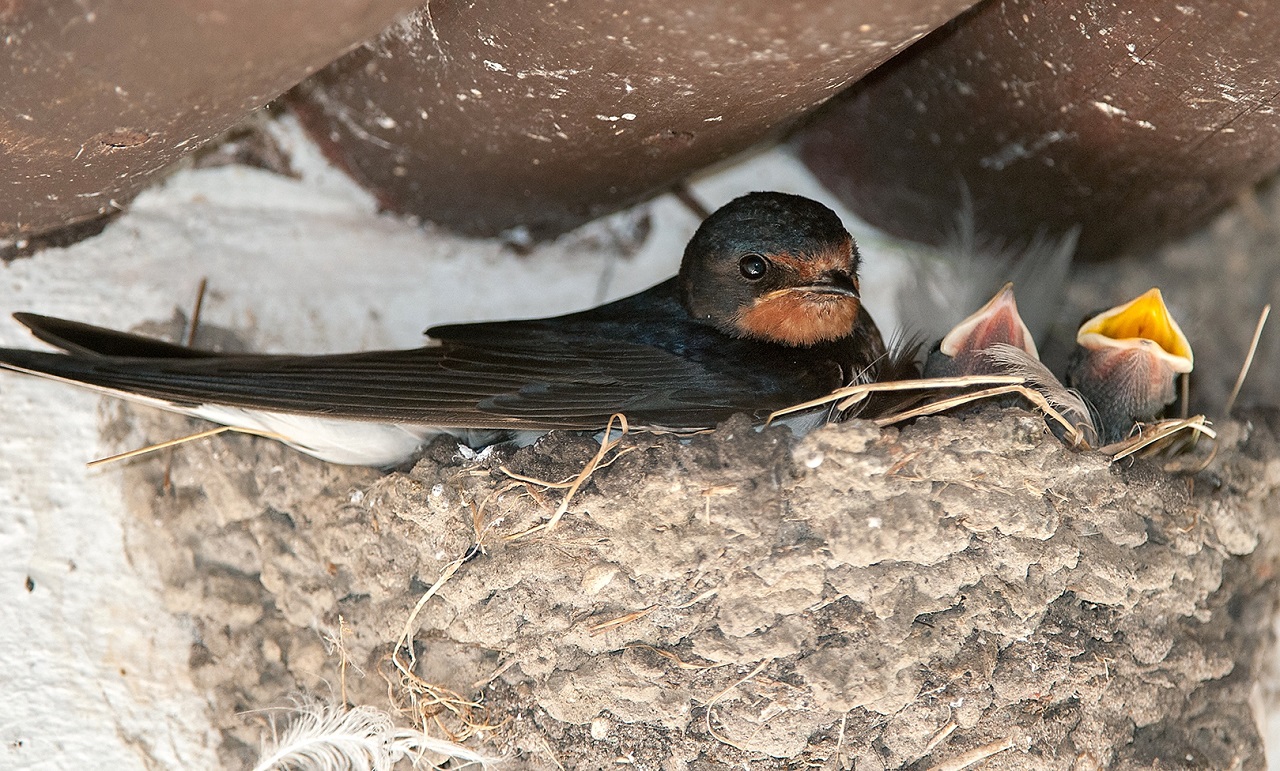
A Barn Swallow warms its young in the nest © Leo/fokus-natur
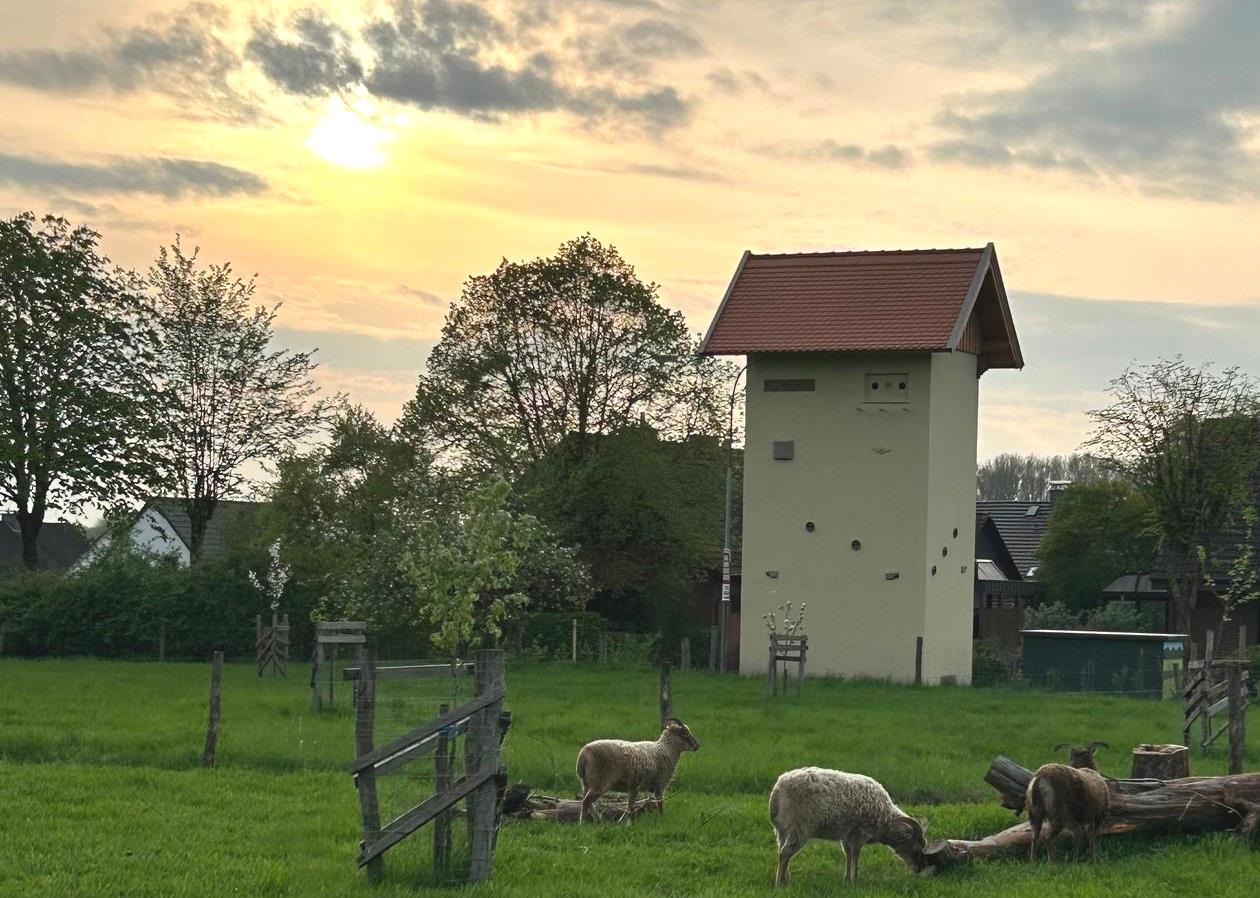
Start of construction at the Hesseln transformer tower © SPA
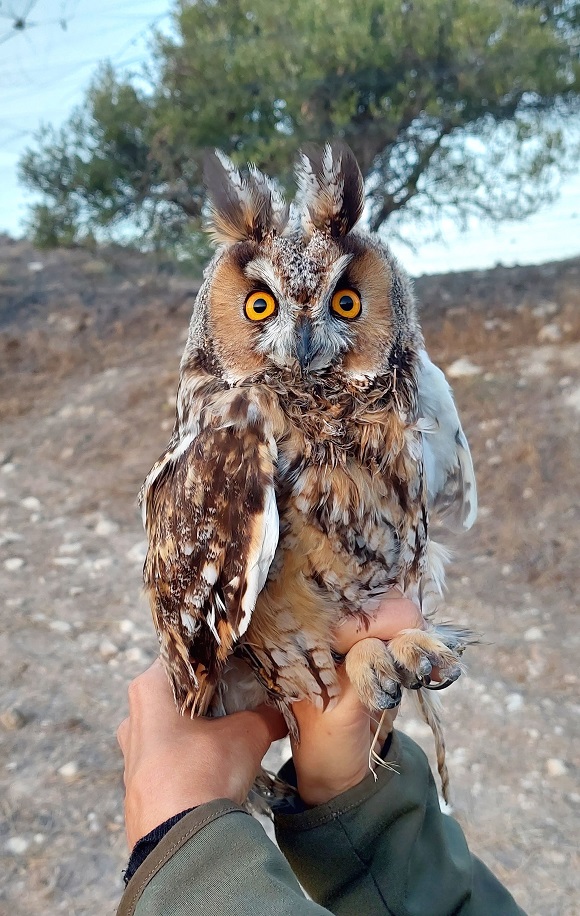
Long-eared Owl freed from a limestick © Committee Against Bird Slaughter (CABS)
2nd Cyprus Report: As we secretly feared, the 'major players' in the Cypriot bird poaching scene are now making up for in the autumn what they failed to do in the spring, namely massive trapping of migratory birds with nets and limesticks
During the first four weeks of the Committee Against Bird Slaughter and our Foundation bird protection camp on Cyprus, our secret fears for the autumn bird migration season have unfortunately come true. Illegally operating bird poachers and hunters on the island are now compensating for this year's greatly reduced bird catch in spring with extensive trapping activities during autumn bird migration.
As announced, this autumn our bird protection activists will once again be concentrating on the most active and brutal bird poachers and the 37 bird trapping sites they have discovered so far. Our operational strategy is already having an impact and its success is motivating our teams! So far, 20 bird poachers have been caught operating unlawfully at these active bird trapping sites, and their illegal activities have been well documented for the presentation of criminal charges. This is a record result for the first four weeks of operation of our bird protection camps!
Even more gratifying is the fact that, among the bird poachers caught by our bird protection activists, there are several who, despite repeated and well-documented observations of their illegal activities, have not been fined for years or who we had not been able to catch red-handed.
Among these, we were able to catch red-handed the so-called 'minefield trapper'. For many years, the man had set up his banned mist nets in an area officially marked as a minefield, thereby risking his life but remaining unmolested. That saga is now at an end. Our activists were finally able to catch and report the illegally operating trapper with his 3 large mist nets and an electronic bird call decoy system.
Particularly motivating for our activists was the success of their operation against two poachers who had been trapping migratory birds for years in the mountain region above the town of Troulloi. They use illegal mist nets and also specialise in trapping owls on limesticks. These two bird trappers, at whose site we have repeatedly found dead owls, have been at the top of our Wanted List for years!
This autumn, we did not dismantle the nets and limesticks at the site but rather monitored the trapping site for hours at a time until the poachers arrived on unregistered motorcycles to check their nets and electronic bird call devices.
Our bird protection camp activists surprised the two poachers, yelling loudly as they killed the birds caught in nets. In fright, the poachers ran to their motorcycles and sped away at high speed. Despite the lack of motorcycle licence plates, the responsible game wardens were able to identify the poachers from our photos and located them shortly afterwards.
The evening trip to their bird-trapping site ended with fines of up to 7,000.00 euros per person. A truly memorable excursion for both poachers.
Results of the Cyprus Autumn Bird Protection Camp (03.09 – 02.10.2023)
Bird trappers
Bird hunters
It is important to note that our bird protection activists, with practically no support from the responsible Cyprus Game Service, continue to carry out all bird protection work unaided, from reconnaissance of trapping sites, reporting the trapping site coordinates, photographically documenting bird poachers in the act and reporting the crimes to the responsible police station. In practice, our activists have to literally drag the state game wardens to the scene of the crime!
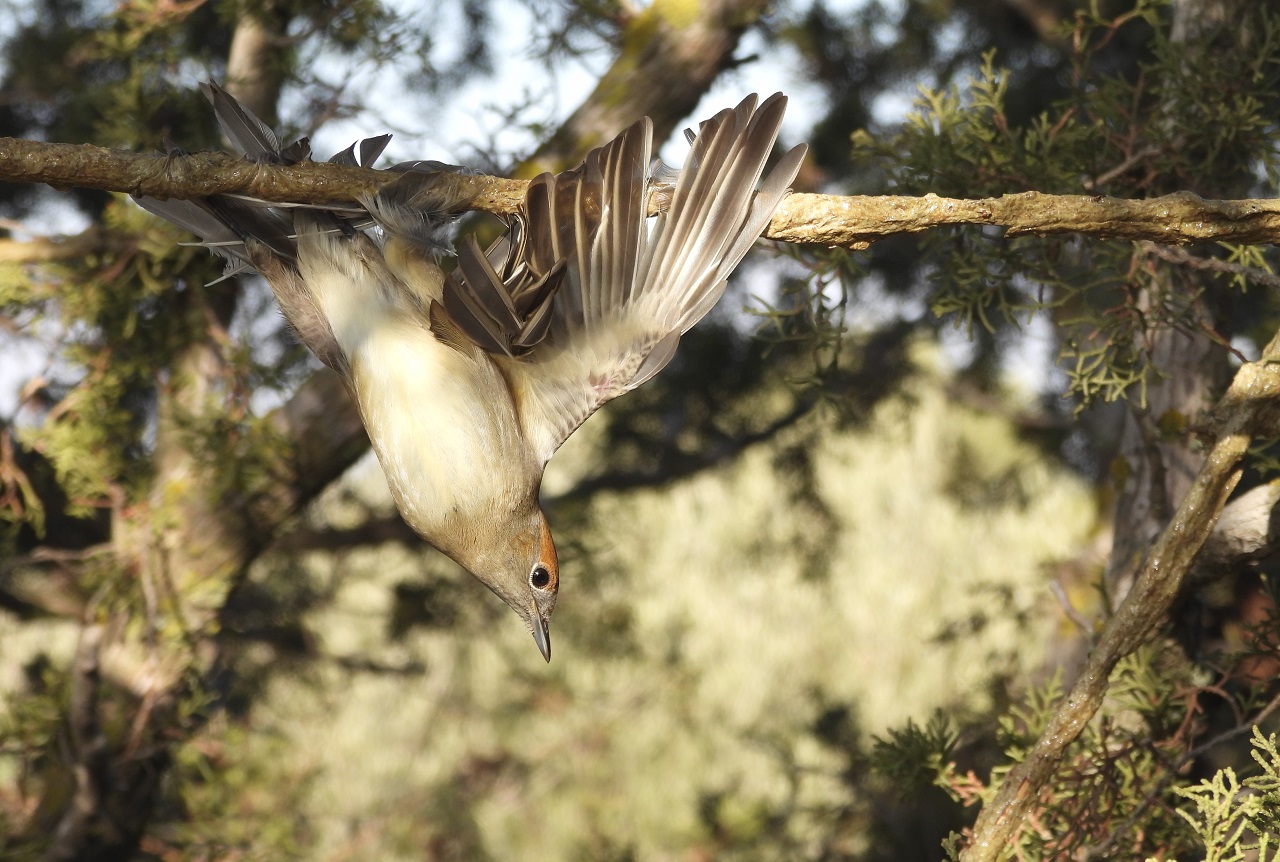
Female Eurasian Blackcap trapped on a limestick © Committee Against Bird Slaughter (CABS)
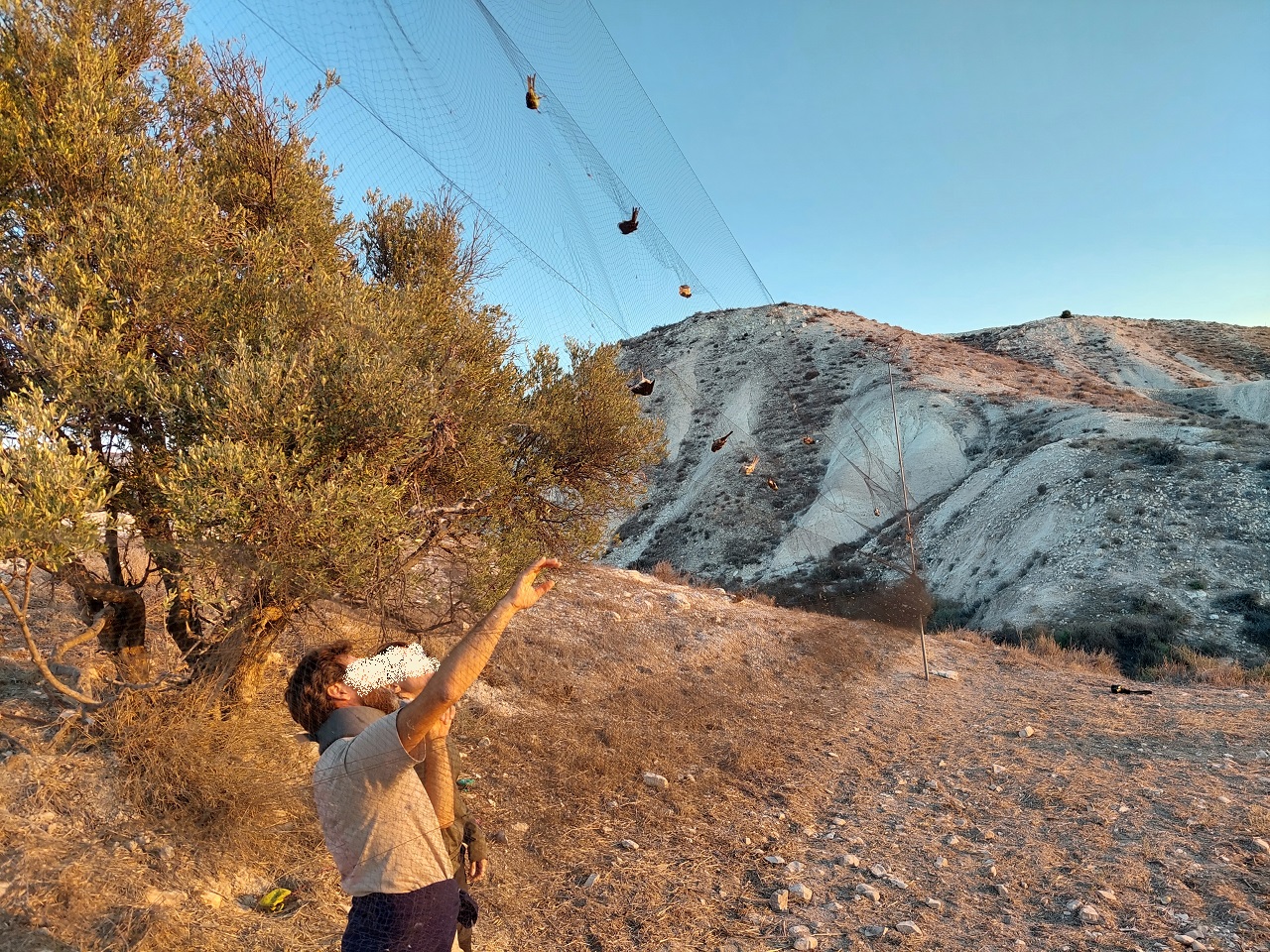
Release of songbirds from an illegal mist net © Committee Against Bird Slaughter (CABS)
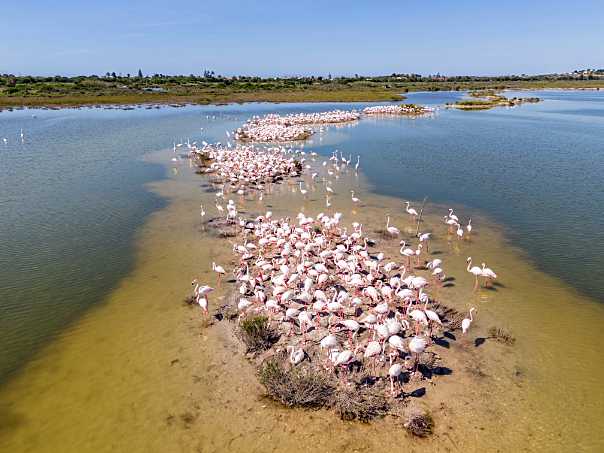
Only consistently protected areas can guarantee that the breeding grounds of the Greater Flamingo, Little Tern, Black-winged Stilt, Stone Curlew and Skylark in our Pantani Migratory Bird Sanctuary in Sicily remain undisturbed. However, new threats are increasingly emerging: for example, areas of our migratory bird sanctuary that have not yet been fenced off are being misused for illegal rubbish dumping ... to the project
Postbank Hannover IBAN: DE47 2501 0030 0905 9063 07 BIC: PBNKDEFF
Stiftung Pro Artenvielfalt Meisenstraße 65 33607 Bielefeld Germany Tel. (0049) 0521 2997-883 / -884 / -889 Fax (0049) 0521 2997-885 Office Mo - Fr. 09.00 to 16.00
Foundation Management team@stiftung-pro-artenvielfalt.org Project Management projekte@stiftung-pro-artenvielfalt.org Donations, Donor Care service@stiftung-pro-artenvielfalt.org
 Donate now